Dublin works well as a short break that does not stay entirely within the city centre. Its coastal railway offers a way to combine galleries, historic streets and neighborhood meals with harbors, beaches and open sea views. A four-night stay gives you three full days: enough for a substantial city day, a northern coastal outing and a southern one, without changing hotels. The key is to treat the coast as part of the holiday rather than an extra squeezed between major attractions. Choose accommodation with a straightforward rail connection, keep your outdoor days interchangeable and leave room for the weather to influence your plans.
Choose a base for easy departures, not just famous surroundings
For this kind of trip, access to the DART coastal railway matters more than being beside a particular landmark. Look at accommodation within a manageable walk of stations such as Pearse, Tara Street or Connolly. Compare the actual walking route, especially if you will have luggage: a short distance on a map can still involve busy crossings or an awkward station entrance. A central base also makes it easier to return from the coast, rest and head out for dinner.
Staying near the busiest nightlife streets can be convenient, but consider how much evening noise you will tolerate. Check room descriptions for street-facing windows, stairs and lift access. A quieter room and breakfast facilities may contribute more to a relaxed trip than a prestigious address. If you choose a coastal base instead, recognize the trade-off: sea air on your doorstep, but more travel whenever you want a city evening.
Build the stay around three interchangeable full days
Use arrival day for settling in and a short neighborhood walk rather than a timed attraction. Give one full day to central Dublin, one to the coast north of the city and one to the south. This creates a clear structure without deciding everything in advance. Keep the city day available for the least appealing outdoor forecast, and avoid nonrefundable commitments across every morning.
On the city day, choose one anchor experience, such as the National Gallery of Ireland or a historic-site visit, then explore a compact area around it. Pair Georgian streets and a garden pause, or combine a museum with independent shops and a long lunch. Trying to cover every famous building will leave little energy for the coastal days that make this itinerary distinctive.
Make Howth a harbor day, with walking as an option
Howth is a natural choice for the northern outing, combining a working-harbor setting, village streets and access to coastal scenery. Plan a satisfying short version first: travel out, explore the harbor area, have lunch and take an easy walk before returning. That way, the day still works if rain, wind or tired legs rule out a longer route.
If coastal walking is a priority, choose a route that matches your ability and the conditions rather than assuming every path is a gentle promenade. Check current access information and local signs before setting out, particularly for cliff routes. Wear shoes with dependable grip and carry a wind-resistant layer. Do not make completing a full loop the measure of success; a shorter out-and-back walk can leave more time to enjoy the village.
Choose one southern coastal stop instead of collecting several
Dún Laoghaire suits travelers who want a harbor-focused day with pier walks, cafés and relatively little route planning. Dalkey offers a village atmosphere and the possibility of linking a meal with a coastal stroll. Bray makes sense if you prefer a seafront setting and a longer promenade. These are different styles of outing, not a checklist to complete in one afternoon.
Pick the stop that best fits your group’s interests and walking appetite. For mixed-energy companions, prioritize somewhere with places to sit and an enjoyable short route. Avoid assuming that a coast path shown on an old map remains open or suitable. Beaches and waterfronts can be worthwhile without swimming or a strenuous hike; watching the changing light over the water may be the main event.
Keep rail travel simple and leave breathing room
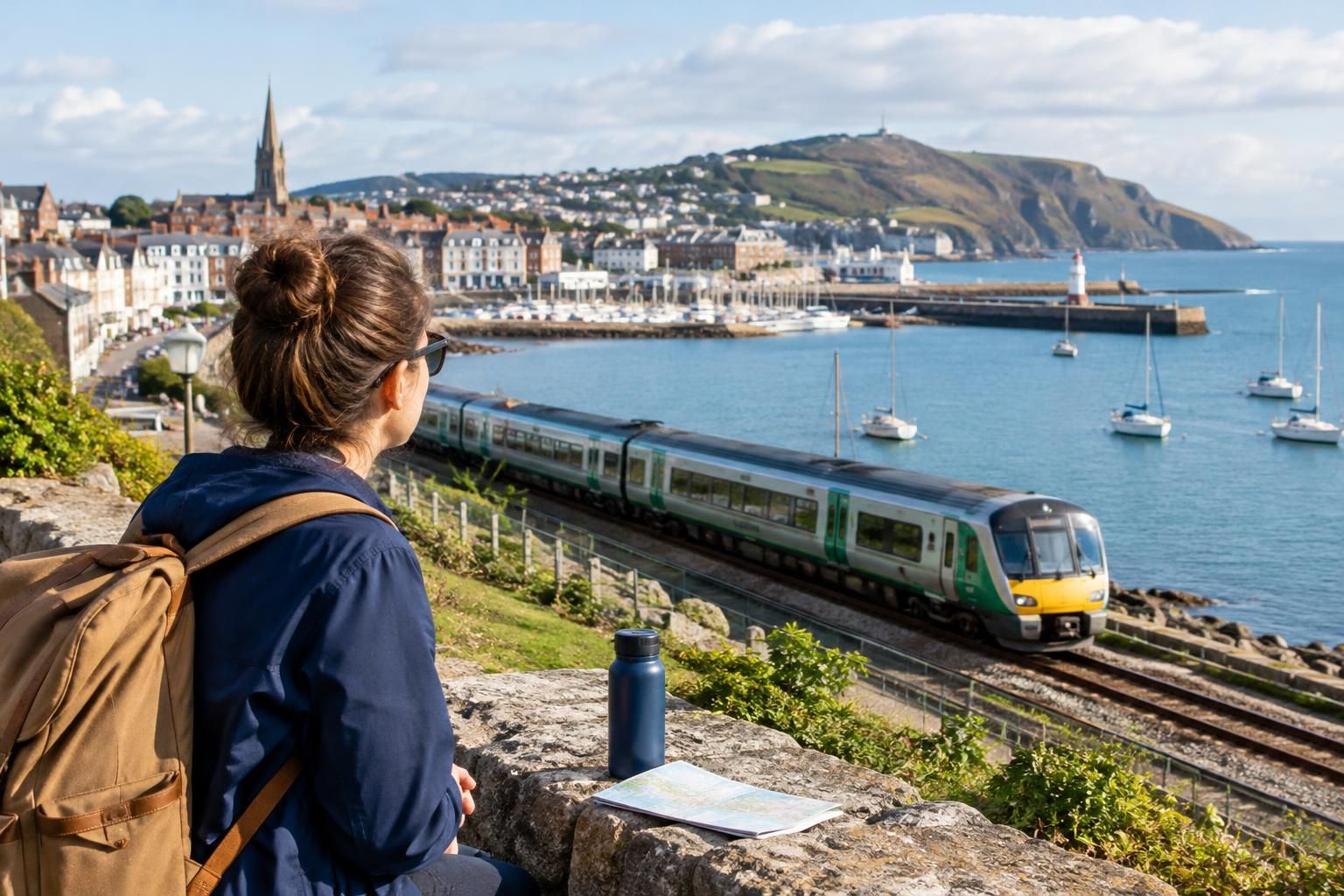
Before each outing, check the current journey planner for your destination, service changes and return options. Not every train serves every coastal stop, so confirm the destination display rather than boarding solely because a train is heading in the right direction. Choose the appropriate ticket or payment option for your journeys, and check validation requirements before traveling.
Avoid tying your return to a tightly timed dinner reservation or another departure. A relaxed coastal lunch can easily run longer than expected, and transport disruption is harder to absorb when every hour has a fixed purpose. On departure day, calculate your airport or onward connection separately; do not assume your coastal rail ticket or route covers that transfer.
Pack for exposed waterfronts and budget for flexibility
Bring a compact waterproof layer, a warm mid-layer and comfortable shoes that work on both city pavements and uneven paths. A small day bag should hold water, a snack and an extra layer without becoming cumbersome in museums or cafés. An umbrella may be useful in town, but a hooded jacket is often more practical along an exposed waterfront.
Build the budget around accommodation, transport, meals and a small number of paid experiences rather than filling every day with admission charges. Allow for an unplanned café stop when the weather turns. If a particular restaurant or attraction matters to you, check its booking arrangements, but leave other meals open so that your day can follow your energy rather than a string of appointments.
A Dublin coastal break works best when the city and seaside balance each other. Choose a convenient base, plan one northern and one southern outing, and keep a city day ready to swap with either. You will have enough structure to travel confidently while retaining the freedom to shorten a walk, linger over lunch or return early without feeling that the itinerary has failed.
AI-assisted evergreen travel guide. Featured image is an AI-generated illustration, not a specific product or booking.