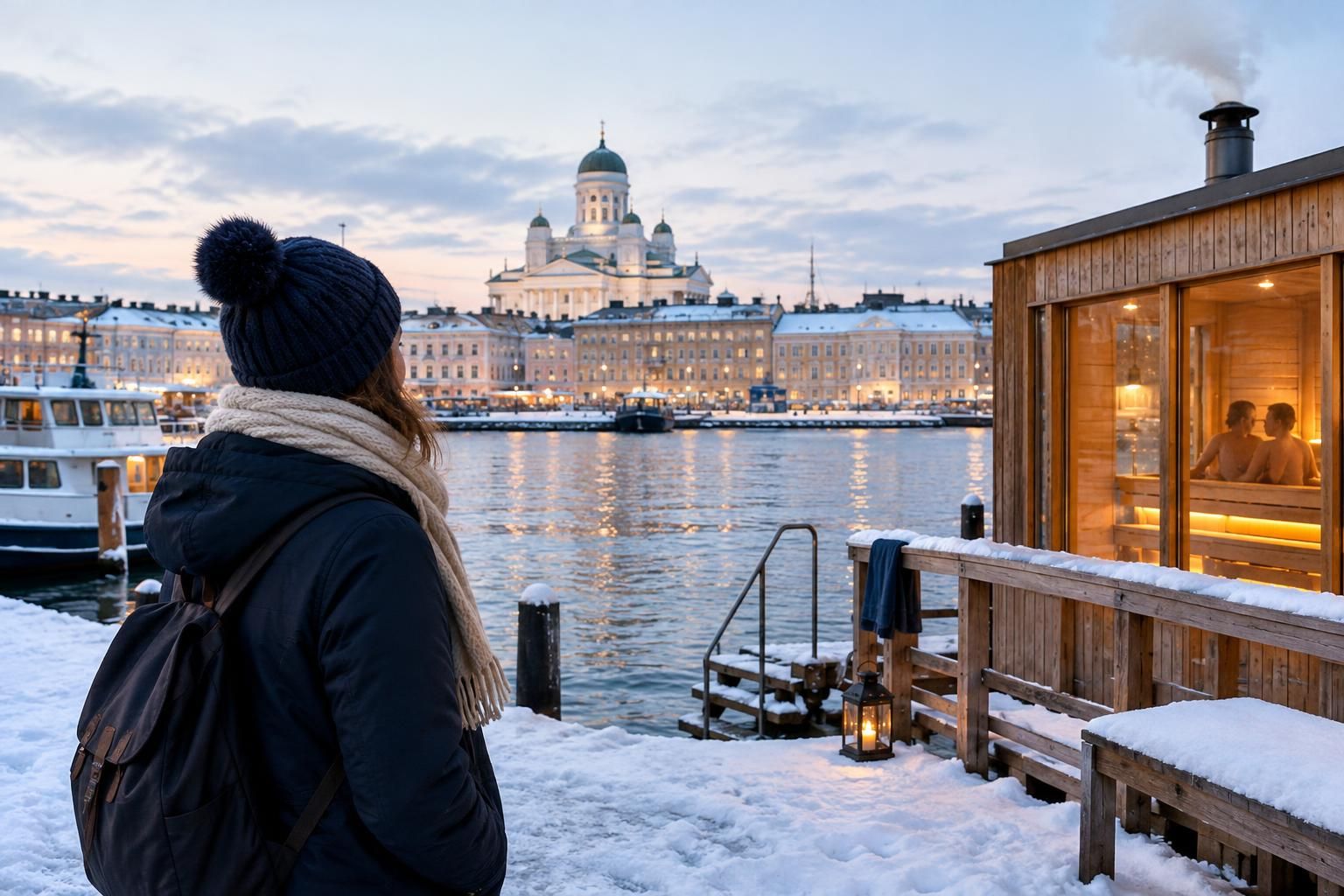
Helsinki offers a distinctive kind of winter city break: waterfront views, substantial architecture, design-minded interiors and plenty of reasons to pause somewhere warm. The most satisfying itinerary is not necessarily the busiest. Short daylight hours and changeable conditions make the order of your activities more important than the number of sights you collect. Plan four nights around a few compact areas, give outdoor sightseeing the brightest part of the day, and treat museums, cafés and sauna as central experiences rather than weather backups. Snow can transform the city, but your trip should work just as well with wet pavements and gray skies.
Choose winter for the atmosphere, not a promise of snow
Before choosing dates, decide which version of winter appeals to you. Around midwinter, limited daylight encourages short outdoor outings and long indoor afternoons. Later winter brings more daylight, which can make neighborhood walks easier to fit into the day. Neither choice guarantees snow, frozen waterfronts or clear skies, so avoid building the trip around a particular landscape.
Four nights gives you three full days: enough for the historic center, a design-focused day and a flexible day shaped by conditions. If a particular museum or sauna matters, check its calendar before fixing your daily sequence. Keep arrival evening simple, especially if you will be learning an unfamiliar transport system in darkness.
Pick a base that makes returning indoors easy
For a first visit, the area around the central railway station and Kamppi is worth considering if straightforward transport connections are your priority. Punavuori suits travelers interested in design shops and neighborhood cafés, while Katajanokka offers waterfront surroundings and distinctive architecture. Compare the actual walking route from a stop to your accommodation rather than judging convenience by map distance alone.
A room that supports winter routines can matter more than a dramatic view. Look for usable coat storage, somewhere to leave damp footwear and enough space to unpack layers. If you are sensitive to noise, assess the street setting carefully. An apartment can suit leisurely breakfasts, while a hotel may simplify luggage storage around arrival and departure.
Build each day around one compact outdoor circuit
Start with the historic center: Senate Square, the streets toward the harbor and the surrounding blocks create a coherent introduction without requiring a cross-city sightseeing marathon. Put this walk in the brightest available window, then pair it with an indoor visit or a long lunch. Waterfront stretches can feel markedly different from sheltered streets, so allow yourself to shorten the route.
On another day, link the Esplanadi area with the smaller streets of Punavuori. Rather than visiting every shop marked on a design map, choose a few interests, such as textiles, ceramics or furniture. Leave time to notice entrances, residential buildings and everyday streetscapes. These details give the city character without turning the day into a shopping assignment.
Use museums and libraries to shape the itinerary
Choose indoor stops by subject, not simply by prominence. Ateneum can anchor a day focused on Finnish art, while Kiasma offers a contemporary-art direction. Oodi provides a different perspective through its architecture and role as a public library. Check exhibition details, visitor arrangements and opening days when planning; a building that interests you may deserve time even when a particular exhibition does not.
Avoid stacking several substantial museums into one day unless that is genuinely your preferred pace. One major visit, a neighborhood walk and an unhurried meal usually create more variety. Keep a second indoor option nearby so a windy afternoon does not force a complicated transfer or leave you filling time somewhere you did not want to visit.
Make sauna a deliberate part of the trip
A public sauna visit works best as its own activity rather than a rushed addition between attractions. Compare settings: a traditional neighborhood establishment creates a different experience from a contemporary waterfront venue. Before booking, establish whether sessions are shared or separated, what clothing is expected, and whether towels, lockers and washing facilities are included.
Give yourself time to understand the venue's etiquette and follow staff instructions. Ask questions rather than assuming that practices are identical everywhere. Cold-water swimming is optional, not a requirement for an authentic visit. Keep the following part of your day light, perhaps with a meal nearby, instead of scheduling another timed attraction immediately afterward.
Keep island excursions optional and transport straightforward
Suomenlinna can be an appealing addition for travelers interested in maritime history and open waterfront landscapes. In winter, however, it deserves a separate decision rather than automatic inclusion. Assess the forecast, daylight, walking surfaces, visitor facilities and ferry arrangements close to the day. Choose a modest route and retain a mainland alternative; exposed outdoor sightseeing is not essential to understanding Helsinki.
Within the city, combine walking with public transport instead of measuring success by distance covered on foot. Check which ticket area covers your accommodation, arrival point and planned journeys. Allow extra transfer time when carrying luggage or navigating slippery surfaces, and save accommodation directions somewhere accessible without a mobile connection.
Pack for transitions between cold streets and warm interiors
Prioritize adjustable layers, footwear with suitable grip, warm socks, gloves and a hat. A weather-resistant outer layer is useful when conditions turn damp. Choose a small day bag that can hold removed layers without becoming cumbersome inside museums and cafés. A spare pair of socks can be more useful than another evening outfit.
Finish with a loose three-day framework: historic Helsinki on the first full day, design and sauna on the second, and a museum-led or island day on the third. Swap those days as conditions become clearer. Reserve only what genuinely needs reserving, leaving meals and shorter walks flexible enough to follow your energy and the weather.
A rewarding Helsinki winter break depends on rhythm: daylight outdoors, purposeful indoor visits and enough space between them to enjoy both. Choose a convenient base, pack for changing conditions and keep the most exposed excursions optional. You will have a trip with a clear structure that still works when winter refuses to look like the postcard.
AI-assisted evergreen travel guide. Featured image is an AI-generated illustration, not a specific product or booking.