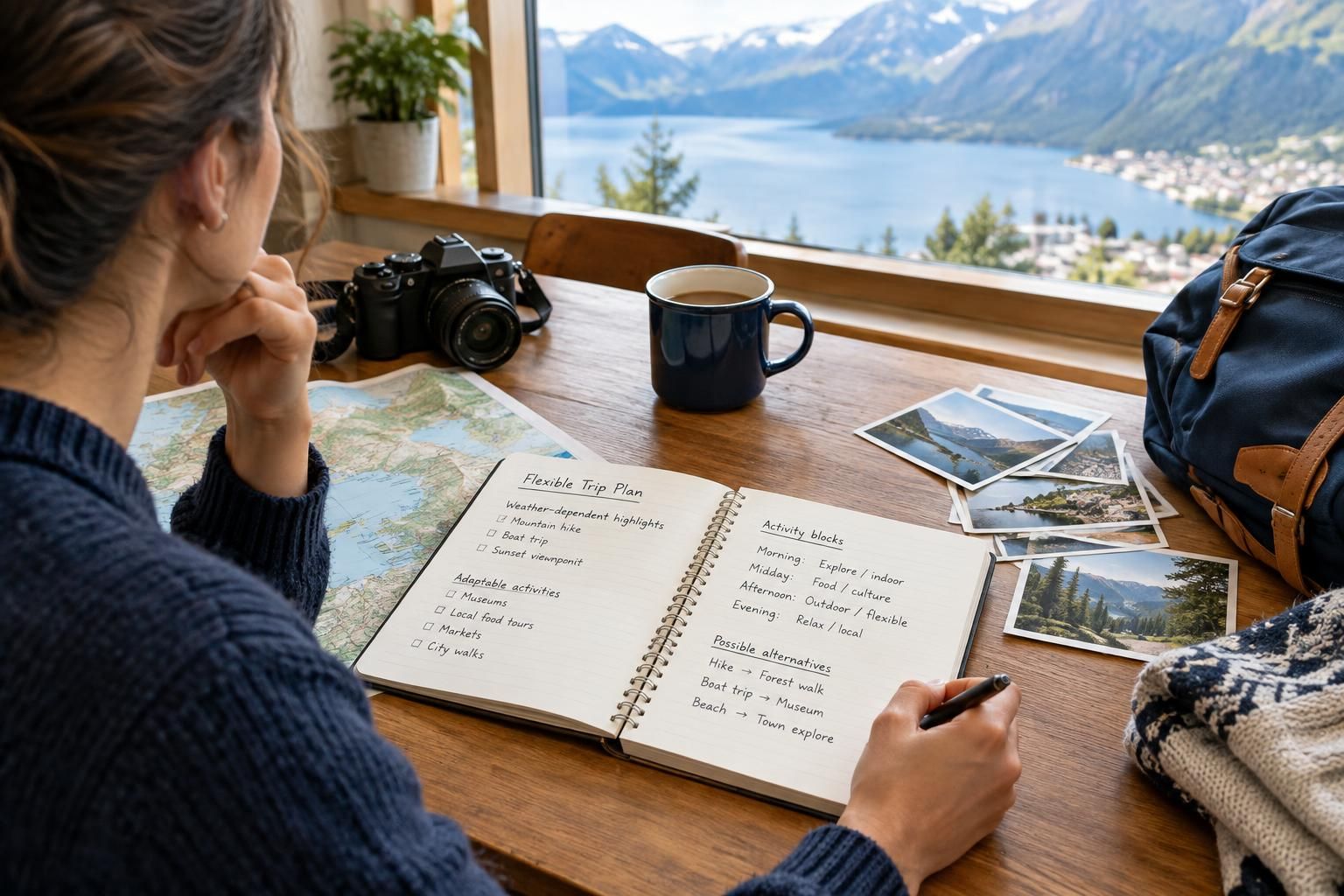
A holiday does not need perfect weather to be rewarding, but it helps if the itinerary does not depend on clear skies every day. A scenic viewpoint, an outdoor market and a long coastal walk can each be excellent choices; putting all three into fixed slots leaves little room to adapt. The solution is not to research an entirely separate rainy-day holiday. Instead, identify which experiences need particular conditions, keep a few days movable and choose a base that remains useful when plans change. This approach works for city breaks, countryside stays and mixed trips where outdoor time matters without being the only reason to travel.
1. Separate weather-dependent highlights from adaptable activities
Start with the experiences that made you choose the destination. Give each one a simple label: conditions matter, adaptable, or mostly sheltered. A panoramic ridge walk belongs in the first group. Exploring a neighborhood with frequent café stops may be adaptable. A ceramics class is mostly sheltered, although getting there still deserves consideration.
Be specific about what would diminish an activity. Low cloud can matter more than light rain for a viewpoint, while strong sunshine may make an exposed afternoon walk less appealing. This avoids treating every imperfect forecast as a reason to abandon outdoor plans. It also reveals your true priorities: if nearly every highlight needs similar conditions, the trip may need more flexibility rather than more attractions.
2. Give important outdoor experiences more than one possible day
Place your most weather-sensitive highlight early enough in the stay that another opportunity remains. On a five-night countryside trip, for example, you might leave two separate days available for the main scenic outing instead of assigning it to the final afternoon. The alternative day does not need to stay empty; fill it with something easy to move.
Distinguish fixed commitments from preferred dates. An arrival transfer or a booked performance may be fixed, while a garden visit or self-guided walk may not be. Keep the movable activities in a short list rather than pinning each one to a calendar square. Where an experience requires advance booking, consider how much uncertainty you are comfortable accepting before making it the centerpiece of the trip.
3. Build small geographic clusters, not a second itinerary
For each area you expect to visit, identify one sheltered alternative that genuinely interests you. Pair a waterfront walk with a local history museum nearby, or a park visit with a covered market in the same district. The aim is to change the balance of the outing without spending half the day crossing the destination.
A useful cluster contains an outdoor option, a sheltered option and somewhere comfortable to pause. You do not need all three everywhere. Two or three clusters can provide enough choice for a short break. Check practical details before relying on any alternative, especially whether it needs a reservation or involves a long exposed walk from public transport. A roof at the destination does not make the whole outing weather-independent.
4. Choose accommodation that supports an occasional slow day
Accommodation matters more when you may spend an unplanned afternoon there. Look beyond the bed: somewhere to sit, space to dry damp outer layers and a convenient place for breakfast can make a slower day feel comfortable rather than wasted. For a longer stay, laundry access may be more valuable than another decorative feature.
Location creates flexibility too. A remote cottage can suit a trip centered on reading, cooking and nearby walks, but it offers a different fallback from an apartment near several indoor attractions. Compare the actual alternatives each base gives you. If your only response to poor weather would be a lengthy drive, decide whether that fits the kind of holiday you want.
5. Match reservations and packing to your tolerance for uncertainty
Reserve experiences that would be disappointing to miss, but avoid filling every sheltered activity slot in advance merely as insurance. Otherwise, a pleasant day can leave you choosing between an outdoor opportunity and a paid indoor booking. Before committing, understand the booking terms and whether changing the date is possible; do not assume flexibility.
Pack for the activities you would still enjoy in ordinary imperfect weather. That might mean a suitable outer layer, comfortable footwear, sun protection or a small bag for damp items. Keep the list proportionate to the trip. Equipment is useful when it supports a realistic plan, not when it creates an obligation to complete an outing regardless of conditions.
6. Set a simple routine for changing plans
Agree on a decision point rather than repeatedly debating the forecast. You might review the next day's outline over dinner, then make a final choice before leaving in the morning. Use forecasts as planning inputs, while checking relevant local information for activities where conditions affect access or suitability.
When switching plans, preserve the purpose of the day. If the original idea was fresh air and a relaxed lunch, a shorter neighborhood walk followed by a lingering meal may satisfy it better than several hours in a museum nobody wanted to visit. For shared trips, discuss acceptable compromises beforehand: some travelers enjoy a drizzly stroll, while others would rather split up briefly and meet later.
A weather-flexible itinerary needs a few movable highlights, appealing alternatives and a base that supports both active and slower days. Leave more than one opening for the experiences that depend on conditions, then keep the rest simple. You are not trying to make weather irrelevant; you are making sure it does not have to dictate the quality of the whole trip.
AI-assisted evergreen travel guide. Featured image is an AI-generated illustration, not a specific product or booking.