A photography-focused trip does not need to mean carrying a heavy camera bag or spending every morning chasing a particular view. Whether you use a phone or a dedicated camera, the most useful planning starts with deciding what you want to notice: everyday street scenes, coastal landscapes, architectural details or the people you are traveling with. From there, you can shape a trip that creates opportunities for pictures without making every meal, walk and rest stop serve the camera.
Choose a visual theme rather than a list of famous shots
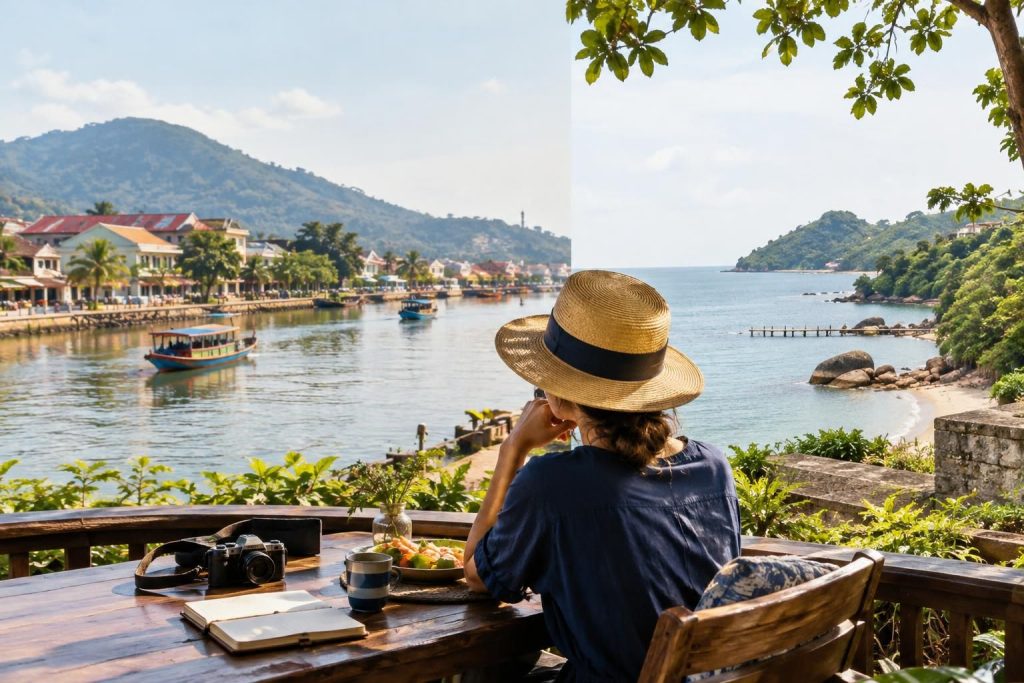
Start with two or three subjects that genuinely interest you. A harbor town might offer working boats, weathered buildings and waterfront routines. A mountain village could suit wide landscapes and small architectural details. Themes help you choose between destinations and neighborhoods without committing to recreating photographs you have already seen.
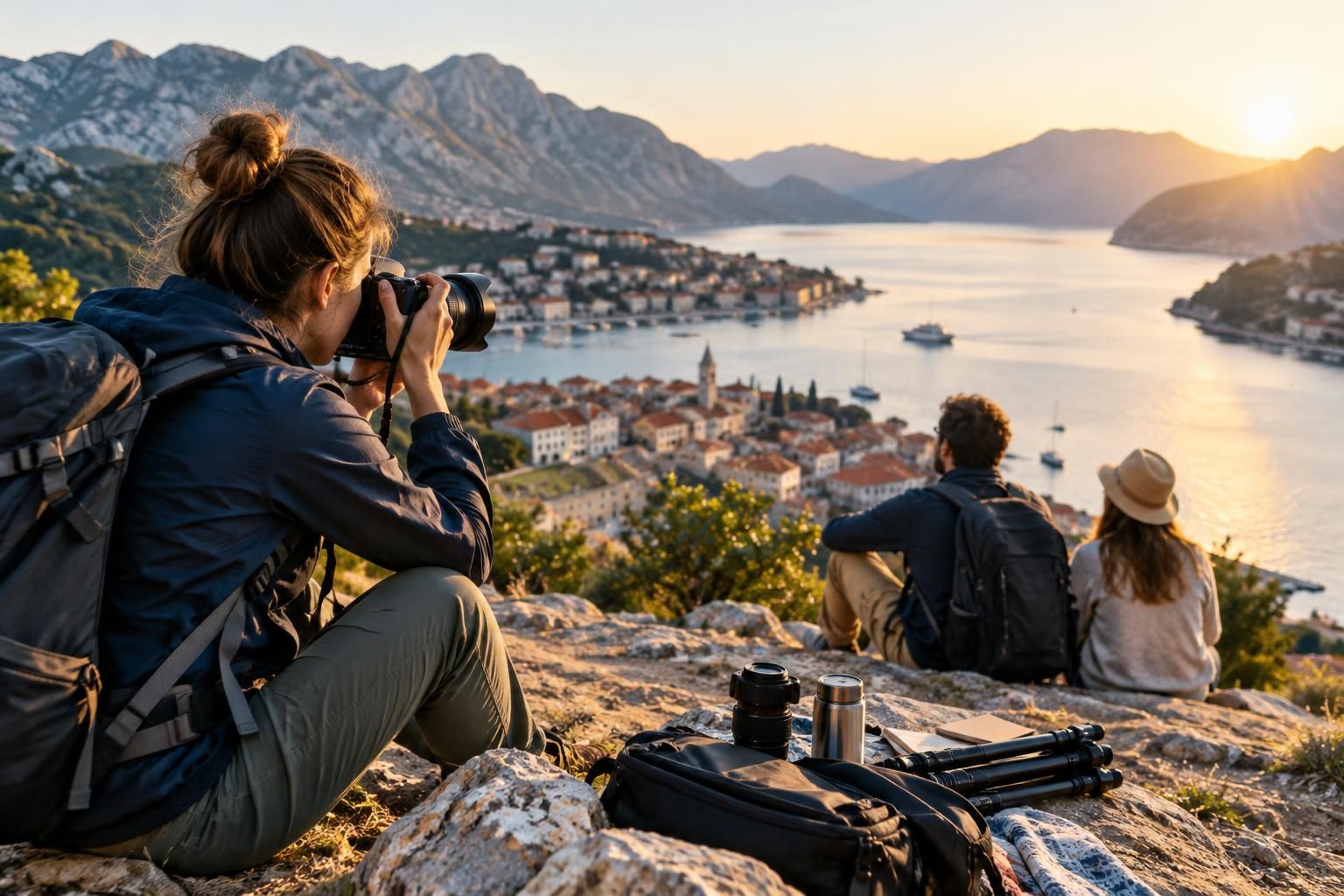
Separate essential subjects from pleasant possibilities. If photographing coastal scenery is your main reason for traveling, give it a dedicated outing and an alternative opportunity later in the trip. Leave smaller interests, such as shopfronts or garden details, for ordinary walks. This keeps your itinerary from becoming a collection of scattered locations connected by long transfers.
Choose accommodation for repeat access
A useful photography base lets you return to an interesting area without making each visit an expedition. Staying within walking distance of an old town, waterfront or landscape trailhead can make short outings practical. Compare the whole journey, including steep streets, station access and the final walk, rather than judging accommodation by distance on a map alone.
Consider what happens between outings too. Somewhere with space to unpack, recharge equipment and leave belongings organized can simplify the trip. If you expect to photograph early or late, check the property's access arrangements before booking. A less dramatic location may work better than an isolated stay if it offers easier meals, transport and opportunities to revisit nearby subjects.
Plan a few sessions, not full days behind the camera
Give each day one main photography window and keep the rest of the schedule lighter. For example, you might spend a morning exploring a waterfront, have an unhurried lunch and use the afternoon for a museum or neighborhood walk. Avoid pairing an ambitious outing with a tightly timed reservation immediately afterward.
Build flexibility around conditions instead of assuming one particular appearance. A landscape might work as a broad view in clear weather or as a study of texture and close details when visibility is limited. Keep an alternative such as covered architecture or a museum where photography is permitted. Confirm venue policies separately rather than assuming that admission includes permission to photograph.
Make the route work for companions as well as photographs
If you are traveling with someone who does not share your interest, discuss the practical meaning of a photography stop. Five minutes to take a few pictures is different from waiting for a scene to change. Agree on which outings are shared, which can be separate and when the camera will stay packed away.
Choose places with more than one reason to visit. A riverside district might offer photographs alongside cafés, gardens and an enjoyable walk. Allow companions to continue exploring rather than repeatedly asking them to wait. For solo sessions, agree on a simple meeting place and time so that a missed message does not complicate the rest of the day.
Carry equipment that suits the actual itinerary
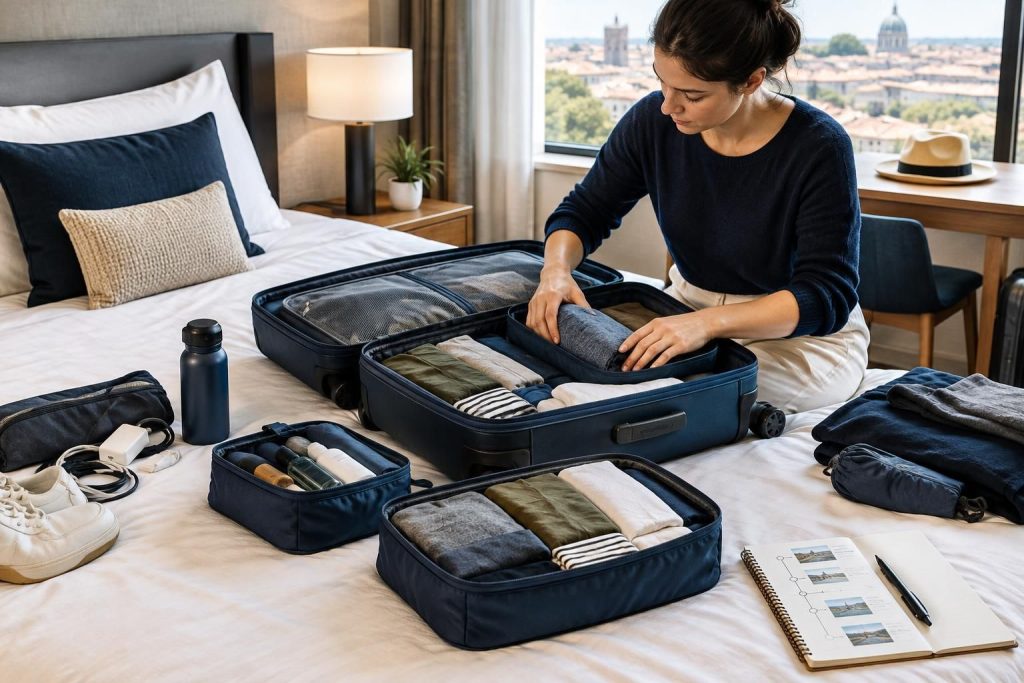
Pack for the longest realistic walk, not just the journey from your room to a viewpoint. A phone or one familiar camera setup may be more useful than several options you hesitate to carry. Before leaving, practice the basic tasks you expect to use, such as adjusting exposure, photographing moving subjects or transferring images.
Match accessories to a clear purpose. Spare power, sufficient storage and suitable weather protection can support an ordinary travel day; specialist equipment should earn its place through a planned use. Consider how you will manage the bag on public transport, during meals and at venues with storage restrictions. Check relevant carrier and venue requirements rather than relying on assumptions about what equipment is accepted.
Leave time for care, courtesy and simply being there
Build a short equipment routine into your downtime: recharge what needs power, organize files and make a separate copy when practical. Avoid filling every evening with editing. A quick review can reveal whether you want to revisit a subject, but sorting an entire day's images can consume the time you meant to spend enjoying the destination.
Treat people and places as more than material for a picture. Ask before making someone the clear subject, respect requests not to photograph and avoid blocking paths or entrances. Do not step into restricted areas or disturb wildlife for a better angle. Finally, choose a few moments to experience without recording them; the trip should remain worthwhile even when the camera stays in your bag.
The strongest photography itinerary gives you access, time and choices rather than promising a particular image. Pick a few subjects, stay somewhere practical and leave room to return when a place interests you. You will have more opportunities to make photographs—and more of the trip left to enjoy beyond them.
AI-assisted evergreen travel guide. Featured image is an AI-generated illustration, not a specific product or booking.