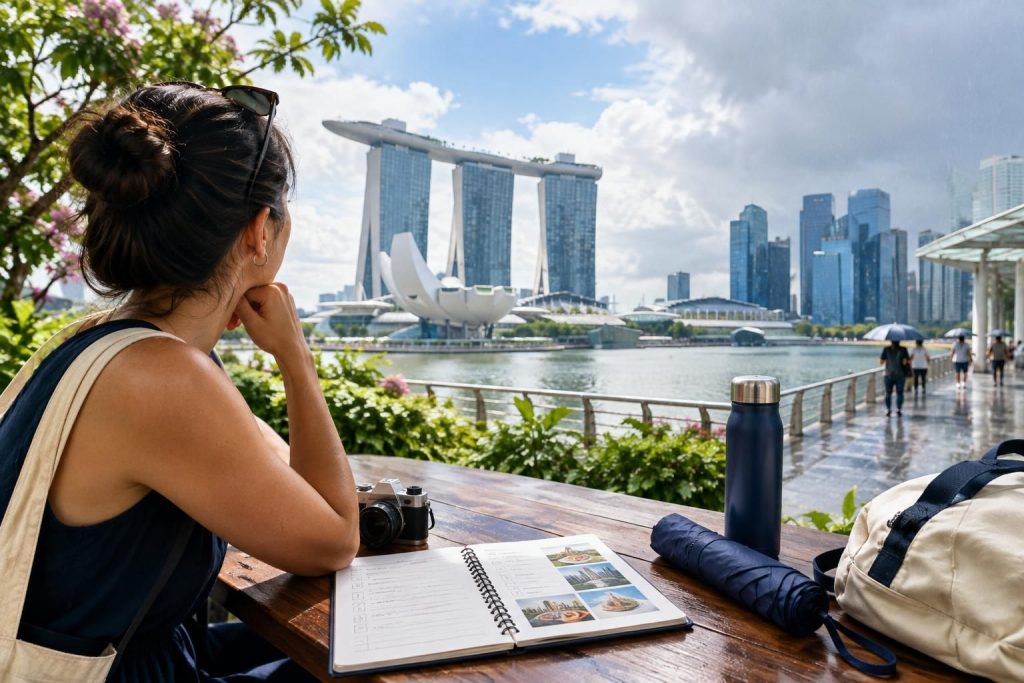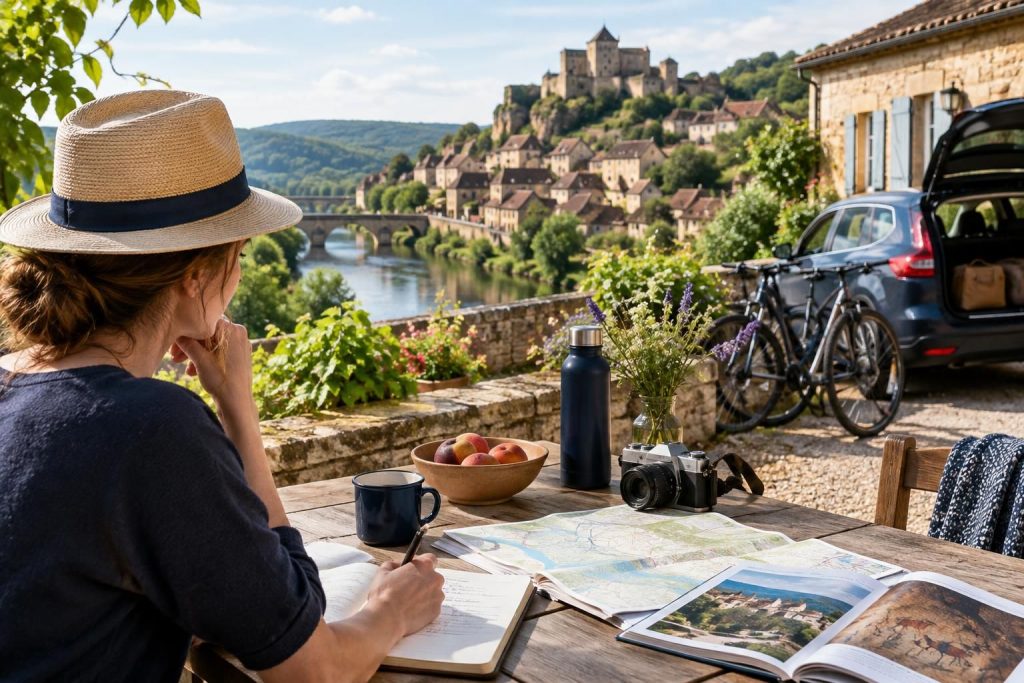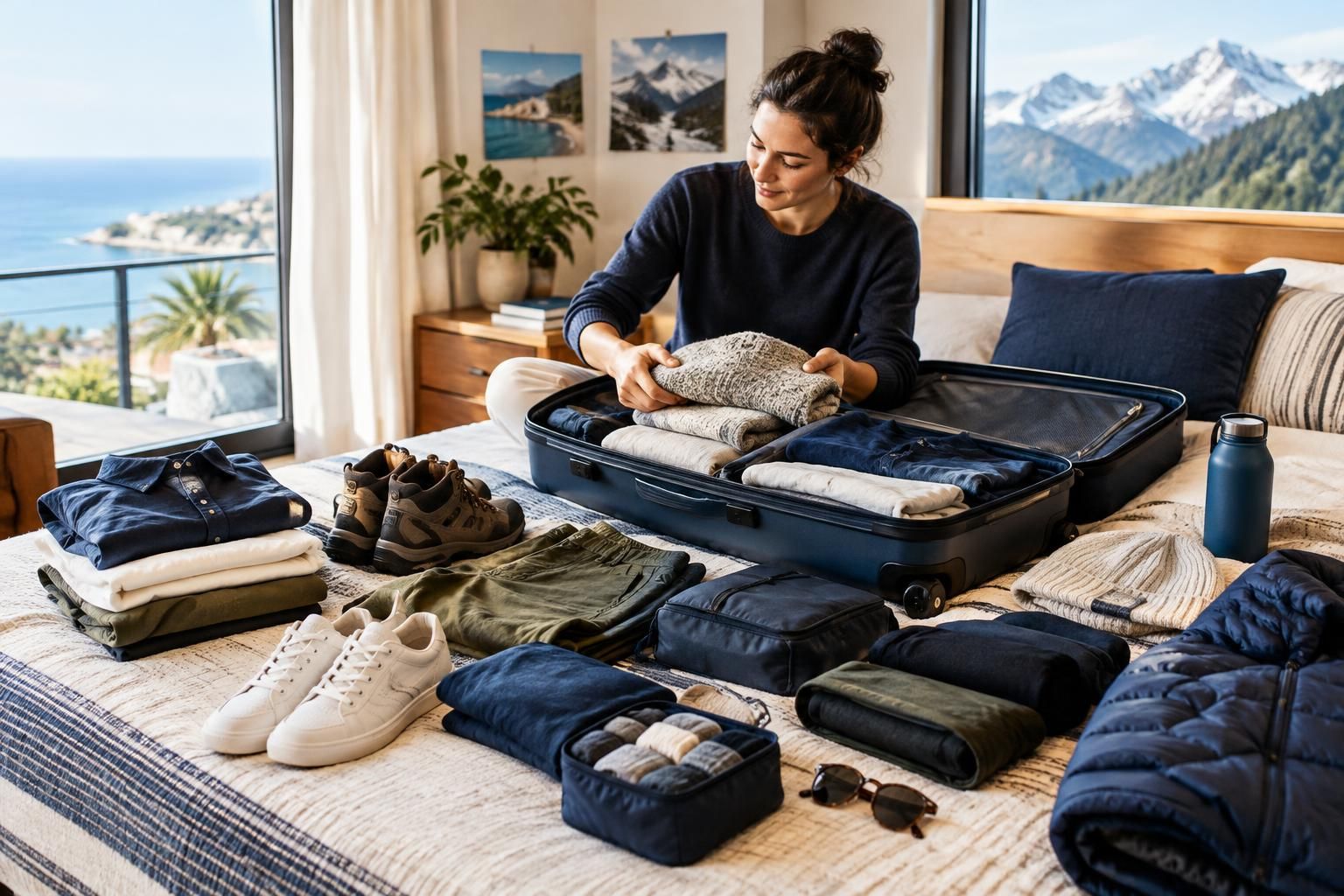
A trip that combines warm coastlines with cool highlands, or sunny afternoons with chilly evenings, can make one suitcase feel inadequate. The temptation is to pack a complete wardrobe for each setting. A more practical approach is to build one adaptable wardrobe, then add a few pieces for the conditions and activities that genuinely differ. The key is not making every item work everywhere. It is identifying what can overlap, what cannot and how much luggage those exceptions deserve.
Start with conditions and activities, not destination labels
Write down the settings you expect to encounter: a humid city, an exposed mountain viewpoint, an air-conditioned train or a breezy waterfront dinner. Labels such as summer destination or mountain town are too broad to produce a useful packing list. Consider temperature ranges, wind, rain, indoor environments and how long you expect to spend outside. Check forecasts closer to departure, while recognizing that conditions can still change.
Next, distinguish sightseeing clothes from activity equipment. A cool-weather city walk may need only an extra layer, while a technical outdoor excursion can require specific clothing and equipment. Confirm those needs with the relevant operator before deciding what to bring. If one optional activity creates most of your luggage burden, weigh its value against choosing an alternative.
Build a shared wardrobe before adding climate extras
Lay out the clothes you could wear in both settings. These might include comfortable trousers, short-sleeved tops, a lightweight long-sleeved shirt and clothing suitable for casual dinners. Choose pieces that combine easily rather than creating a separate outfit for every day. A limited color palette helps, but comfort and suitability matter more than perfect coordination.
Then add only the items that solve a distinct problem. For a warm coast and cool upland town, that could mean swimwear, one insulating layer and an appropriate outer layer. Test each addition against the shared wardrobe. If a bulky sweater works with only one outfit, a more versatile layer may earn its space more convincingly.
Use layers that each perform a different job
A useful layering system separates your next-to-skin clothing, insulation and protection from wind or rain. For ordinary sightseeing, a T-shirt, a warm midlayer and a suitable jacket can provide more combinations than several heavy tops. Choose the outer layer for the conditions you expect rather than assuming every lightweight jacket handles prolonged rain.
Try the complete combination at home. Sleeves should fit comfortably together, and the outer layer should close without compressing everything underneath. Also consider how you will carry removed layers during a warm afternoon. A jacket that fits in your day bag is easier to manage than one that becomes awkward luggage whenever the temperature rises.
Give footwear the strictest space test
Shoes can consume more room than the clothing that separates two climates. Start with a comfortable main pair suited to your dominant activity and expected surfaces. Add a second pair only when it serves a clearly different purpose, such as sandals for a beach stay or footwear required for a planned excursion. Do not assume one pair can reasonably handle every environment.
If formal dining or a special event requires different shoes, account for that explicitly rather than adding a vague just-in-case option. Wear the bulkiest practical pair during transfers and pack footwear so dirty soles stay away from clothing. Let damp shoes dry before enclosing them for an extended period whenever your itinerary allows.
Pack around the order of your trip
The sequence of destinations should influence your bag layout. If your trip begins somewhere warm, keep the clothes for that section accessible and group cooler-weather layers together. Reverse the arrangement if you start in the cold. Packing by climate module can be more useful than sorting everything strictly into shirts, trousers and underwear.
Keep a transition outfit accessible on travel days. Leaving a hot city in shorts may feel sensible until you arrive somewhere much cooler after dark. A reachable long layer and trousers can prevent a full suitcase search. Likewise, leave room to put away the jacket you needed at departure when you arrive in warmer conditions.
Resolve the bulky exceptions before closing your bag
Examine every item needed for only a small part of the itinerary. Depending on the activity and destination, renting specialist equipment or arranging suitable gear through an operator may be worth exploring. Confirm what is offered, its suitability and any collection arrangements before relying on it. Do not build your packing plan around an unconfirmed assumption.
Finally, pack the bag completely and test it as you will actually move it: lift it, carry it and check whether your day bag still fits essential layers. Compare its dimensions and weight with the requirements of your booked transport, including smaller connecting services. Leave some spare capacity for clothing that will not fold neatly in transit and for separating damp or dirty items.
Packing for two climates works best when you plan for specific differences rather than two imagined wardrobes. Start with shared clothing, add layers with distinct purposes and reserve space for genuine activity requirements. A useful final question is not whether an item might come in handy, but which part of the trip would be difficult without it. That distinction keeps your luggage manageable without stripping away the choices that make the journey comfortable.
AI-assisted evergreen travel guide. Featured image is an AI-generated illustration, not a specific product or booking.