A family heritage trip can begin with something small: a village name on a certificate, a photograph of a shopfront or a story about a relative’s journey. Turning that fragment into a holiday takes a different approach from building a conventional sightseeing itinerary. You are planning around places that may have changed, records that may be incomplete and discoveries that cannot be guaranteed. The most rewarding plan combines a manageable research goal with experiences that make the destination worthwhile in its own right.
Choose one question to guide the journey
Start by deciding what you most want to understand. Perhaps you want to see the landscape where a grandparent grew up, trace the move from a farming village to an industrial city or explore the port from which relatives departed. A clear question helps you distinguish meaningful stops from places that merely share a family surname.
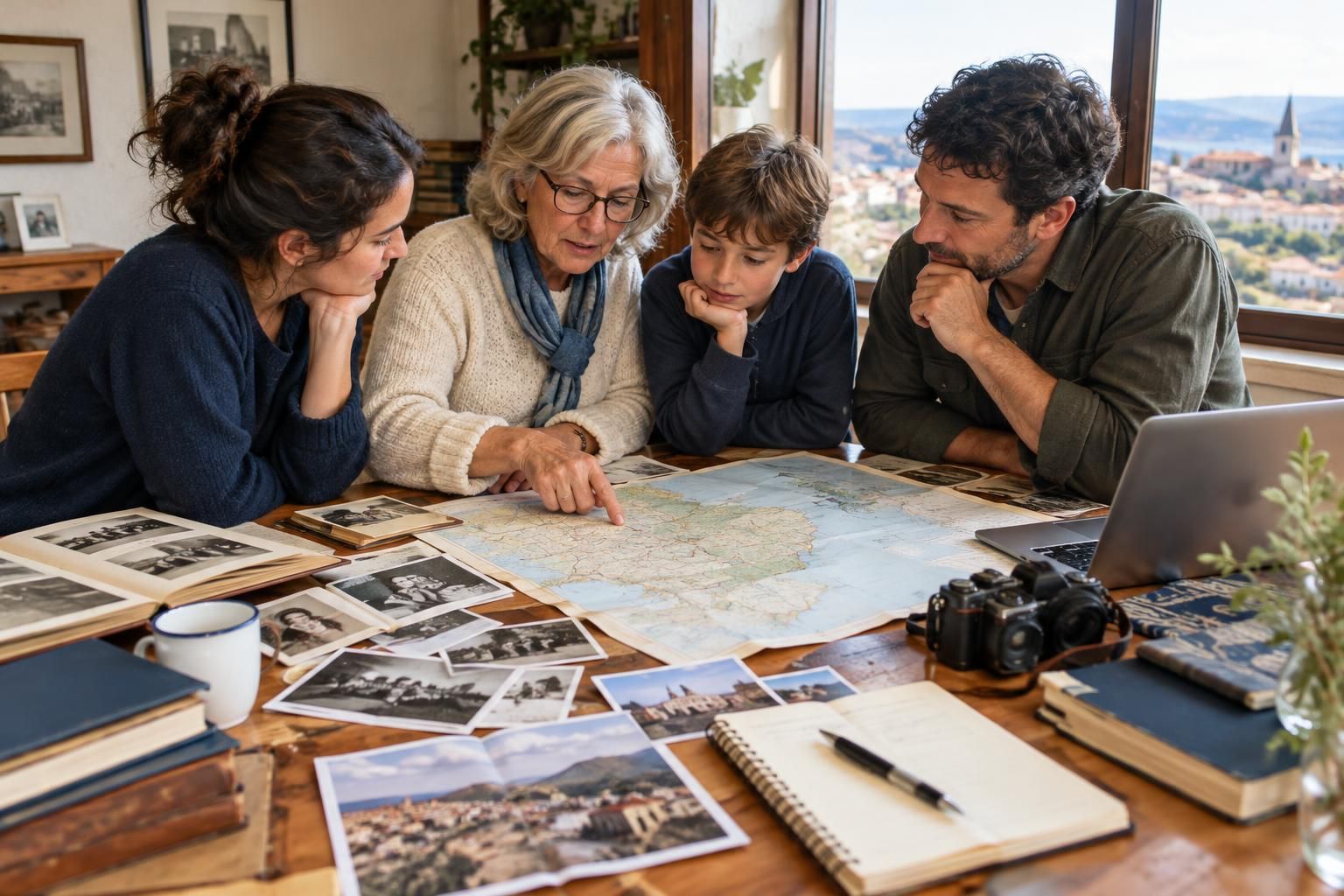
Create a short list with three categories: essential places, useful research leads and optional discoveries. Keep the essential list small enough that the trip still works if a record is unavailable or an address cannot be located. If several generations lived across a wide region, following one branch of the family may produce a more coherent journey than trying to include everyone.
Separate confirmed information from promising leads
Before booking around a location, gather the information you already have into one working document. Record names, approximate dates, place names and the origin of each detail. Label uncertain spellings and family recollections as leads rather than treating them as established facts. This makes it easier to explain your question to an archive or local researcher.
Historical place names, municipal boundaries and street layouts may differ from present-day ones. A familiar town name might also refer to more than one location. Compare the details carefully before committing to a remote detour. Bring copies of relevant photographs and documents rather than irreplaceable originals, and keep a concise version of your research accessible during the trip.
Build a route around geographic clusters
Plot the strongest leads on a map, then group nearby places. A regional base with several short excursions can be more practical than changing accommodation for every ancestral village. Choose that base for its transport connections, everyday services and appeal outside the research itself, not simply because it sits at the exact midpoint.
Consider the final stretch of each journey. Reaching a regional station does not necessarily solve the onward trip to a rural cemetery or hamlet. Establish a workable transport approach before making a stop essential. Where several places require complicated transfers, choose the one most closely connected to your central question rather than collecting brief visits.
Treat archives and local visits as separate planning tasks
A scenic walk through a family hometown and a productive archive session require different preparation. For a research visit, find out what material the institution holds and what arrangements apply to access, appointments, identification, photography and advance requests. Ask focused questions: a name, approximate period and type of record give staff a clearer starting point than a broad request to find your ancestors.
Allow research time its own space in the itinerary. Avoid placing your only archive opportunity between an arrival transfer and a long onward journey. If you arrange help from a guide, translator or researcher, agree on the purpose and scope beforehand. Local context, language support and document research are different services; decide which gap you actually need to fill.
Make ordinary places part of the experience
An exact house may no longer exist, and a surviving building may reveal little from the street. Broaden the experience to the surrounding environment: the distance between the village and its market town, the terrain around former workplaces or the route connecting a neighborhood with a station. These details can help you picture daily life without pretending the present is unchanged from the past.
Include experiences that connect with the region rather than claiming a proven family link. A local history museum, a landscape walk or a regional meal can add depth even when no personal record emerges. Keep private homes and working properties in perspective: a family connection does not make a place a visitor attraction. Plan for public viewpoints and request permission where appropriate.
Leave room for companions, surprises and reflection
Travel companions may care about the family story without wanting to spend every afternoon examining records. Agree on a few shared anchor experiences, then identify research sessions during which others can explore independently. A comfortable base with appealing alternatives helps prevent one person’s project from becoming everyone else’s obligation.
Reserve some unassigned time after your most promising visit, but avoid building the whole trip around a hoped-for encounter or breakthrough. If relatives or local contacts are involved, make invitations low-pressure and be clear about your interests. At the end of each day, note what you learned, what remains uncertain and where each photograph was taken. Distinguishing observation from interpretation will make your travel notes more useful later.
A successful heritage trip does not need to end with a newly discovered relative or a perfectly identified doorstep. It can offer a clearer sense of distance, landscape and the places behind familiar stories. Choose a focused question, prepare carefully for research and build a journey you would still value if some leads remain unresolved. That balance leaves room for both meaningful discovery and an enjoyable holiday.
AI-assisted evergreen travel guide. Featured image is an AI-generated illustration, not a specific product or booking.