A family heritage trip does not need to begin with a complete family tree. A village name, an old photograph or a relative’s memory can provide enough direction for a journey. The challenge is turning those clues into a realistic travel plan without assuming every question will have an answer. Start with a small geographic focus, separate confirmed details from possibilities, and build a trip that remains rewarding even if a particular building, record or family connection proves difficult to find.
1. Choose one question to shape the journey
Decide what you most want to understand. You might want to see the landscape where a grandparent grew up, trace a family’s move from a village to a port, or learn about an occupation that shaped earlier generations. One clear question makes it easier to choose destinations and avoid collecting unrelated stops.
Define success in terms you can influence. Walking through an ancestral town and learning about its history is a workable goal; finding a particular person or proving a family story may not be. If several relatives are traveling, ask each person to name one meaningful experience, then identify the priorities the group shares.
2. Turn scattered clues into a compact place file
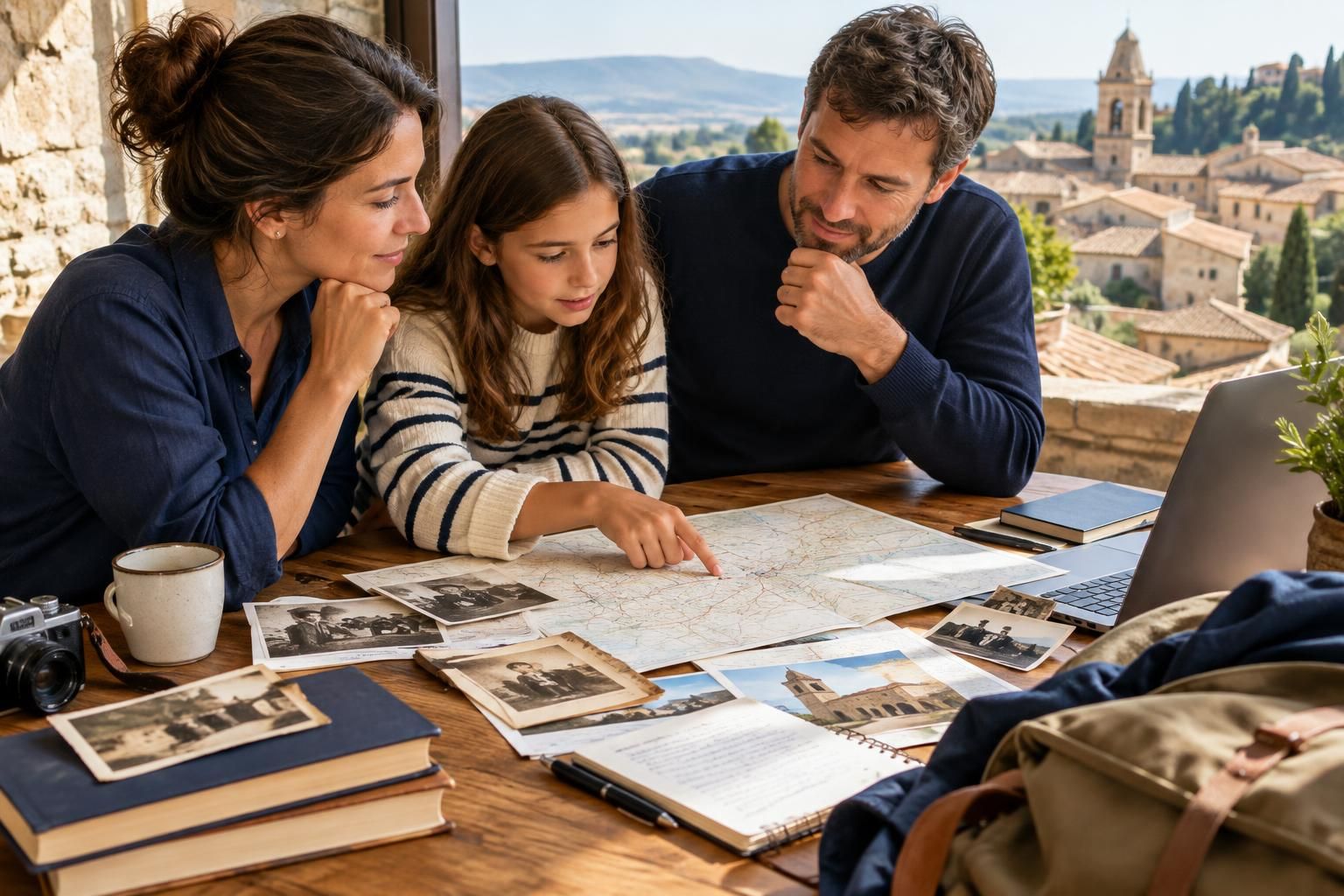
Gather copies of useful material before building the itinerary: letters, photographs, certificates, addresses and notes from family conversations. Keep originals at home where possible. For each clue, record where it came from and whether it is confirmed, uncertain or simply a family recollection. This prevents a frequently repeated story from becoming an assumed fact.
Create a short file for each possible destination. Include spelling variations, approximate dates, family names and any landmarks visible in photographs. A focused page is easier to use during a conversation than a large folder of unsorted material. Keep digital copies available offline and carry a few printed images if they could help explain what you are looking for.
3. Resolve place names before choosing accommodation
An old place name may refer to a village, district, parish or larger administrative area. Spellings and boundaries can change, and different places can share similar names. Compare several geographic clues, such as a nearby river, larger town or transport connection, rather than relying on a name alone.
Once you have a likely location, choose accommodation around the visits you can reasonably make. A nearby town may offer a more practical base than the ancestral village itself, particularly if your plans involve several settlements. Compare access to transport, meals and everyday services, and consider whether a car would solve a genuine access problem or merely add parking and navigation work.
4. Separate research appointments from sightseeing
Archives, local history collections, religious institutions and small museums may be relevant to your search, but do not build the trip around assumed access. Before committing to a journey specifically for records, ask the relevant institution about its access process, appointment arrangements, search tools and any restrictions on copying material. Prepare a concise request with names, dates and locations rather than a broad request to investigate your family.
Keep appointment days relatively light. Finding a record, interpreting handwriting or discussing a photograph can take more concentration than ordinary sightseeing. If language is likely to be a barrier, consider whether a local guide or interpreter would help, and clarify the task and fees before agreeing to assistance.
5. Make visits respectful and low-pressure
A building associated with your family may now be someone else’s home or workplace. Plan to appreciate what is visible from public areas, and ask permission before entering private property or photographing people. An old family connection does not create an entitlement to access.
If you hope to meet possible relatives, make contact in advance rather than arriving unannounced. Introduce yourself briefly, explain the possible connection and give the other person room to decline. Agree before sharing their stories, photographs or identifying information with a wider group. A warm exchange can be meaningful without becoming an investigation.
6. Build a trip that works even without a discovery
Pair family-focused stops with experiences that reveal the place itself. A regional museum, market visit, landscape walk or traditional craft demonstration can add context to names and dates. These activities also give companions something to enjoy if they are less interested in documentary research.
Leave unscheduled time near your most important location. You may want to revisit a street, follow up on a lead or simply sit with an unexpected feeling. Heritage travel can bring excitement, uncertainty or disappointment, sometimes on the same day. Avoid stacking every emotionally significant visit into one tightly managed itinerary.
7. Capture context, not just photographs
At the end of each day, note what you saw, whom you spoke with and which details remain uncertain. Label photographs with place names and dates while they are fresh in your memory. Keep documentary findings separate from your interpretations so that later discoveries can refine the story without confusion.
Choose a manageable way to share the journey afterward: a short illustrated account, a map with family locations or an album combining old and new photographs. Include unanswered questions rather than filling gaps with confident guesses. The result can become a useful starting point for another trip or for relatives exploring the same history.
The strongest heritage itinerary balances a focused search with an open-minded visit to a real, present-day place. Follow the clues carefully, arrange important access before traveling, and leave space for ordinary experiences beyond the family story. Even without a dramatic discovery, you can return with a clearer sense of geography, history and the questions worth pursuing next.
AI-assisted evergreen travel guide. Featured image is an AI-generated illustration, not a specific product or booking.