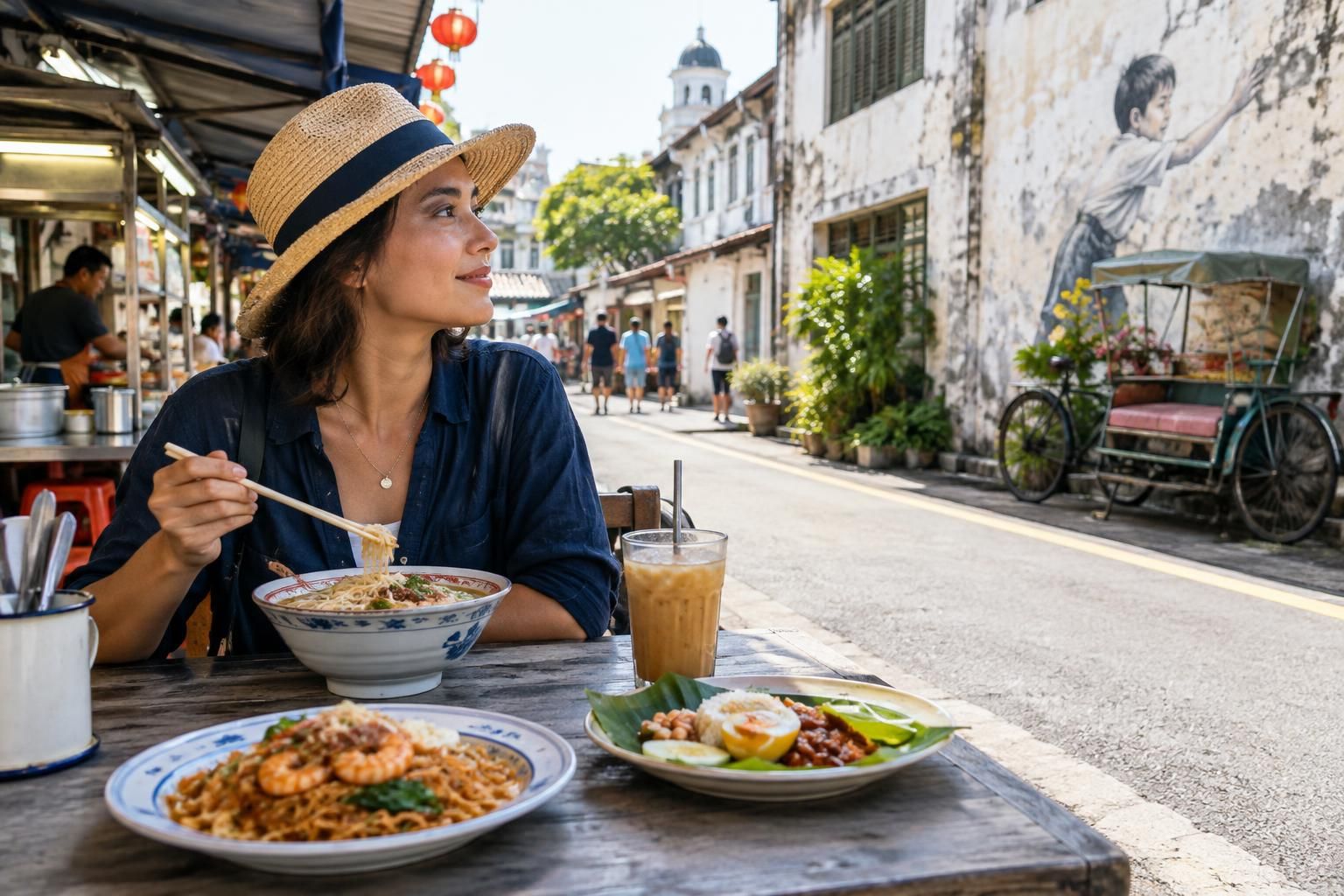
George Town, on the Malaysian island of Penang, rewards travelers who plan around meals without turning every meal into a mission. Its food traditions reflect Malay, Chinese, Indian and Peranakan influences, while its streets offer shophouses, places of worship, markets and waterfront corners to explore between stops. A satisfying visit needs more than a list of dishes: it needs manageable walking routes, a comfortable base and enough flexibility to follow your appetite. Use this approach to build a food-focused stay that still feels like a holiday.
Give the city enough time, but keep the plan light
Three or four nights make a useful starting point for travelers who want several meals in George Town without spending the whole visit eating. That creates room for an introductory walk, a few neighborhood outings and a slower period when heat or rain changes your plans. With only two nights, concentrate on the historic center rather than adding several excursions across Penang.
Plan one main food outing each day, then keep the remaining meals flexible. For example, pair a morning market visit with an afternoon of architecture and a simple dinner near your accommodation. On another day, make an evening hawker meal the focus and avoid a large late lunch. Arriving hungry enough to enjoy a dish is more useful than completing a long checklist.
Choose accommodation for the gaps between meals
A base in or near the historic center suits travelers who want to explore on foot and return to their room between outings. Look at the actual street setting rather than judging distance from a map pin alone. A room above a busy dining street offers a different experience from a courtyard guesthouse or a larger hotel on the edge of the center.
Prioritize effective cooling, a comfortable place to rest and clear information about stairs, windows and bathroom arrangements. Converted shophouses can be atmospheric, but layouts vary. Travelers sensitive to noise should ask about the room’s position within the building. If much of your itinerary centers on George Town, consider whether a beach-based stay would create more transfers than you want.
Build a tasting list around contrasts
Choose a handful of contrasting dishes rather than searching for one definitive version of everything. Char koay teow offers stir-fried noodles; Penang-style assam laksa brings a sour, fish-based broth; nasi kandar combines rice with a choice of curries and accompaniments. Roti canai, served with curry or other accompaniments, offers another texture and meal format.
Balance substantial meals with smaller tastes, such as a piece of kuih or a bowl of cendol, a dessert commonly made with shaved ice, coconut milk, palm sugar and green jelly strands. Sharing can create variety, but agree on portions before ordering. Leave room to repeat a favorite, too: a second encounter can be more rewarding than adding another unfamiliar dish.
Make ordering easier without overplanning
Hawker centers, coffee shops and individual stalls can have different ordering arrangements. Before sitting down, pause to see whether people order at a counter, approach individual vendors or receive table service. Note your table number if there is one, and ask how payment works rather than assuming every venue follows the same system. Carry a practical mix of payment options, including smaller cash denominations.
If you have dietary requirements, prepare short, specific questions about ingredients. Meat, seafood, stocks, sauces and garnishes may not be obvious from a dish’s name or appearance. Photographs and translation tools can help start a conversation, but they do not establish what a meal contains. If you cannot clarify an essential requirement, choose another dish or venue rather than relying on a guess.
Connect meals with compact neighborhood walks
Use food stops to structure short loops through the city rather than repeatedly crossing town. A heritage-center walk might combine shophouse streets, the area around Armenian Street and a waterfront visit. Another outing could focus on Little India and nearby streets. Choose two or three non-food stops per loop so there is time to notice buildings and street life.
Treat places of worship and residential areas as more than backdrops. Follow posted guidance, ask before photographing people closely and avoid blocking doorways while framing pictures. Around the clan jetties, remember that parts of the waterfront are living neighborhoods. A modest route with time to pause often gives a better sense of George Town than a crowded sightseeing list.
Plan for heat, rain and an optional change of scene
Build outdoor walks into the cooler parts of your day where possible, and leave a generous indoor break between outings. Pack light clothing, comfortable footwear, sun protection and a compact rain layer or umbrella. Keep a few optional indoor activities in reserve, such as a museum visit or a relaxed café stop, and check access details before setting out.
For a longer stay, reserve one day for a different side of Penang, such as a hill outing, gardens or coastal scenery. Group activities geographically rather than attempting to cover the island between meals. Check transport arrangements and attraction access close to the day, and leave breathing room before onward travel. There is no need to add an excursion if another slow day in George Town appeals more.
A good food-focused George Town trip balances curiosity with appetite. Choose a convenient base, organize short neighborhood outings and give each day one culinary anchor rather than a demanding schedule. The spaces between meals matter: they let you rest, explore and decide what you genuinely want to try next.
AI-assisted evergreen travel guide. Featured image is an AI-generated illustration, not a specific product or booking.