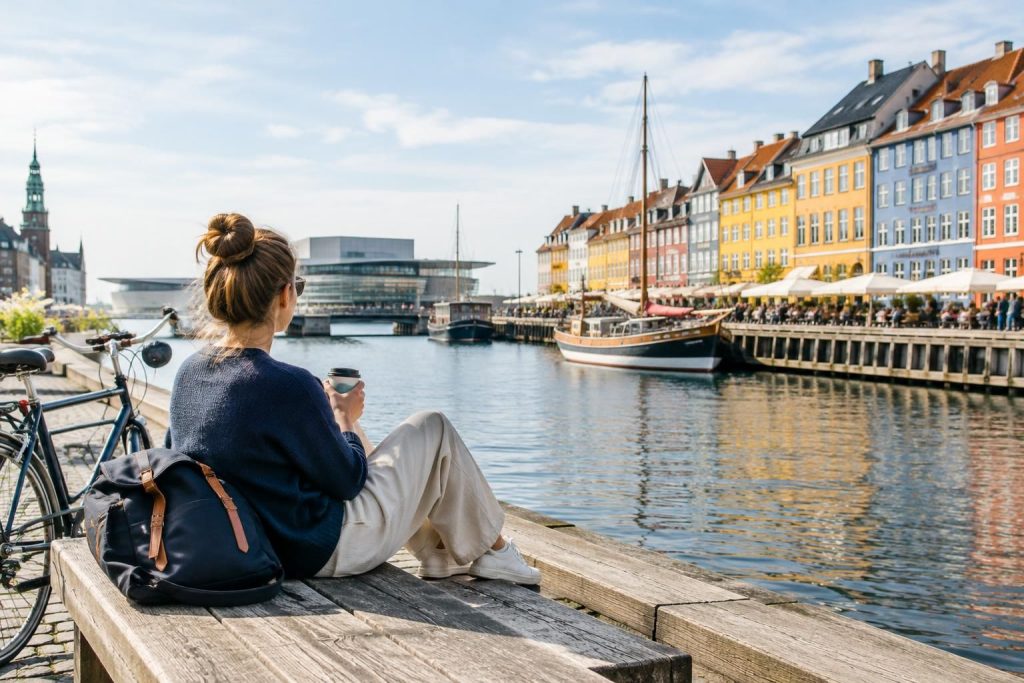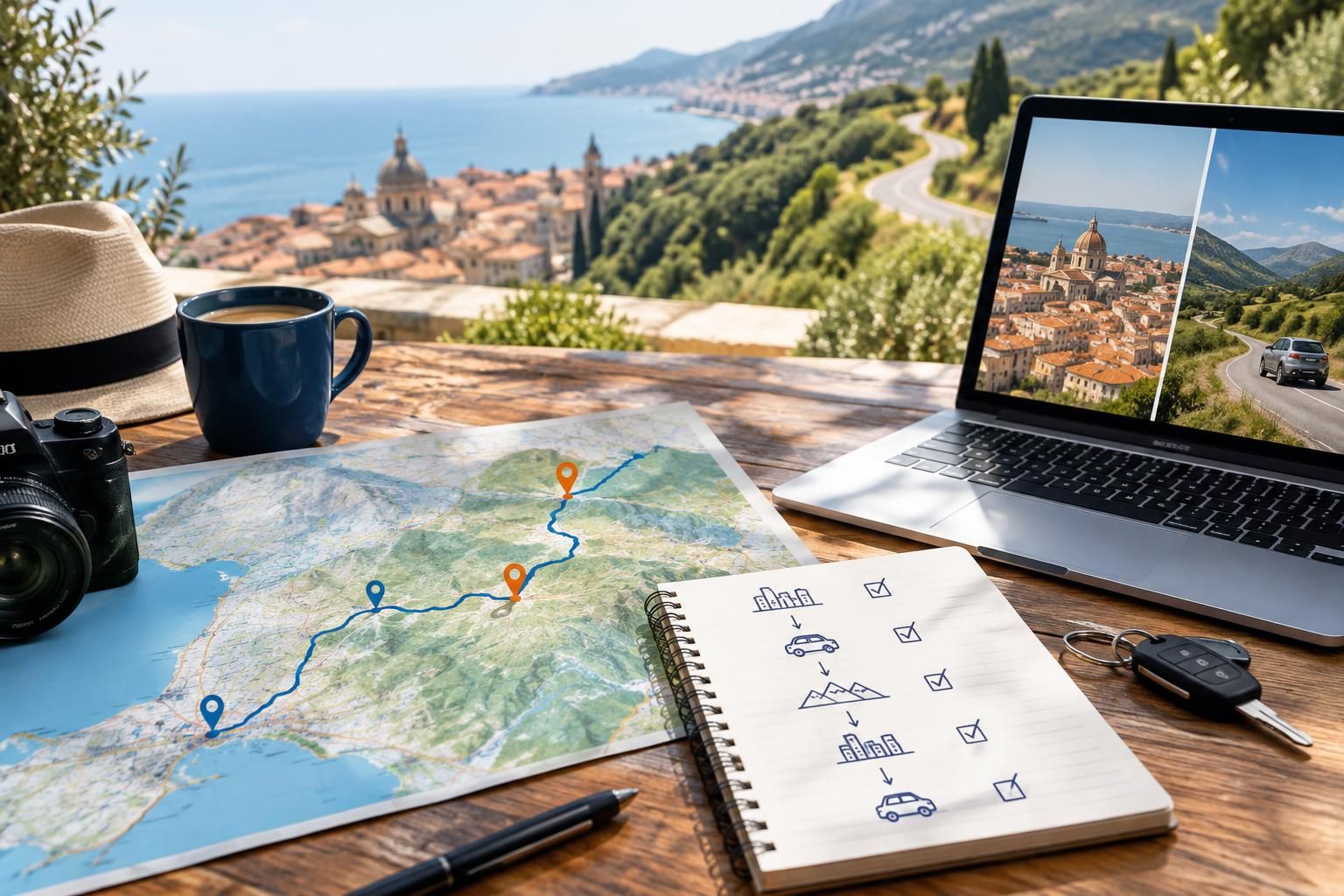
A holiday does not have to be entirely car-free or built around driving every day. A few well-placed rental days can connect village stays, rural walks or scattered beaches, while trains and local transport handle the urban parts. The challenge is making the change between transport modes feel straightforward rather than adding another chore. Start with the places you want to experience, identify where a car makes a meaningful difference, and shape the route around that limited window.
Separate useful driving days from unnecessary ones
List your intended stops and label each one as walkable, reachable by public transport, or easier with a car. Think beyond the main destination: a town might have a railway station, while the farmhouse you want to stay in sits well outside it. Equally, a coastal resort may offer enough beaches and restaurants on foot that a car would spend most days parked.
Look for a continuous stretch where driving unlocks something specific. That could be three nights among small villages or a countryside stay between two cities. If the only reason for renting is one remote excursion, compare a day rental, organized outing or booked transfer instead. A car should solve a clear access problem, not become the default because one afternoon is awkward.
Shape the route around a clean handover
A simple structure is city first, countryside second, then another transport-connected base. Spend the urban days without a vehicle, collect it as you leave, and return it before settling into the next city. Another option is a rural loop from one regional hub, with luggage stored or accommodation booked there before and after the driving section.
Sketch both versions before choosing. A loop may involve some repeated road but simplify collection and return. A one-way route may avoid backtracking but introduce different rental conditions and costs. Do not judge solely by the line on the map: include the journeys to the rental office and onward from the return location.
Compare collection locations door to door
Airport, station and neighborhood rental locations create different travel days. An airport collection can make sense immediately after a flight, but returning there from a city hotel solely to collect a car may add an unnecessary detour. A station location might fit naturally after a rail journey, while an outer-city office could place you closer to the road out.
For each option, map the full sequence: leave accommodation, reach the office, complete collection, load luggage and drive to your first stop. Check the intended location's operating arrangements and return process before committing. Leave breathing room around any fixed train or flight rather than treating the advertised driving time as the entire transfer.
Choose accommodation that suits each transport phase
Use different accommodation priorities for different parts of the holiday. During car-free days, favor convenient access to the places you will visit and the transport you will use. During rental days, look at vehicle access, parking arrangements and the practicality of carrying bags from the parking space to your room.
A picturesque old-town stay can still work with a car, but understand the approach before booking. Ask whether parking is on site or elsewhere, whether it needs arranging, and how unloading works. For rural accommodation, consider evening plans too: somewhere secluded may suit quiet dinners at home better than spontaneous meals in several neighboring villages.
Compare the complete cost, not just rental days
Build two rough totals: keeping a car throughout and renting only for the driving section. For both, include the relevant rental quote, fuel or charging, parking and any expected road charges. For the partial-rental version, add rail fares, local journeys and transfers needed to reach the collection point. Compare equivalent vehicle sizes and rental terms.
A shorter rental is not automatically the cheaper choice, especially if it requires costly transfers or different collection and return locations. It may still be worthwhile for the convenience of car-free city days. Keep any deposit or temporary payment hold separate from the holiday's spending total, while allowing for its effect on your available funds.
Keep the driving window realistic
Avoid filling every rental day with distant stops simply to make the car feel worthwhile. Pick one main outing or area for each full day, then add optional stops nearby. A village market, a landscape walk and a long lunch can justify having a car without requiring a large daily distance.
Treat collection and return days as lighter travel days. Choose a vehicle that accommodates passengers and bags comfortably, and review the rental terms, required documents and any destination-specific driving requirements before booking. For an electric vehicle, consider charging access alongside the route and accommodation rather than assuming every overnight stop will provide it.
Plan the final hour with the car
Work backward from the return location. Decide where you will refuel or charge as required by the agreement, where passengers and luggage will go, and how you will reach the next accommodation or departure point. Save the return instructions where you can access them without relying on a connection.
Keep the handover free of ambitious sightseeing. Allow time to remove belongings and complete the return process before starting the next leg. If the following journey is time-sensitive, consider returning the car the previous day and spending the final night somewhere connected to your departure point.
The best partial-car itinerary puts each form of transport where it earns its place. Walk and use public transport where they make the day simpler; drive where distance and scattered destinations make flexibility valuable. Once the collection, accommodation and return arrangements fit together, a few rental days can open up a much broader holiday without making the whole trip revolve around a vehicle.
AI-assisted evergreen travel guide. Featured image is an AI-generated illustration, not a specific product or booking.