A museum-focused trip can take you deep into a destination’s art, history, design or everyday life. It can also become a blur of display cases if you try to see every important collection. The most useful plan is not the one with the longest museum list, but the one that gives you time to notice, understand and remember what interests you. Start with a few strong priorities, connect them to the surrounding city and treat your attention as a limited resource.
Choose a thread rather than a checklist
Give the trip a loose theme before choosing individual museums. You might follow maritime history in a port city, explore textiles and fashion, or compare architecture with decorative arts. A theme makes decisions easier without requiring every visit to cover the same subject. It also helps you distinguish between a collection you genuinely want to explore and a famous institution you feel obliged to include.
Write down three questions you would enjoy answering. For a design-focused trip, these might concern local materials, domestic life and the relationship between craft and industry. Use those questions to select one anchor museum and a few complementary experiences. A historic house, workshop visit or walk through a relevant neighborhood can add more depth than another large collection.
Match your museum list to your available attention
Classify potential visits as anchors, shorter stops or optional extras. An anchor deserves your freshest attention and a substantial part of the day. A shorter stop might center on one collection or a compact specialist museum. Optional extras should be genuinely expendable, not obligations waiting to make you feel behind. For a four-day break, two anchors and a couple of smaller possibilities can provide plenty of substance.
Estimate visits from your habits rather than the size or reputation of the institution. Someone who reads labels closely needs a different allowance from someone who prefers a visual overview. Include time for entering, storing belongings, finding the right galleries and taking a break. Avoid planning two demanding collections back to back simply because their buildings are close together.
Give each visit a clear shape
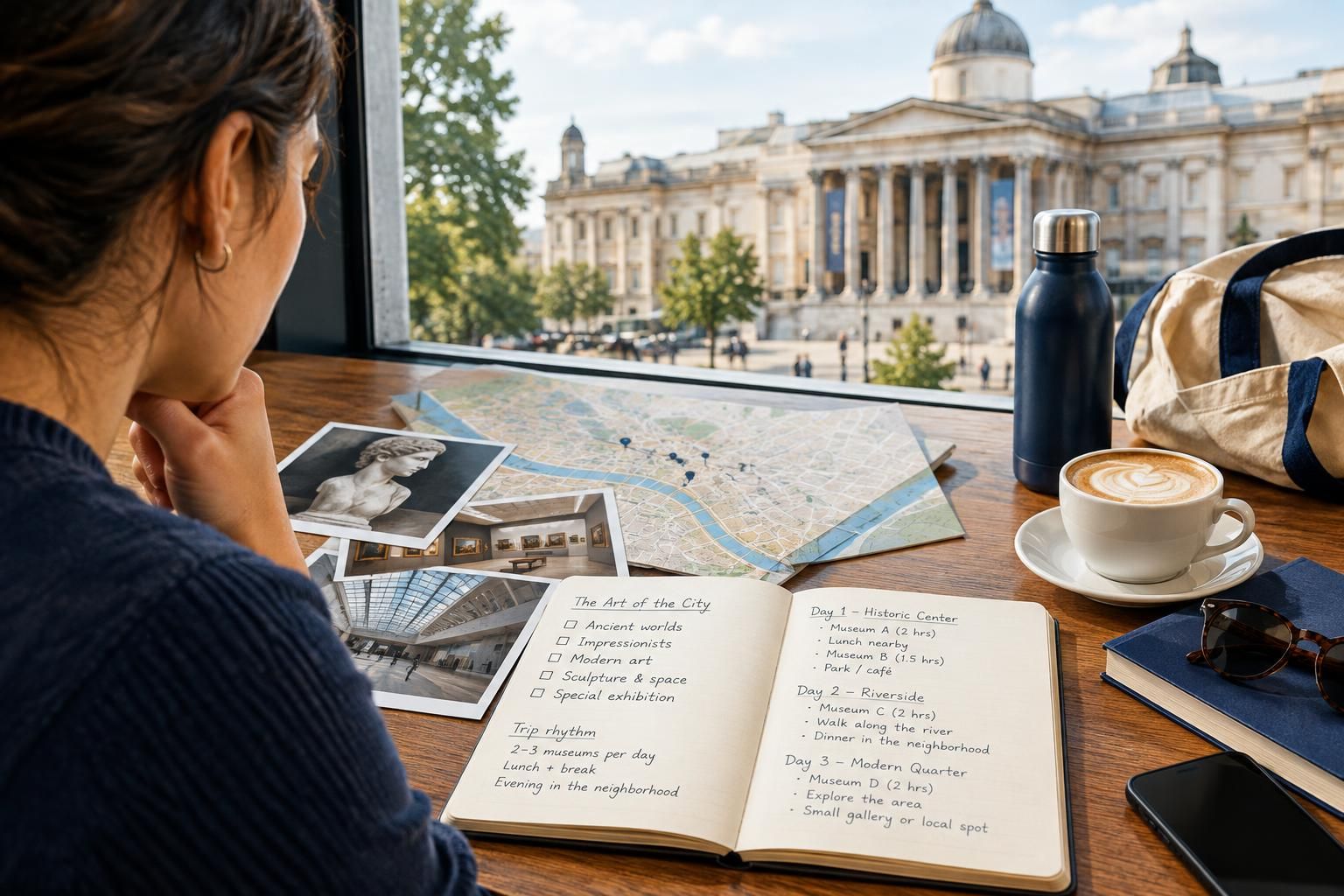
Before arriving, identify a small number of priorities: perhaps one period, one gallery and a handful of objects. These provide a satisfying core even if you leave earlier than expected. Keep the rest of the collection as an invitation rather than a task. For a large art museum, you might concentrate on landscape painting, then browse an unfamiliar department if your interest holds.
Choose a stopping point as well as a starting point. That could be the end of a particular collection or the moment you notice yourself scanning labels without absorbing them. A break may restore your attention, but leaving can also be the right decision. If you are considering returning on another day, check the ticket’s entry conditions rather than assuming repeat admission is included.
Arrange days around neighborhoods and contrasts
Group visits geographically, but balance proximity against repetition. Two nearby museums devoted to similar material may be less rewarding on the same day than one museum followed by a garden, market or waterfront walk. Look for experiences that let you encounter related ideas outside a display case, such as noticing building materials after a decorative arts collection.
Choose accommodation for the whole trip rather than for a single headline museum. Consider routes to several planned stops, places to eat and the practicality of returning for a break. Sketch a sample day from your prospective neighborhood, including the journey home. A seemingly convenient base may be less useful if each evening requires another complicated transfer.
Check the details that can change your plan
Before committing to your itinerary, check each institution’s published visiting information for your intended dates. Pay particular attention to admission arrangements, temporary exhibitions, gallery closures and whether separate reservations are involved. Do not build a trip around an individual object without checking whether its display is confirmed. Collections can change, and a familiar image does not establish what will be on view.
If seating, step-free access or a quieter environment matters to your visit, investigate those details early. A building’s general accessibility description may not answer questions about a particular gallery or route. Also check bag and photography policies before deciding what to carry. Keep booking confirmations and essential visit notes together so that practical details do not compete with the experience.
Leave space to connect what you have seen
Allow an unstructured interval after your most important visit. Lunch, a short walk or time in a square gives you a chance to talk or think before taking in more information. If traveling with someone whose interests differ, agree on a meeting place and let each person choose some galleries independently. Sharing one memorable discovery afterward can be more enjoyable than staying together throughout.
Keep a small record rather than trying to document everything. Note one object that surprised you, one idea you want to explore and one connection to the destination outside the museum. Add a photograph only where permitted and useful. These notes can guide a later visit or reading choice, while helping separate the trip’s highlights from the mass of material you encountered.
A rewarding museum trip leaves you with connections, not just completed visits. Choose a clear thread, protect time for your strongest interests and let the destination provide context beyond the galleries. When your plan includes permission to skip, pause and change direction, each museum has a better chance of becoming a distinct and memorable part of the journey.
AI-assisted evergreen travel guide. Featured image is an AI-generated illustration, not a specific product or booking.