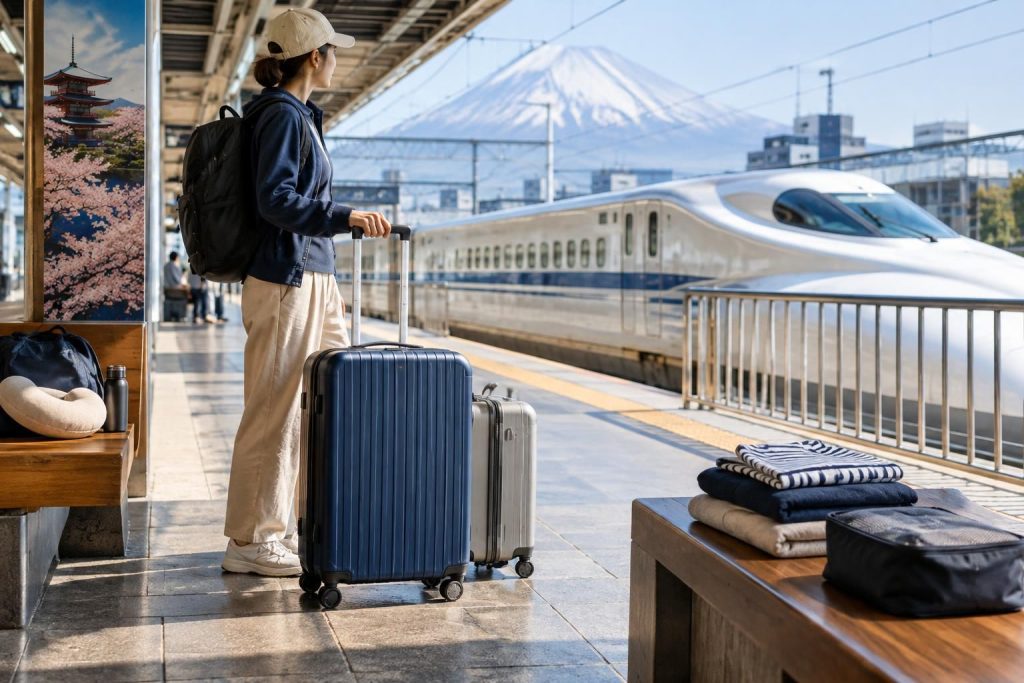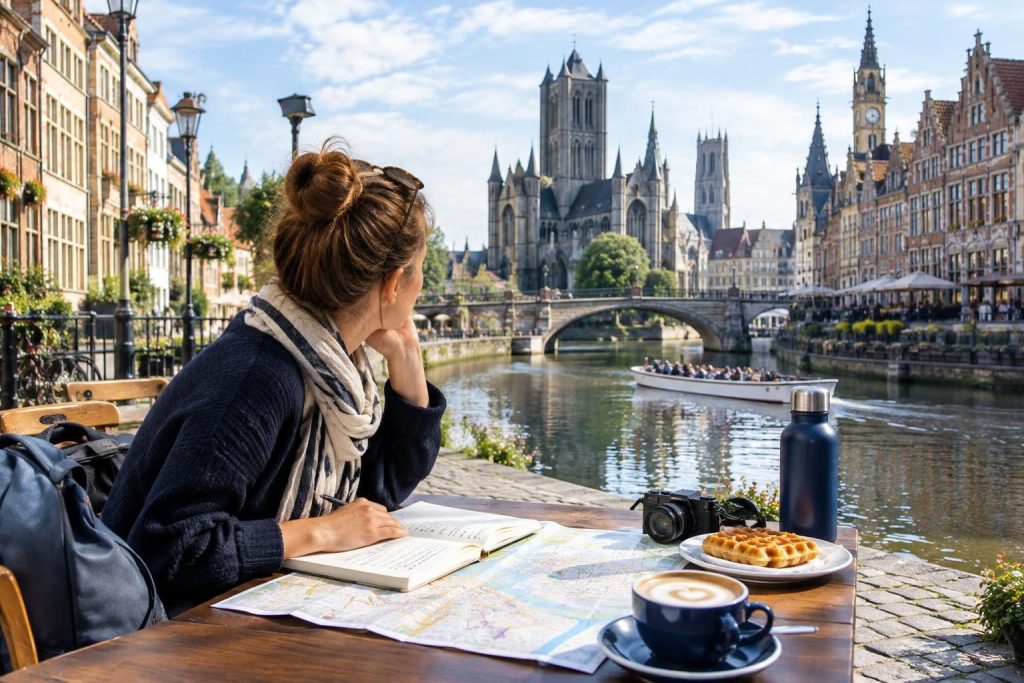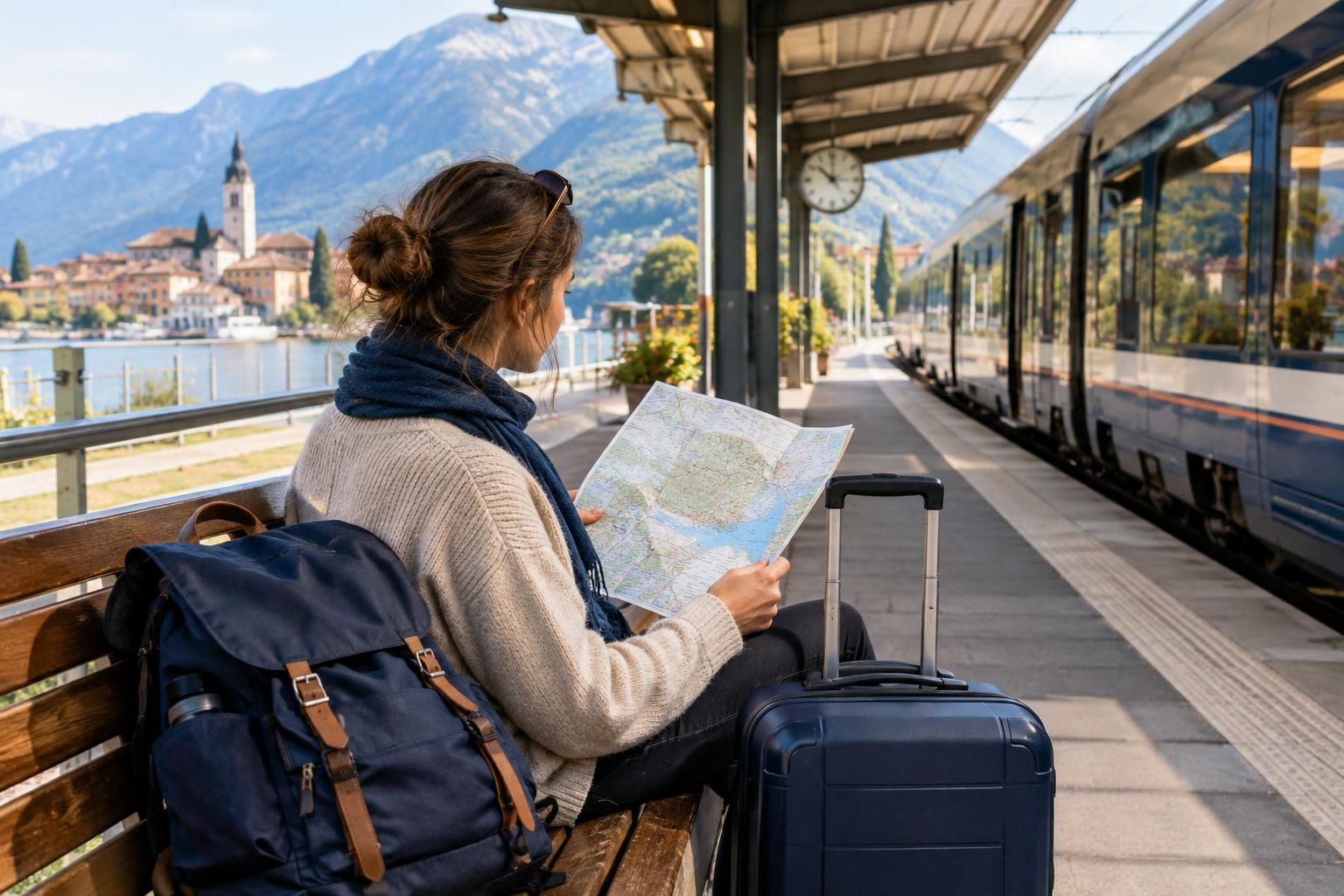
A train-based holiday can turn the journey into part of the experience: a changing landscape outside the window, an afternoon in a smaller town and fewer decisions about driving or parking. But a route that looks elegant on a map can become tiring when it involves repeated packing, awkward connections and stations far from where you want to stay. The key is to plan around complete travel days rather than train rides alone. Start with the places you genuinely want to explore, then build a route that gives both the journeys and the destinations enough room.
Choose a route shape before choosing every stop
Begin with two or three anchor destinations rather than a long list of stations. These should be places where you have a clear reason to stay, such as architecture, coastal walks, food markets or access to the countryside. Then consider whether a linear route, a loop or one main base best connects them.
A linear route can work well when you arrive in one city and leave from another. A loop may suit a return journey through the same gateway, while a single base reduces packing and hotel changes. Avoid adding a destination simply because the train passes through it. Each overnight stop creates work beyond the journey itself, including finding your accommodation and getting settled.
For example, a city, a smaller regional town and a lakeside stay can provide more variety than several similar cities visited in quick succession. Choose contrasting experiences, not just more dots on the map.
Judge each journey from accommodation to accommodation
The time on the train is only one part of a moving day. Add the trip to the departure station, time to find the platform, any changes, the onward journey from the arrival station and the process of leaving or collecting luggage. A short rail segment can still consume much of a morning.
Check the exact station names when comparing routes. A city may have several stations, and a connection described as being in the same city may require a separate transfer. Station location also affects accommodation choices: staying beside a station is not automatically convenient if most of your activities are elsewhere.
Give each moving day a modest destination plan. A neighborhood walk and an uncomplicated meal are easier to enjoy than a tightly timed attraction immediately after arrival. Treat anything extra as a bonus rather than a commitment.
Make connections suit your travel style
A connection should allow time for the people taking it, not just look possible on paper. Consider luggage, unfamiliar signs, stairs, traveling with children and whether you will need to buy food or use facilities. If changing stations is involved, account for that journey separately.
Where practical, compare a direct service with a faster-looking itinerary that requires several changes. Fewer transfers may be worth a longer ride because you avoid repeatedly gathering bags and locating another platform. This matters especially on days when you are already tired from an early departure.
Before committing to an important connection, understand what the ticket arrangement means if an earlier service is delayed. Separate bookings can have different conditions from a connected itinerary. Check the relevant terms rather than assuming every missed onward journey will be handled in the same way.
Match overnight stays to the effort of moving
Frequent one-night stops can make a rail holiday feel like a sequence of check-ins. Give your main destinations enough time for at least one day without luggage or a departure deadline. Shorter stays can still make sense when a place has one clear attraction or naturally breaks up a longer journey.
Consider using a well-connected town as a base for nearby excursions. This lets you explore with a small day bag while leaving your main luggage behind. However, compare the repeated out-and-back travel with the effort of changing accommodation; a base loses its advantage if every outing involves substantial backtracking.
Keep your final overnight location practical for the journey home. If reaching your departure point requires several rail connections, consider moving closer beforehand rather than making the last day depend on every stage working neatly.
Pack for platforms, luggage racks and short transfers
Choose luggage you can move and lift yourself comfortably. You may encounter steps, uneven paving or storage away from your seat. Test your packed bag at home by carrying it a short distance and lifting it onto a stable raised surface. If that feels difficult, reduce the load before departure.
Keep tickets, identification, a charging cable, a warm layer and a snack accessible without opening your main bag. A small pouch or day bag helps you keep essentials together while larger luggage is stored. Avoid spreading belongings across several loose bags that are easy to overlook when changing trains.
Check luggage and special-item conditions for the services you intend to use, particularly for bicycles or bulky equipment. Do not assume that arrangements on one operator apply throughout a multi-country journey.
Compare tickets against the route you actually want
Build a workable itinerary before deciding whether individual tickets or a rail pass suits it. Compare the complete cost, including any required reservations and optional extras you intend to use. A pass is not automatically the simplest choice, and individual tickets are not automatically restrictive; the conditions matter.
For each significant journey, note whether the ticket is tied to a particular departure, whether a seat reservation is required and what changes are permitted. Keep the necessary tickets and reservation details accessible for inspection, including an offline version where supported.
Finally, leave some flexibility in the holiday itself. An uncommitted afternoon can absorb a slower journey or become time for an unexpected discovery. The best route is not the one that extracts the most travel from a ticket, but the one that supports the trip you want.
A satisfying rail holiday depends on rhythm: worthwhile stops, manageable moving days and enough time to settle into each place. Plan the route first, assess journeys beyond their advertised duration and choose luggage and tickets that fit your needs. With fewer unnecessary transfers and less pressure on arrival days, the train can become an enjoyable thread connecting the holiday rather than the task that organizes every hour.
AI-assisted evergreen travel guide. Featured image is an AI-generated illustration, not a specific product or booking.