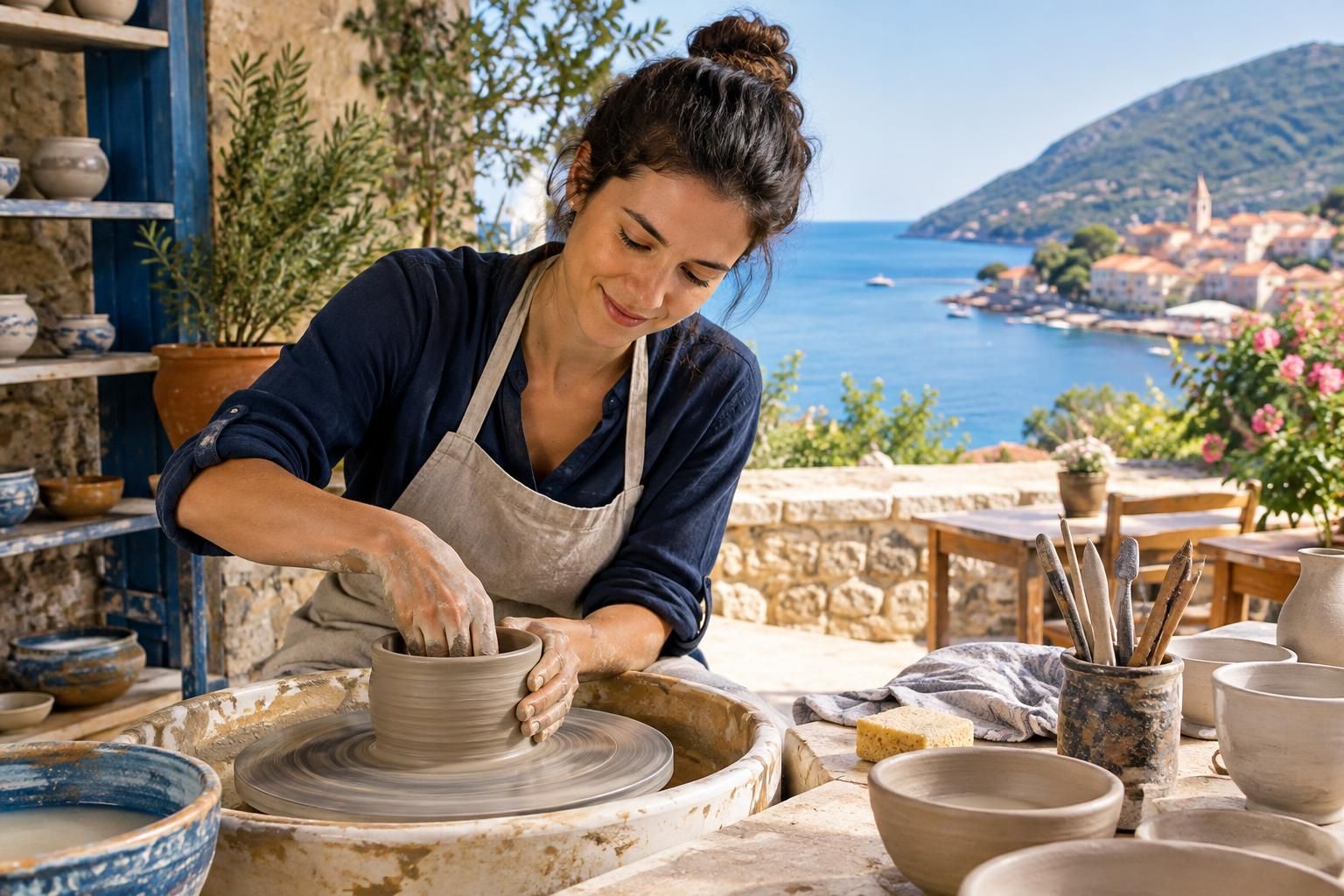
A hands-on course can give a trip a satisfying sense of purpose. Instead of moving between sights, you spend part of each day learning something connected to a place: shaping clay, preparing regional dishes, sketching buildings or working with textiles. The challenge is making the learning fit the holiday rather than letting it consume every available hour. A good plan starts with the kind of experience you want, then accounts for the course schedule, accommodation, equipment and time to explore.
Decide whether the skill or the destination comes first
Start by choosing your main priority. If you want to develop a particular skill, compare suitable courses before committing to a destination. A beginner seeking structured instruction needs something different from an experienced hobbyist looking for independent studio time. If the destination matters more, look for an introductory workshop that adds depth without dictating the whole trip.
Write a simple goal, such as learning three useful cooking techniques or becoming comfortable sketching outdoors. This helps you judge whether a short session, several half-days or an intensive week is the better fit. For a first learning holiday, a modest commitment leaves room to discover whether you enjoy practicing the activity away from home.
Look closely at what the course actually involves
A course title rarely tells you enough. Ask about the intended experience level, teaching language, group format and balance between demonstrations and individual practice. Find out whether everyone works on the same project or receives guidance suited to their interests. A beautiful setting does not compensate for instruction that is too advanced or too basic.
Clarify practical demands as well. Outdoor painting might involve carrying materials between locations, while a craft workshop could require long periods of standing or detailed handwork. Ask about breaks, seating and any access needs that affect your participation. If a companion is joining, assess suitability separately rather than assuming the same class will suit both of you.
Check what the fee includes and what remains your responsibility. Materials, equipment use, meals, transport to field locations and finishing work may be handled differently. Read the cancellation terms before tying other bookings to the course.
Build the itinerary around your likely energy level
Treat teaching hours as active travel time, not as a small appointment inside an otherwise empty day. Learning unfamiliar techniques requires concentration, and a full-day course can leave little appetite for an ambitious evening itinerary. Pair intensive sessions with easy dinners, short walks or unstructured downtime.
For example, a seven-night trip might include an arrival day, three mornings of instruction, two open exploration days and a final day for collecting work or revisiting a favorite place. Half-day sessions can leave afternoons free, but avoid assigning a major excursion to every gap. Allow for practice, conversations and tasks that take longer than expected.
Where possible, arrive before the first session rather than planning to step straight from a long journey into class. Leave some space after the final session, too, especially if your work needs finishing or collection.
Choose accommodation for the daily routine
Once the teaching location is clear, consider how you will reach it each day. A charming rural stay may be awkward if every morning begins with a complicated transfer. Compare the door-to-door journey, including walking with supplies, rather than relying only on distance. Ask whether all sessions start at the same location.
Match the room to the activity without assuming it can become a studio. A desk may be useful for reviewing notes or sketching, but messy materials, strong odors and equipment can be unsuitable for guest accommodation. If you want extra practice, ask about designated workspace. For a cooking course, a kitchenette might be useful, but only if you genuinely want more cooking after class.
Make equipment and finished work part of the plan
Before packing specialist supplies, request a precise list of what is provided and what you need to bring. Borrowing course equipment can simplify transport, while familiar personal tools may matter more to an experienced participant. Check applicable transport restrictions for unusual items rather than assuming they can travel in your usual bag.
Think about the return journey before making something bulky or fragile. Pottery may need further processing; artwork may need drying or protective packaging. Ask when finished pieces can be collected and whether delivery is an option, then consider the cost and uncertainty involved. A small textile project or sketchbook may be easier to bring home than a large object.
Let the learning shape a few independent experiences
Choose a handful of outings that deepen what you are learning. A market visit can complement a cooking class; a ceramics collection can give context to studio work; a slow neighborhood walk can provide subjects for sketching. Keep these outings selective so the trip does not become a second syllabus.
Leave room for interests unrelated to the course, especially when traveling with someone who is not participating. Agree on a few shared meals or excursions and allow separate daytime plans. Before leaving, note a small next step you can realistically try at home. Continuing one technique is often more rewarding than returning with an ambitious project you never start.
A successful learning holiday gives both the course and the destination enough room. Choose instruction that suits your level, make the daily journey straightforward and account for materials before you pack. With a little breathing space around the lessons, you can return with a useful skill and memories that extend well beyond the classroom.
AI-assisted evergreen travel guide. Featured image is an AI-generated illustration, not a specific product or booking.