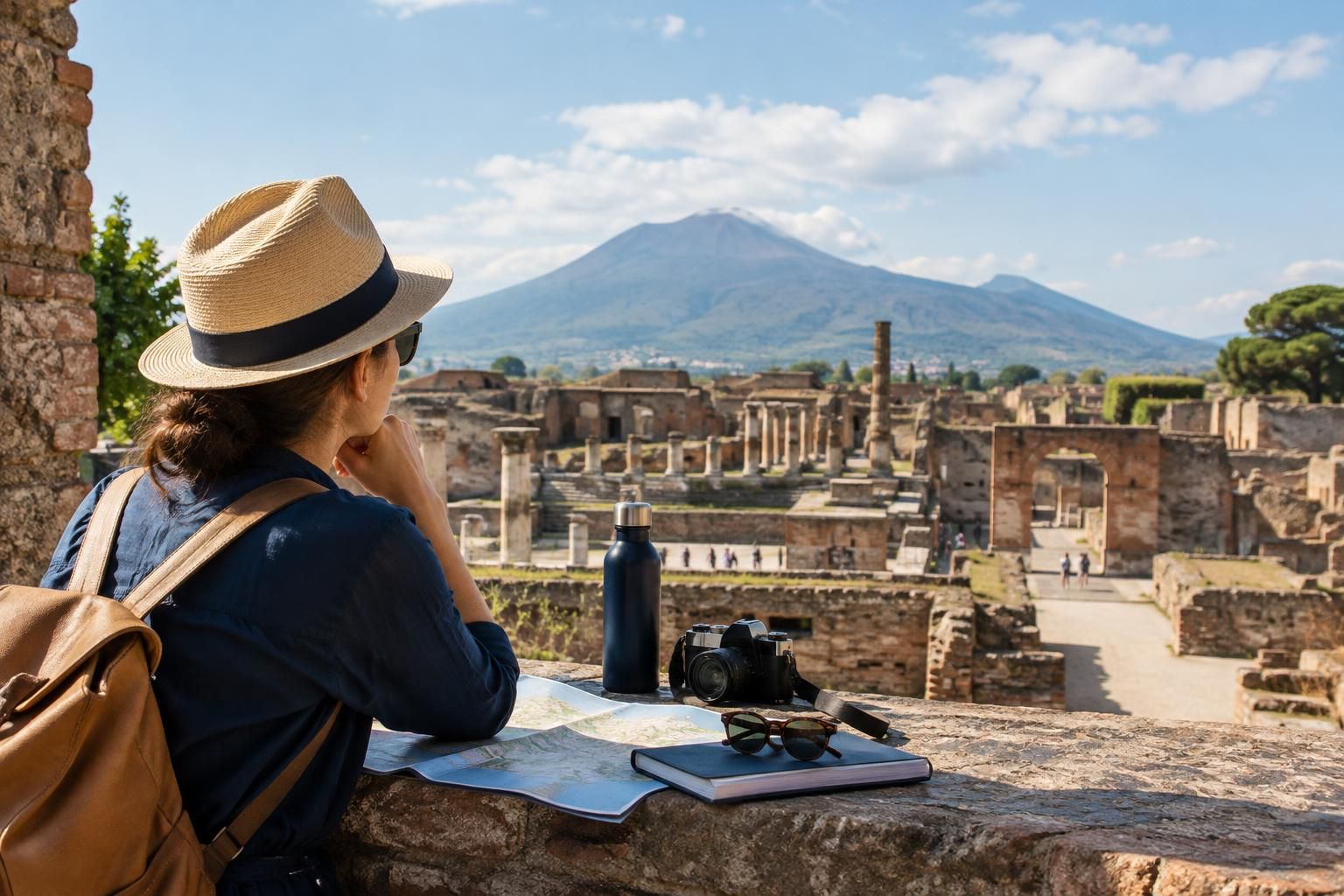
The challenge of an archaeology-focused trip to Naples is not finding enough to see. It is leaving enough time and energy to understand what you are looking at. Pompeii offers the scale of an ancient town, Herculaneum rewards close attention to buildings and materials, and the National Archaeological Museum in Naples adds objects and artistic context. Treating them as three separate experiences, rather than a checklist to complete quickly, makes the trip more rewarding. A five-night stay is a useful starting point: enough for four full days, with room for neighborhood walks, long lunches and a change of plan.
Choose a Naples base that suits both sightseeing and evenings
For this trip, Naples is more than a transport hub. Staying in the city lets you connect ancient history with lively streets, churches, food shops and waterfront views. The historic center suits travelers who want atmosphere and plenty to explore on foot, while accommodation around Piazza Dante or the museum area can make a museum-focused day straightforward.
A base near Napoli Centrale may simplify regional departures, but convenience alone should not decide the booking. Consider the actual walk from the station, likely street noise, stairs and how you want to spend your evenings. In older buildings, check whether a lift reaches the accommodation floor. For warmer-weather visits, confirm cooling arrangements rather than assuming every room has air conditioning.
Give each major archaeological experience its own day
A balanced outline is one day for the National Archaeological Museum and nearby streets, one for Pompeii, one for Herculaneum, and one flexible Naples day. Put the museum first if you enjoy understanding objects before encountering their settings. Visit it later if seeing the excavated towns will make the collections more meaningful. Neither order is essential.
Avoid automatically filling the Herculaneum day with another major excursion. Although its excavated area is more compact than Pompeii's, the point is to notice details, not simply finish sooner. Keep the remaining time for a meal or a quiet return to Naples. Leave the flexible city day uncommitted until you have considered the weather and how much walking the first outings involved.
Approach Pompeii as a town, not a sequence of famous stops
Pompeii makes more sense when you choose a few themes. You might focus on public life around the forum, domestic spaces and courtyards, or the relationship between streets, shops and places of entertainment. Trying to cover every district can turn a fascinating visit into a long march across uneven ground.
Before setting out, identify a manageable cluster of priorities using the site's visitor information. Access to individual buildings can vary, so treat named houses as possibilities rather than promises. Choose a starting area and a point at which you will reassess your energy. For two travelers with different interests, agreeing on three shared priorities can prevent constant route negotiations.
A guided introduction can help explain the urban layout and distinguish original features from later intervention. Alternatively, independent visitors can prepare a short reading list and carry an offline map. Either way, allow time simply to look: a doorway, worn threshold or street junction can communicate daily life as effectively as a celebrated monument.
Use Herculaneum and the museum to change the scale
Herculaneum offers a different perspective rather than a smaller repeat of Pompeii. Its surviving building fabric, including upper-level elements in places, encourages attention to how homes and streets worked vertically. Look at room arrangements, decorative surfaces and the relationship between private interiors and public space.
At the National Archaeological Museum, resist the urge to inspect every collection equally. Give priority to material connected with the Vesuvian towns, then add another collection if your concentration holds. Check current gallery access and admission arrangements before choosing the day. A shorter, attentive museum visit is often more useful than continuing after the objects have begun to blur together.
Plan transport around the entrance, not just the destination name
Rail can work well for these excursions, but station names and archaeological entrances deserve careful attention. Pompeii has multiple rail approaches, and a station serving the modern town is not interchangeable with every entrance to the excavations. For Herculaneum, account for the walk between the relevant station and the site rather than treating arrival by train as arrival at the gate.
Before each outing, check the operator, departure station, ticket conditions and return options. Do not build the day around a tight connection after a long site visit. Keep the accommodation address and essential route details available offline. If considering a private transfer, compare the complete door-to-door journey and agreed meeting point, not just the driving time.
Pack for exposed sites and protect the gaps between visits
Archaeological sightseeing involves sustained standing as well as walking. Wear familiar shoes with reliable grip, carry a compact bag, and bring sun protection, water and a weather-appropriate layer. Large outdoor areas can feel demanding in heat or rain. Check site provisions and bag restrictions before departure rather than assuming lockers, refreshments or sheltered breaks will be available wherever needed.
Keep evenings deliberately simple after excavation days. Choose dinner near your accommodation instead of adding a cross-city journey. Use the flexible Naples day for a waterfront stroll, neighborhood browsing or a relaxed café stop. Travelers who need step-free access should investigate specific routes and surfaces at each attraction; a compact site is not necessarily an easy-access one.
The strongest Naples archaeology itinerary gives each place a different purpose: Pompeii for urban scale, Herculaneum for close observation, and the museum for objects and context. Choose accommodation that supports comfortable evenings, verify the exact transport approach, and leave one day adaptable. You will cover less ground than on a packed itinerary, but have more opportunity to make sense of what survives.
AI-assisted evergreen travel guide. Featured image is an AI-generated illustration, not a specific product or booking.