Not speaking the local language does not have to limit your trip to guided activities or familiar places. It does change which preparations are most useful. Rather than trying to learn enough vocabulary for every situation, focus on the moments when clear communication matters: finding your accommodation, choosing a meal, buying the right ticket and explaining a request. A small collection of phrases and written details can support independent exploring while leaving room for spontaneous encounters.
Identify the conversations your itinerary will require
Start with your actual plans rather than a generic phrase list. A city break might involve station signs, museum ticket options and restaurant menus. A countryside stay could require explaining a pickup point, asking about a walking route or arranging a departure time with your host. List five or six likely interactions and prepare for those first.
Consider the communication support available when comparing experiences. A guided activity in a language you understand may be worthwhile when explanation is central to the experience, such as a history walk or craft workshop. Independent exploring can work well when you mainly want to enjoy architecture, landscapes or a market at your own pace. Check the language offered for a specific activity rather than assuming it from the booking page.
Learn a small set of phrases you can actually use
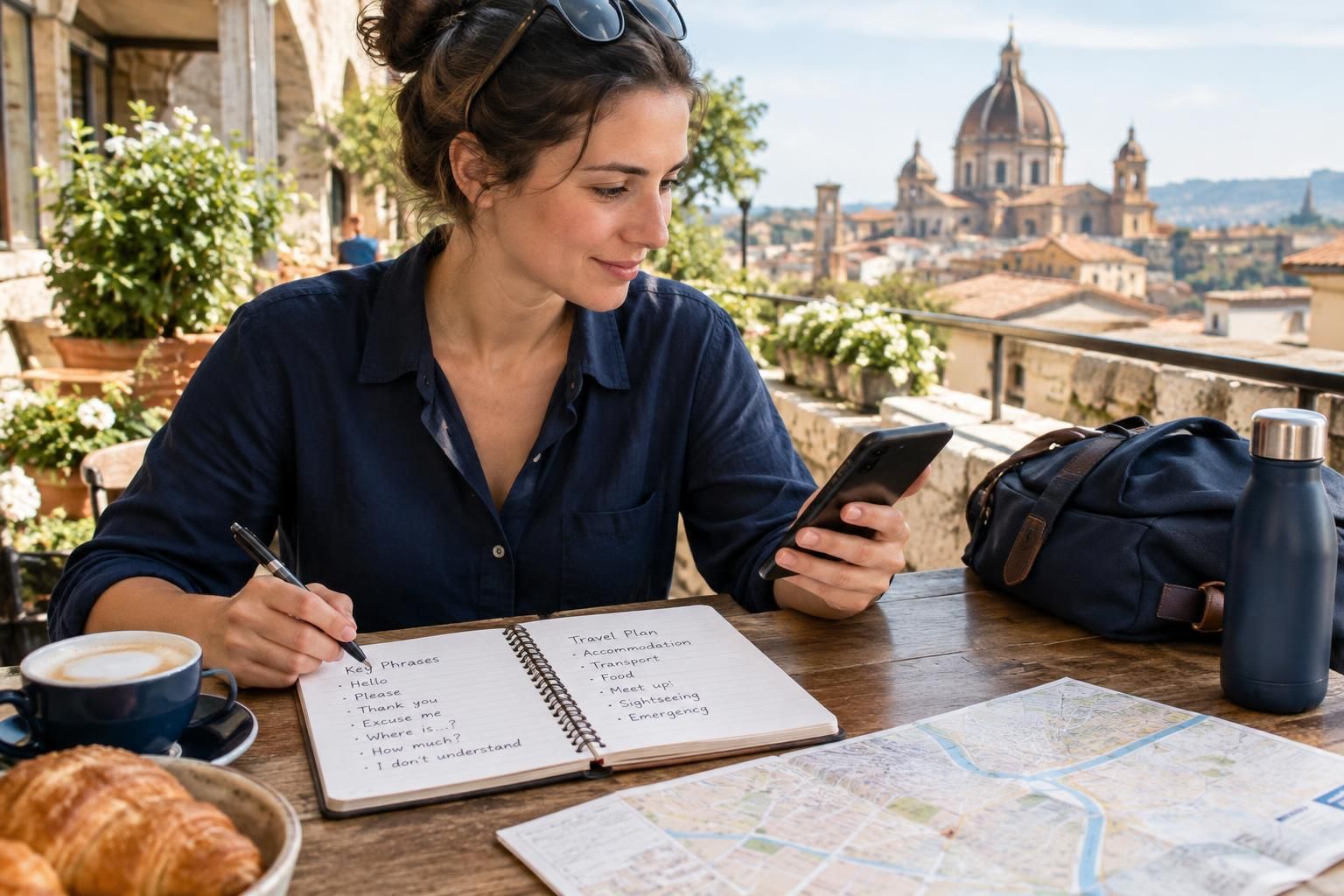
Prioritize greetings, thanks, apologies and simple requests. Useful examples include asking whether someone speaks a language you know, requesting slower speech and saying that you do not understand. Learn how to ask for a price, a destination or a written answer. These phrases help manage an exchange even when you cannot follow everything being said.
Practice saying the phrases aloud, but also keep them written down. Recognizing an answer is often harder than asking the question, so learn a few likely responses: yes, no, here, there and basic numbers. Courtesy matters more than delivering a perfect sentence. Begin with a greeting and ask about a shared language instead of launching directly into a complicated request.
Make names, addresses and meeting points easy to show
Save your accommodation name and address in the local writing system where available, alongside the version you can read. Include a map pin and any entrance instructions supplied by the property. A building name alone may not identify the correct doorway, especially in a large complex or a pedestrian area. Keep these details accessible without needing to sign back into a booking account.
For travel days, record both your destination and the specific station, terminal or stop you need. Similar place names can create confusion, and a city may have several arrival points. When arranging a meeting, use a named entrance or recognizable landmark rather than a vague description such as 'outside the station.' A saved map or image can make a short conversation much clearer.
Use translation tools for short, specific exchanges
Set up your preferred translation tool before departure and check which features work without an internet connection. Download relevant language files if that option is available. Keep essential information separately as well: an offline translation feature is less useful if the phrase you need is buried in an inaccessible email. Camera translation can help you approach a sign or menu, but treat the result as an aid rather than a definitive interpretation.
Write short sentences with one idea at a time. 'Can I leave my bag here until this afternoon?' is easier to translate than a long explanation of your departure plans. Avoid idioms, jokes and ambiguous abbreviations. If the reply seems unrelated, rephrase the question instead of repeating the same wording. Do not enter passport numbers, payment details or other unnecessary personal information into a translation tool.
Prepare for meals and transport without scripting the whole day
For meals, learn a few ingredients and cooking terms relevant to your preferences. A photograph or display can provide a starting point, but it may not reveal everything in a dish. Ask one clear question at a time. If you need precise ingredient information, seek explicit confirmation rather than relying on an image, a guessed word or an uncertain automatic translation.
For transport, have the destination visible before approaching a counter or driver. Clarify the date, destination and ticket type rather than asking only for 'one ticket.' When something important is agreed, ask for it in writing or show the details back for confirmation. This also works for accommodation requests: a written departure date or bag collection time is easier to check than a hurried spoken exchange.
Leave space for slower conversations and imperfect understanding
Avoid building days that depend on every interaction being instant. Ordering lunch, finding a platform or explaining an accommodation request may take longer when you lack shared vocabulary. A little space between commitments lets you handle these exchanges without turning a minor misunderstanding into a missed activity. Keep an alternative experience in mind when a language-dependent activity proves difficult to arrange.
Speak clearly at a normal volume, give the other person time and avoid assuming that limited shared language means limited willingness to help. Ask before recording a conversation or using voice translation close to someone. Some encounters will remain brief, and that is fine. A greeting, a patient exchange and a sincere thank-you can still make everyday travel feel personal.
The most useful preparation is not a complete vocabulary; it is a reliable way to communicate essential details. Learn a few courteous phrases, save names and destinations clearly, and use translation tools thoughtfully. Then allow conversations to take their own pace, without expecting every exchange to be effortless or perfectly understood.
AI-assisted evergreen travel guide. Featured image is an AI-generated illustration, not a specific product or booking.