A stay on the Kinabatangan River offers a different rhythm from a city break or beach holiday. In this part of Malaysian Borneo, much of the experience revolves around quiet boat outings, watching riverbank vegetation and leaving room for wildlife to appear on its own terms. The most useful planning decisions are not how many attractions to fit into each day, but where to sleep, how transfers work and how much time to allow. A well-paced visit combines guided outings with enough downtime to enjoy the river even when animals remain out of sight.
Allow enough nights for more than one chance
Two nights make a practical starting point for a river stay, while three nights give you more breathing room. A single night can feel dominated by arrival and departure, particularly when transfers consume a substantial part of each day. Additional time offers repeated opportunities to observe wildlife in different conditions without expecting one outing to deliver everything.
For a broader Sabah itinerary, treat the river as a distinct stop rather than an excursion squeezed between flights. One workable outline is a night in the Sandakan area, two or three nights by the river, then a return to your onward transport base. Adjust this around actual connections, leaving a buffer rather than pairing a river transfer with a tightly timed flight.
Choose the lodge setting before comparing room features
Sukau and Bilit are useful location names when exploring accommodation along the lower Kinabatangan. Rather than assuming all riverside properties offer an identical experience, ask how each is reached, whether the final approach involves a boat and where guided outings usually begin. A secluded setting can be appealing, but it may also mean less freedom to leave independently.
Think about how you will spend the hours between excursions. A shaded communal area, a comfortable place to sit and a room that suits your tolerance for heat may matter more than decorative touches. Ask about fans or air conditioning, electricity arrangements, bathroom facilities, steps and walkways. Travelers with mobility needs should request specific descriptions rather than relying on a broad accessibility label.
Compare the whole stay, not just the nightly rate
River accommodation is often presented alongside transfers, meals and guided activities, so compare like with like. Request a clear breakdown of collection points, included boat outings, guide arrangements, drinking water and any separately charged activities. Establish whether excursions are shared and whether the arrival and departure days include time on the river.
Group size affects the atmosphere as much as room category does. A photographer may value space for equipment and a less hurried outing, while a family may prefer flexibility around meals and tired children. Private arrangements can offer more control, but shared trips can also be rewarding. The important question is whether the proposed pace matches your interests.
Build the day around observation and downtime
Early and late outings are a natural framework for a wildlife-focused stay, with a quieter middle of the day. Avoid filling every gap automatically. Time spent watching from a lodge’s designated viewing areas, sorting photographs or reading can make the visit feel like a stay in a landscape rather than a sequence of departures.
Ask what optional walks or evening activities involve before committing. Terrain, darkness, duration and weather exposure can change the character of an activity considerably. A traveler who enjoys seated observation may not enjoy a muddy walk, and there is no need to do both. Keep some flexibility for rain or changes recommended by your guide.
Set wildlife expectations around possibilities, not promises
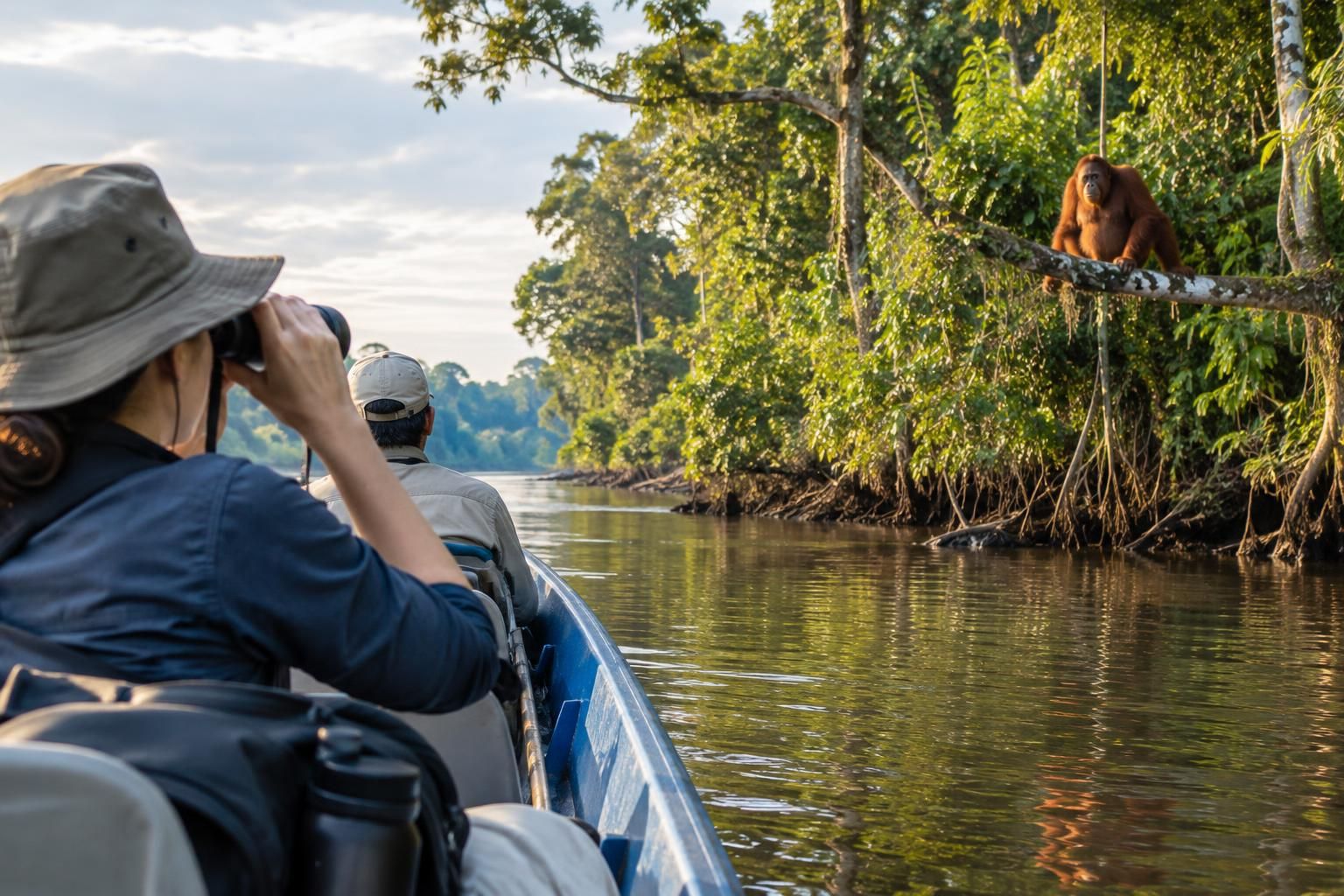
Proboscis monkeys, hornbills and other river-associated wildlife are part of the Kinabatangan’s appeal. Orangutans and Bornean elephants also draw visitors, but sightings should be treated as possibilities, never itinerary items. Dense vegetation, animal movements and simple chance all influence what becomes visible.
Choose an approach that values patient observation over pursuit. Follow your guide’s instructions, keep noise low and do not feed, call to or attempt to touch animals. Binoculars can make a distant sighting more satisfying without needing the boat to move closer. Smaller encounters, bird calls and the changing river scenery are worth noticing even when a hoped-for species does not appear.
Pack for humidity, splashes and limited luggage space
Bring lightweight clothing that dries readily, a rain layer and footwear suited to the activities you actually book. Covered shoes are useful if walks are included; an easy spare pair can be convenient around accommodation. A brimmed hat, binoculars and a compact day bag are more practical on a boat than repeatedly opening a large suitcase.
Protect electronics and spare clothes inside waterproof bags or liners rather than assuming your outer luggage will keep everything dry. Carry spare camera batteries and enough storage for your needs. Before packing, ask whether transfers have luggage restrictions or whether a larger bag can be left at your accommodation in Sandakan. Keep essential personal items with you.
Connect the river stay with a contrasting stop
The Sandakan area can provide a useful contrast to the river, especially if you want to include Sepilok’s conservation-focused attractions. Treat those visits as separate experiences with their own arrangements, not substitutes for observing free-ranging wildlife. Confirm current visitor procedures and transport details when assembling your itinerary.
Elsewhere in Sabah, a city stay, coastal downtime or a mountain-area visit can add variety. Resist adding all three simply because they appear on the same regional map. Compare the actual transfer effort and choose one contrasting element that suits your available days. Fewer accommodation changes preserve time for the reason you came: being present in the landscape.
A rewarding Kinabatangan trip starts with realistic expectations and thoughtful logistics. Give the river more than a passing visit, choose accommodation around comfort and access, and understand exactly what your arrangements include. Once there, let guided observation and unhurried downtime set the pace. The experience is richer when wildlife remains a possibility to appreciate rather than a checklist to complete.
AI-assisted evergreen travel guide. Featured image is an AI-generated illustration, not a specific product or booking.