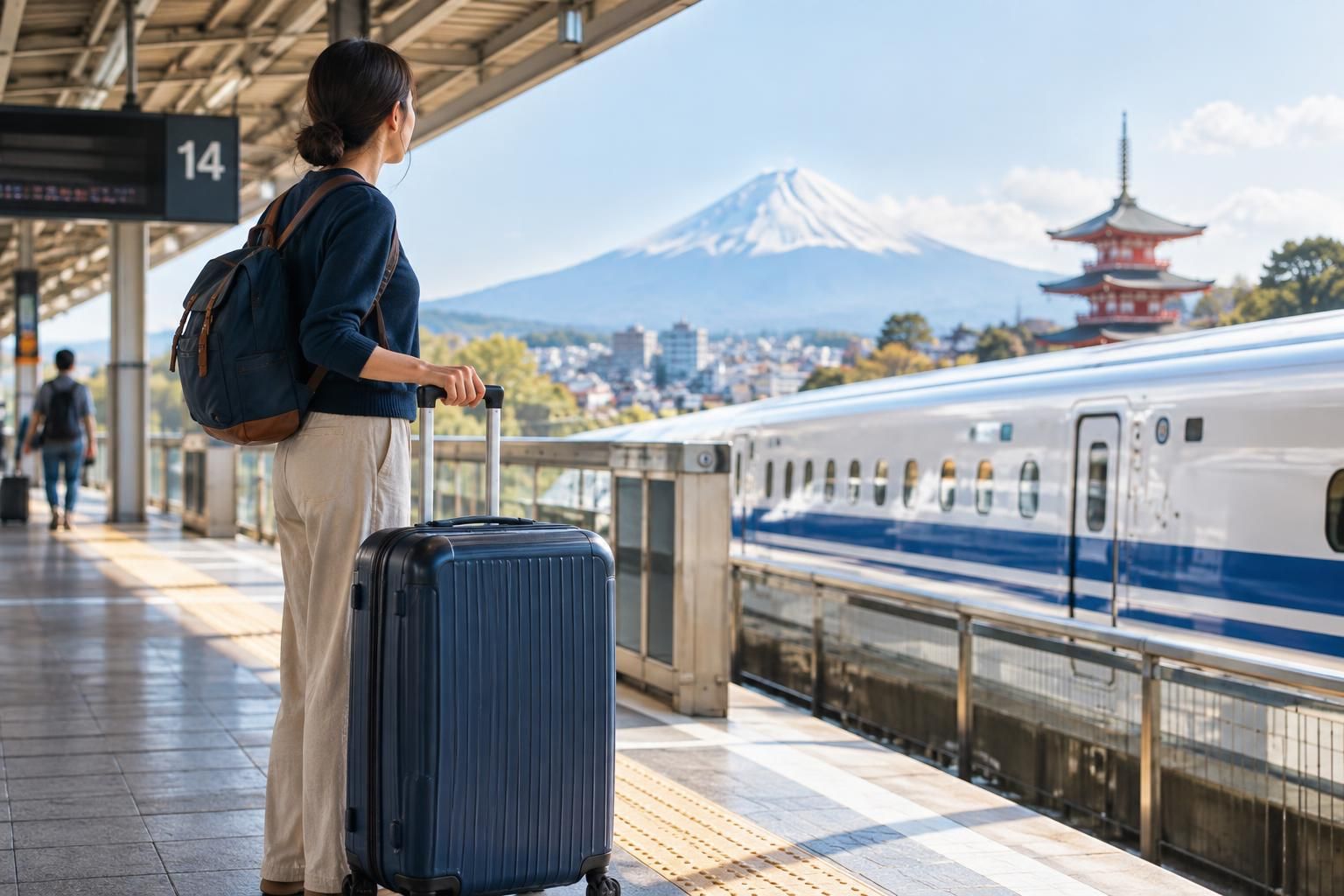
A large suitcase can fit a Japan trip perfectly well until the itinerary adds a hillside inn, a crowded station transfer or a one-night stop between cities. The answer is not necessarily to pack everything into a backpack. It is to decide when your main bag needs to travel with you and when it can take a different route. By combining longer hotel stays, selective luggage forwarding and a small overnight bag, you can keep room for comfortable clothing and purchases without turning every sightseeing day into a moving day.
Plan the route around luggage handovers
Before choosing individual trains, mark every accommodation change on your itinerary. A route such as Tokyo, a short mountain stay and Kyoto creates a different luggage problem from three consecutive city hotels. The mountain stop may involve buses, slopes or a room with limited space, making it a useful place to separate from your main suitcase.
Group nearby outings around one base where possible. Visiting Nara from Kyoto, for example, avoids an additional check-in and repacking cycle. An extra hotel night is not automatically better than a day trip: compare the atmosphere you gain after day visitors leave with the effort of moving everything. Give each overnight stop a reason beyond its position on a map.
Choose between carrying, forwarding and storing
Carrying your suitcase makes sense when you are moving directly between hotels and need its contents immediately. Forwarding is worth considering when you have a short detour, several transfers or a destination that is awkward with wheeled luggage. Storage serves a different purpose: it lets you explore before check-in or after checkout while your bag stays in the same city.
Do not build the itinerary around assumed same-day delivery or guaranteed storage space. Before relying on a forwarding arrangement, confirm the collection point, destination acceptance, expected delivery window, size restrictions and payment process. For storage, identify an alternative to your first choice. A station locker that looks convenient on a map is not a dependable plan until you know your bag fits and space is available.
Use an overnight bag to make small detours easier
A compact bag is especially useful for one or two nights away from your main route. For a city-to-city journey with an intermediate hot-spring or countryside stay, consider sending the large suitcase ahead and carrying only what the detour requires. Leave enough time for the delivery arrangement you have actually confirmed.
Pack a complete change of clothes, sleepwear if needed, toiletries, chargers and anything essential to your daily routine. Keep travel documents, valuables, medication and fragile items with you rather than in forwarded luggage. A soft bag that closes securely is more practical than an open shopping tote, particularly when boarding transport or walking in rain.
Pick accommodation for its approach, not just its station distance
A hotel described as close to a station may still involve a long underground passage, stairs or an inconvenient exit. Examine the final approach as carefully as the wider neighborhood. A slightly longer but straightforward route can be easier than a short walk involving footbridges, steep lanes or repeated level changes.
Ask about luggage holding and delivery acceptance before making either service central to your plan. At traditional inns and compact properties, also consider where an open suitcase will go. Packing cubes or separate clothing pouches let you remove what you need without spreading belongings across the room. Keep wheels and bags off bedding and follow the property's guidance about indoor floors.
Make transfer days simpler than sightseeing days
Treat a transfer day as having less usable time than a full day in one place. Checking out, reaching the platform, finding the next hotel and settling in all consume attention, even when the train journey itself is straightforward. Choose one optional activity near your arrival base rather than a sequence of timed commitments.
Before selecting a train, check the relevant operator's luggage guidance for that service, including any reservation or size requirements. Once aboard, use designated storage appropriately and avoid blocking aisles or doorways. If the route involves several changes, compare it with a simpler journey rather than choosing solely by the shortest displayed travel time.
Pack for repeated access, not just suitcase capacity
Organize belongings into three groups: items needed in transit, items needed tonight and items that can remain packed. Your transit bag should hold documents, a charger, an extra layer and other everyday essentials. Keep the first night's clothing accessible so a late arrival does not require unpacking everything.
Choose clothing that works across several settings and plan laundry into longer stays instead of carrying a separate outfit for every day. Leave some unused space for purchases, but avoid treating a second full-size suitcase as the default solution. If shopping is a priority, schedule it toward the end of the trip, when fewer accommodation changes remain.
The most useful luggage plan follows the shape of your trip. Carry your suitcase on straightforward moves, consider forwarding it past awkward detours and use storage for short gaps around check-in. Confirm each handover before depending on it, and keep enough essentials with you to remain comfortable if plans shift. That preparation makes smaller places and spontaneous stops easier to enjoy without giving up the convenience of a full-size bag.
AI-assisted evergreen travel guide. Featured image is an AI-generated illustration, not a specific product or booking.