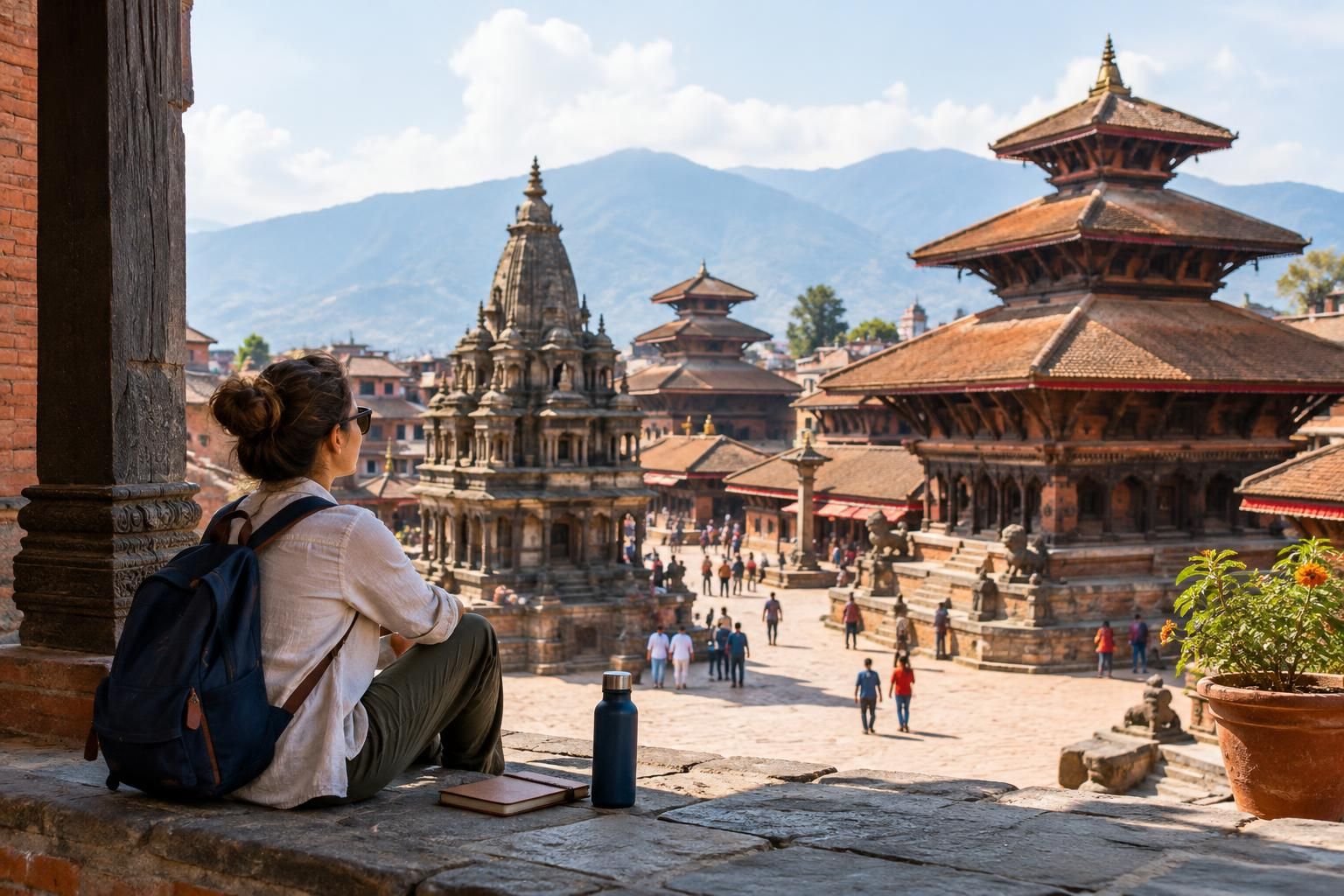
A visit to Nepal does not have to revolve around a trek. The Kathmandu Valley offers a different kind of journey: temple squares, brick-lined lanes, working courtyards and meals that deserve more time than a hurried sightseeing stop. Kathmandu, Patan and Bhaktapur share a valley but have distinct atmospheres, making them rewarding companions rather than interchangeable destinations. The key is to resist treating every landmark as a separate excursion. Choose accommodation around the evenings you want, group outings geographically and leave room for the everyday scenes between major sights.
Give the valley enough time to become more than a stopover
Four to six nights makes a useful planning framework for a heritage-focused visit. With four nights, keep one base and devote separate days to Kathmandu, Patan and Bhaktapur. With five or six, consider a second base or a slower day built around a neighborhood walk, a craft experience and a long lunch. These are suggested allocations, not minimum requirements.
Avoid filling your arrival day with distant sightseeing. An initial walk near your accommodation lets you get your bearings without depending on a chain of transfers. Similarly, keep the night before an onward flight logistically simple. A hill viewpoint or countryside stay can add variety, but it also introduces another journey; include one only if landscapes matter more to you than deeper time in the towns.
Choose your base for the hours outside sightseeing
Thamel in Kathmandu suits travelers who value a concentration of visitor-oriented restaurants, shops and accommodation. Its convenience can come with street activity and noise, so the exact lane and room position matter. A quieter property elsewhere in Kathmandu may feel more restful, but check how its location fits your intended outings rather than judging it by straight-line distance alone.
Patan is worth considering if your priorities include historic streets, courtyards and evenings close to its old center. Bhaktapur can work as a second base for travelers who want to experience its lanes beyond a daytime visit. Splitting five nights between Kathmandu or Patan and Bhaktapur is one possible approach. For a shorter stay, the extra packing and check-in may outweigh the change of atmosphere.
Plan by neighborhood, not by landmark count
Build each sightseeing day around one main area. In Kathmandu, you might pair the historic center with nearby lanes and a meal rather than adding several cross-valley stops. Give Patan its own unhurried outing, with time for its Durbar Square area, smaller courtyards and shops. Treat Bhaktapur as a substantial day rather than a brief addition on the way somewhere else.
Road journeys can take longer than a map suggests, so avoid tightly timed commitments in different towns. For an independent outing, decide whether you want a return transfer arranged in advance or the flexibility to organize each leg separately. If hiring a driver, clarify the stops, waiting time and return arrangement. A local guide can add context, but need not be booked for every day.
Make heritage visits thoughtful rather than repetitive
Several grand squares in succession can blur together without a focus. Give each outing a question: how are courtyards used, what distinguishes the woodcarving, or how does a neighborhood organize daily worship? A guided walk early in the trip can provide a vocabulary for noticing details later. Leave space to sit and observe rather than moving continuously from monument to monument.
Religious sites are also places of worship, and access expectations vary. Check signs and ask before entering uncertain spaces or photographing ceremonies. Ask permission before making someone the subject of a photograph, especially inside a workshop. If a craft demonstration interests you, establish whether it is a paid activity, a shop visit or part of a guided experience so everyone understands the arrangement.
Choose accommodation for comfort, not just character
A traditional-looking guesthouse can be atmospheric, but photographs rarely explain how a stay will feel. Ask about stairs, bathroom layout, hot water arrangements, heating or cooling, and whether your room faces a street, courtyard or internal passage. Historic-style buildings may have steep steps or uneven thresholds, making specific questions particularly useful for travelers with mobility needs.
Check vehicle access as well. A property inside a narrow pedestrian lane may require carrying bags from a drop-off point. Pack so that you can comfortably manage that final stretch, and ask the property to explain the arrival route. For a split stay, a compact bag makes changing bases less disruptive. Space for laundry and a place to relax can matter more than an elaborate room.
Leave room for food, weather and unscheduled discoveries
Use meals to vary the rhythm of sightseeing. Momos, dal bhat and Newari dishes offer different starting points, but do not turn every lunch into a destination requiring another drive. Ask what a dish contains rather than assuming a familiar name means a familiar preparation. A food walk or cooking session can be a useful alternative to another afternoon of monuments.
Check seasonal conditions before deciding how much outdoor walking to schedule, and retain an indoor option such as a museum or workshop. Comfortable footwear, a light day bag and layers suit days that alternate between lanes, courtyards and seated breaks. Keep one half-day largely unassigned: you may want to revisit a square, browse handmade goods or simply spend longer somewhere that caught your attention.
A satisfying Kathmandu Valley trip depends less on covering every famous site than on choosing a workable rhythm. Start with one well-located base, give each historic center proper time and add a second stay only when it improves the experience. With fewer cross-valley journeys and more room for ordinary streets, meals and conversations, a non-trekking visit can feel like a complete Nepal journey rather than a prelude to one.
AI-assisted evergreen travel guide. Featured image is an AI-generated illustration, not a specific product or booking.