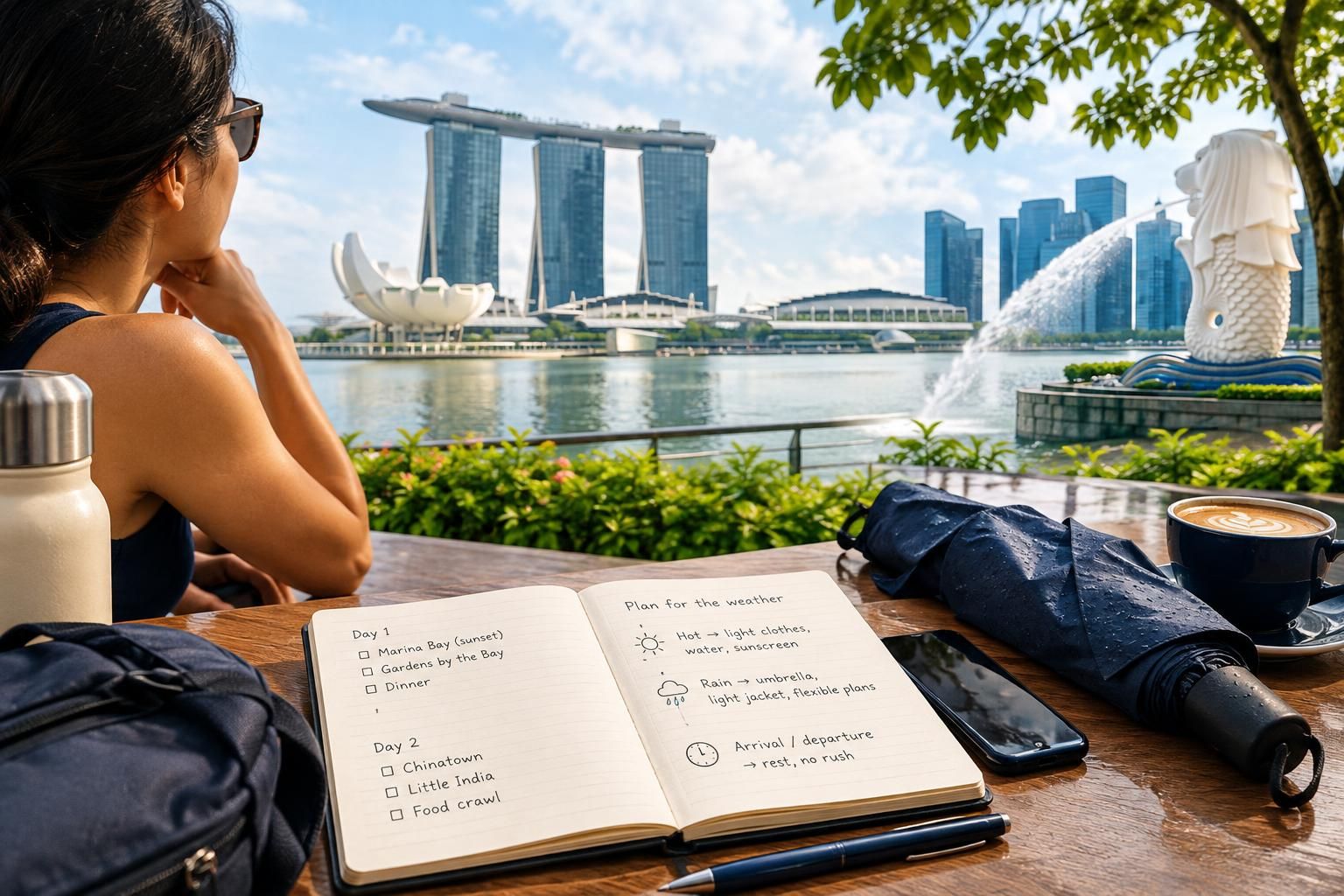
A two-night Singapore stopover can add a rewarding city break to a longer journey, but the best itinerary starts with your flights rather than a sightseeing checklist. An early arrival, an overnight flight or a late departure can each change how much energy and usable time you have. Instead of trying to fit the whole city into a short stay, build the trip around one waterfront outing, one neighborhood exploration and enough unplanned time to enjoy a meal without watching the clock. Singapore’s tropical climate makes the order of those activities as important as the activities themselves.
Count usable hours, not calendar days
Write down your expected airport arrival, likely hotel arrival and the time you need to leave for your next flight. Then subtract transfers, check-in formalities and sleep. Two nights might give you one full day and two useful half-days, or little more than a single day between tired evenings. Plan for that actual window.
If you arrive early after an overnight flight, ask your accommodation about early room access and luggage storage before booking. Neither should be assumed. Keep the first morning simple: breakfast, a short walk and an indoor fallback are more forgiving than a timed attraction. For a late arrival, prioritize an easy transfer and dinner near your hotel rather than an ambitious evening across town.
Choose a base that simplifies your particular trip
For a short stay, the walk between your room, public transport and food matters more than a long list of hotel facilities. Consider the City Hall or Bugis areas if you want a central starting point for several sightseeing districts. Chinatown can suit travelers who want neighborhood walks and varied eating options close together. Marina Bay may appeal if the waterfront is your main priority.
Compare the complete journey from the airport, not just a station name on the map. A cheaper room becomes less appealing if it adds awkward changes or a long luggage walk. Check the actual entrance location, lift access, room size and recent descriptions of street noise. An airport-area stay can make sense for a very early departure, but weigh that convenience against repeated trips into the city.
Build one waterfront outing and one neighborhood outing
Use Marina Bay and Gardens by the Bay as the basis of one outing rather than separate cross-city excursions. You could combine a waterfront walk with a garden visit, choosing any ticketed component according to your interests and available time. Avoid treating every landmark as a mandatory stop; the setting itself is part of the experience.
For your second outing, choose a neighborhood that offers a different atmosphere. Chinatown suits a mix of streets, food and cultural sites; Kampong Glam offers another blend of architecture, shops and cafes; Little India rewards travelers interested in markets and everyday street life. Pick one to explore properly, with a second only if your energy allows. Sentosa or a major wildlife attraction is better treated as a substantial outing of its own, not a quick addition between central sights.
Let heat and rain shape the day
Put your longest outdoor walk earlier or later in the day, and give the middle hours a flexible indoor role. A museum, gallery, leisurely lunch or hotel rest can make the evening more enjoyable. Indoor gardens may also provide an alternative, but check the conditions of the specific attraction rather than assuming every garden visit offers relief from the heat.
Keep a nearby rain option for each sightseeing area so a shower does not trigger an unnecessary journey across the city. Carry a compact umbrella, water and a small bag that protects your phone and travel documents. Lightweight clothing and comfortable footwear are useful, while a thin extra layer can help in strongly air-conditioned interiors. Leave enough flexibility to pause rather than forcing a walk through uncomfortable weather.
Use meals as anchors, not extra appointments
A short stopover needs only a few food priorities. You might choose a hawker-centre meal, a breakfast of kaya toast and eggs, and one longer dinner. Dishes such as chicken rice, laksa or roti prata offer different starting points, but there is no need to cross the island for every meal. Look for options along your planned route.
At a hawker centre, take a moment to understand the arrangement before ordering: stalls may handle food and drinks separately, and ordering or collection practices can differ. If ingredients or dietary requirements matter, ask directly rather than relying on a dish name or photograph. Build meals into your sightseeing breaks so eating becomes part of the visit, not another task squeezed between attractions.
Keep the departure day local and easy to shorten
For a typical two-night stay, use arrival day for settling in and a modest neighborhood walk. Make the full day your main sightseeing day, with one outdoor cluster, a midday break and an optional evening outing. On departure day, choose breakfast and a nearby activity that you can shorten without losing a prepaid experience.
Before leaving the hotel, confirm your luggage arrangements and work backward from the airport arrival time advised for your flight. Compare public transport and car transfers for your luggage load, departure hour and tolerance for changes. Keep passports, medication, a fresh top and charging essentials accessible rather than buried in stored bags. Avoid a distant final excursion simply because the flight leaves late; a calm final meal is often a better use of the remaining hours.
A successful Singapore stopover is not measured by the number of attractions covered. Choose a convenient base, explore in geographic clusters and protect time for rest between flights. With one main sightseeing day and flexible plans around it, two nights can offer a satisfying introduction without leaving you exhausted for the next stage of your journey.
AI-assisted evergreen travel guide. Featured image is an AI-generated illustration, not a specific product or booking.