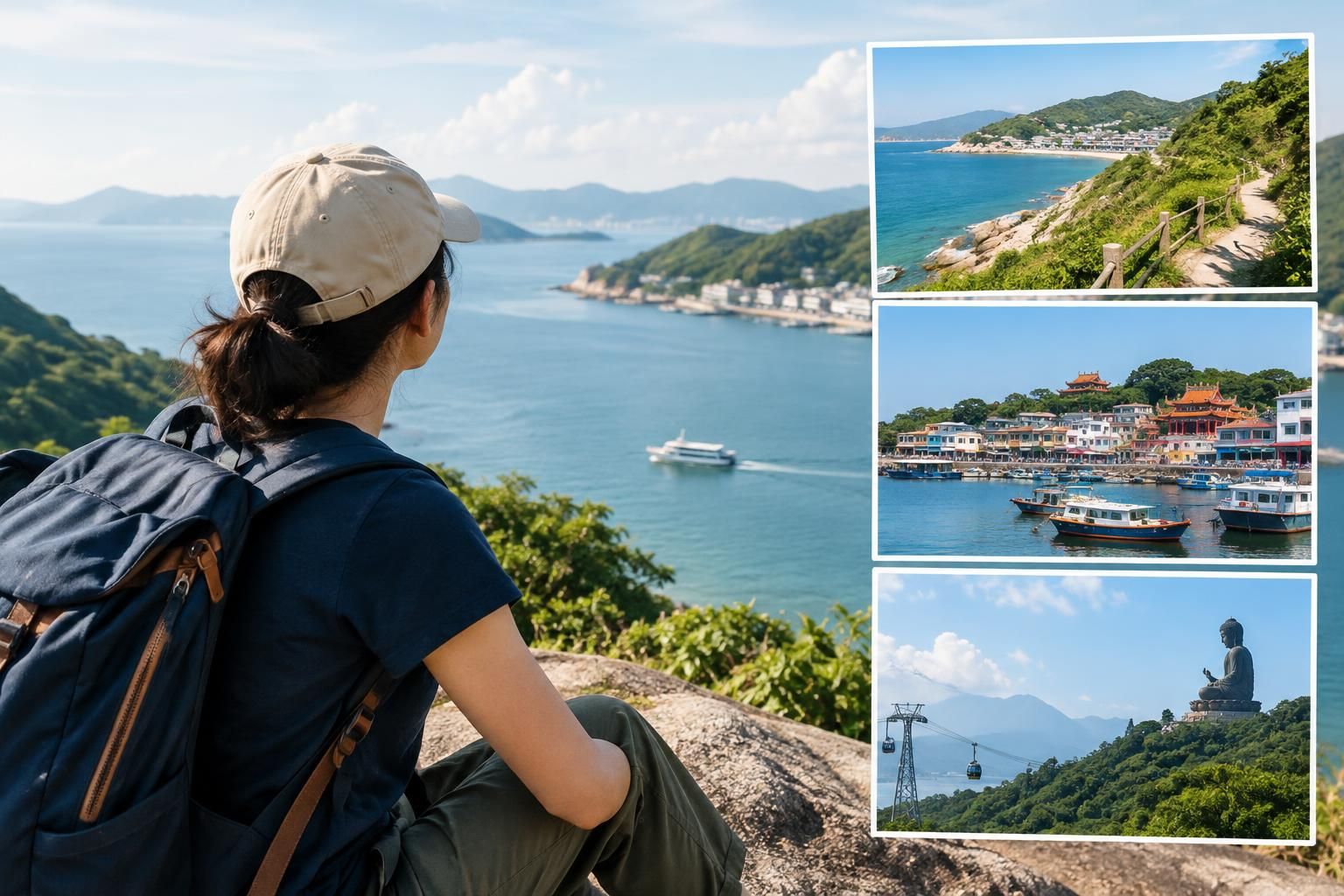
Hong Kong’s outlying islands offer a different rhythm from its dense urban neighborhoods: waterfront villages, wooded slopes, fishing heritage and long lunches beside the water. The planning challenge is not finding enough to do, but choosing an island that matches your energy and interests. Lamma, Cheung Chau and Lantau can each anchor a rewarding day, yet they suit quite different itineraries. Rather than trying to collect several islands in one outing, choose one, identify a main experience and leave room for the journey itself.
Start with the kind of day you actually want
Choose Lamma if your ideal outing combines a village arrival, a substantial walk and an unhurried meal. Cheung Chau is a strong option for harbor atmosphere, narrow lanes and a compact area to explore without committing to a longer cross-island route. Lantau suits travelers who want a particular landscape or cultural stop and are willing to plan the connections around it.
Walking tolerance matters more than a list of attractions. A waterfront wander and a hilly path can feel entirely different in Hong Kong’s humidity. Before choosing, decide whether everyone wants mostly level strolling, a purposeful walk or several transport legs. If your group has mixed priorities, make the shortest comfortable version of the day your core plan, with an optional extension.
Pick Lamma for a walk between villages
Lamma’s classic planning idea is simple: arrive at one village, walk across part of the island and leave from another. Yung Shue Wan and Sok Kwu Wan provide useful endpoints for this style of outing. The appeal is the transition between village streets, greener stretches and coastal views, rather than a sequence of major sights.
Treat the route as a proper walk, not a promenade between restaurants. Look at the terrain, exposure and distance before committing, particularly with children or anyone who finds hills tiring. Carry water and sun protection, and avoid making a fixed meal booking the only reason to push onward. Returning from your arrival village is a perfectly reasonable alternative when the weather or your energy suggests a shorter day.
Choose Cheung Chau for a compact, flexible outing
Cheung Chau works well when you want the freedom to explore without designing every hour. Begin around the harbor, then choose between village lanes, waterfront food stops and a walk toward the beach side. Its central area makes it easier to shape a satisfying visit around short explorations rather than one continuous route.
Keep the harbor and nearby streets as the core of your plan, then add a longer coastal walk only if conditions suit. Narrow lanes are shared spaces, so stay attentive rather than treating them as a pedestrian sightseeing set. If you are considering cycling, first assess the surroundings and your confidence; walking can be the simpler choice for visitors who mainly want to browse, eat and stop frequently.
Treat Lantau as several destinations, not one stop
Lantau requires the most selective planning of the three. Mui Wo, Tai O and Ngong Ping offer distinct experiences, and moving between them takes a meaningful share of the day. Choose Mui Wo for a village-and-landscape focus, Tai O for its waterside settlement and stilt-house scenery, or Ngong Ping for the Big Buddha and monastery setting.
A common mistake is treating all three as nearby stops on a casual island loop. Instead, build the day around one main area, adding another only after checking the full journey back to your accommodation. When visiting religious spaces, follow posted guidance on clothing, photography and behavior. Around Tai O, remember that distinctive waterfront buildings are also homes; keep access clear and ask before photographing residents closely.
Plan the outward and return journeys together
For any island outing, identify both your arrival point and your intended departure point before leaving your hotel. This is especially important on Lamma, where a cross-island walk can end at a different ferry pier. On Lantau, your route may combine rail, bus, ferry or cable car, depending on the area you choose. Compare the complete journey rather than only the most scenic segment.
Check current routes, departure arrangements and service notices close to your visit, and leave a comfortable buffer for the return. Do not make the final possible connection your target. If you have a flight, a timed event or a nonrefundable dinner reservation that evening, choose a shorter island plan or save the outing for another day. Ferry travel is more enjoyable when every queue does not feel consequential.
Pack lightly and leave space for lunch
Bring comfortable footwear with grip, water, sun protection and a light rain layer. A small day bag is easier to manage on boats and village lanes than bulky luggage. Download a map before setting out, and carry a backup payment method rather than assuming every small business accepts your preferred option. Travelers sensitive to boat motion may prefer an itinerary with fewer sea crossings.
Food can provide the structure that a sightseeing checklist does not. Choose a relaxed lunch window, compare menus before sitting down and ask how dishes are priced, particularly when ordering seafood by weight. Do not rely on finding a specific dish or dietary accommodation without checking. Allow time afterward for one final wander instead of rushing directly from the table to the pier.
The best Hong Kong island day trip is the one whose pace fits your group. Choose Lamma for a village-to-village walk, Cheung Chau for flexible exploration or a specific part of Lantau for a focused excursion. One island, a manageable route and an unrushed return usually offer more than an ambitious itinerary spent watching the clock.
AI-assisted evergreen travel guide. Featured image is an AI-generated illustration, not a specific product or booking.