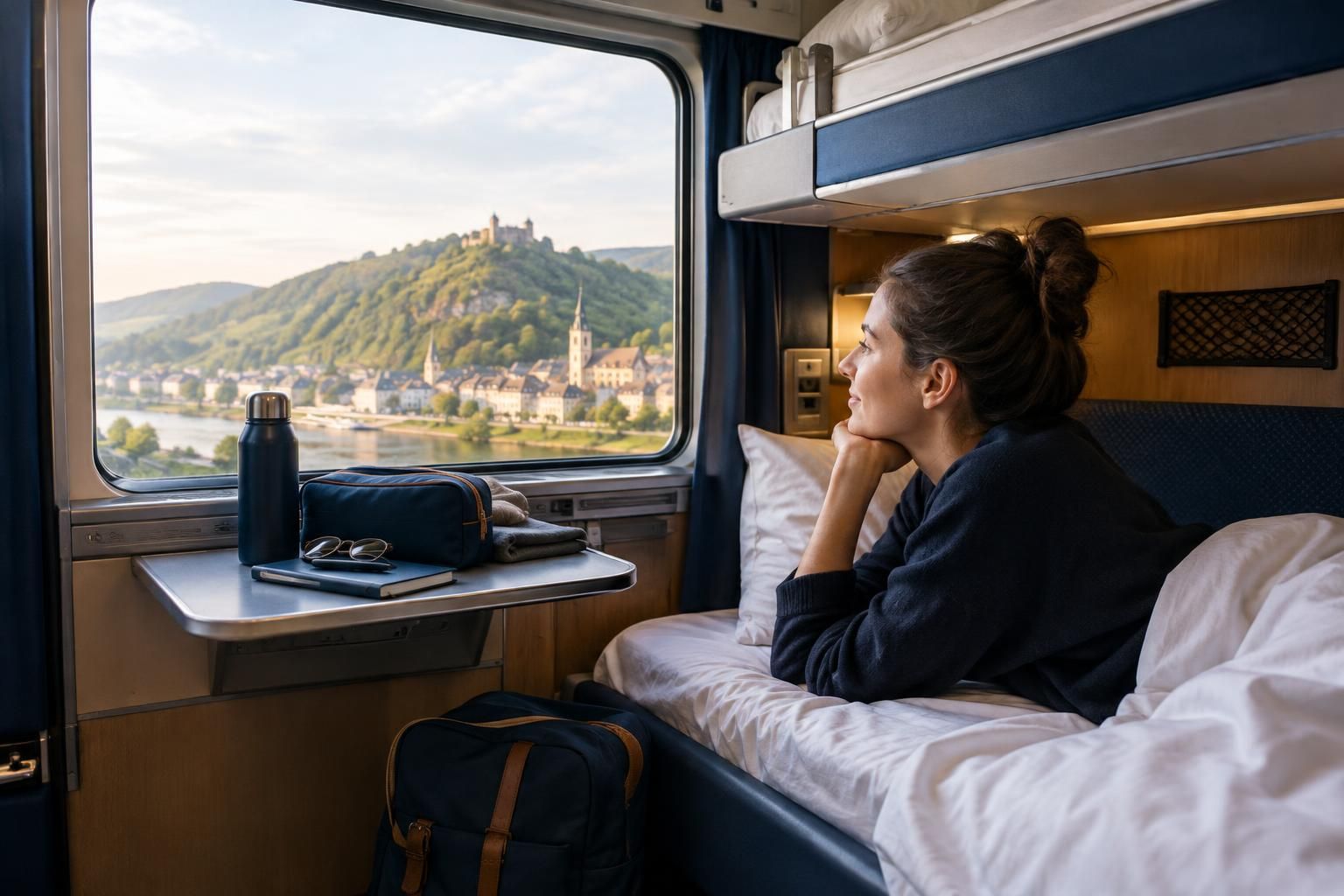
A European night train can turn the journey between destinations into part of the holiday: an evening departure, a compact sleeping space and a morning in another city. But it works best when planned as an experience rather than simply a hotel replacement. Sleep may be interrupted, compartments can feel small, and arriving early creates its own practical questions. For a first overnight rail trip, choose one straightforward journey between places where you genuinely want to stay. Then build the accommodation, luggage and arrival-day plans around it.
Choose the journey before building the itinerary
Start with two destinations that suit the same trip, rather than selecting a train solely because it travels overnight. A pairing such as a Central European city break followed by time in northern Italy can offer a satisfying change of scenery. Treat this as an itinerary idea, not an assumption that a particular direct service operates on your dates.
Compare the complete journeys: accommodation to departure station, time aboard, arrival station to the next lodging, and any onward connection. An overnight option loses some appeal if it requires a lengthy detour or an awkward transfer. A daytime train may be the better choice when scenery matters, the journey is relatively short, or uninterrupted sleep is a priority.
Understand what kind of sleeping space you are choosing
An overnight seat, a couchette and a sleeper compartment are different experiences. A seat generally offers the least separation from other passengers. Couchettes usually provide simple bunks in shared compartments, while sleepers typically offer more bed-like accommodation. Labels, layouts and facilities vary, so examine the actual category rather than relying on the word sleeper.
Consider privacy, bunk access and how your group will fit. A solo traveler may prefer a private space or accept sharing to control costs. Families should check whether everyone can occupy the same compartment. Anyone who would find climbing difficult should investigate lower-berth arrangements. Do not assume that a private compartment includes a toilet or shower; those are separate details to confirm.
Compare the total cost and the conditions
Assess the journey as one part of the whole holiday budget. Compare the overnight fare with daytime transport plus accommodation, while remembering that a train berth is not equivalent to a full hotel night. Include likely extras such as station meals, luggage storage after arrival and accommodation access if you want a room before the normal check-in time.
Before committing, check what the fare includes and how changes or cancellations are handled. A rail pass does not automatically mean every sleeping option is covered; reservations and accommodation charges may be separate. When booking for several people, confirm how berth assignments work rather than assuming that tickets bought together place everyone in one compartment.
Give both ends of the journey some breathing room
Keep the departure day geographically simple. Enjoy a museum, market or neighborhood walk near your base instead of planning a distant excursion that must connect perfectly with the night train. Collect stored luggage with time to spare, have a meal, and identify the correct departure station; large European cities may have several stations with similar-looking names.
At the other end, avoid making the first morning depend on a tightly timed onward train, a prepaid tour or an airport transfer. If another connection is unavoidable, leave a generous buffer and understand the ticket conditions. For a first night-train experience, spending at least the arrival night in the destination city makes the journey less demanding.
Pack a small overnight kit inside your main luggage
Arrange your bag so you can settle in without unpacking everything. Keep a toothbrush, sleepwear, an eye mask, earplugs, a charging cable and the next morning’s clothes in one accessible pouch. Add a water bottle and a modest snack rather than depending entirely on onboard food. Keep travel documents and essential personal items where you can reach them.
Choose luggage you can lift and maneuver yourself, and examine any published storage guidance for the train. Large rigid cases can be awkward in narrow compartments. Before settling down, identify the space intended for your bags and avoid obstructing the door or walkway. Soft layers are useful because your preferred sleeping temperature may differ from the compartment’s.
Plan an arrival day that works even after imperfect sleep
Make luggage storage the first practical question for the destination. Ask your accommodation about its arrangements and check alternatives near the station, without assuming early room access. Then plan a gentle sequence: breakfast, a short walk and one optional activity. A riverside stroll or an unhurried neighborhood lunch is easier to adapt than a packed schedule of timed admissions.
Keep your first overnight journey as a single experiment within a longer trip. Pair it with several nights in each destination, rather than alternating trains and sightseeing days. If you sleep well, the arrival day becomes a bonus. If you do not, a flexible afternoon and a comfortable room still allow the holiday to find its rhythm.
The best first European night-train trip is not necessarily the longest or most elaborate. It is one with a suitable sleeping space, manageable luggage and enough flexibility at both ends. Choose destinations worth lingering in, compare the full journey rather than the fare alone, and leave the first morning open. That makes room for the pleasure of waking somewhere new without asking the train to do everything.
AI-assisted evergreen travel guide. Featured image is an AI-generated illustration, not a specific product or booking.