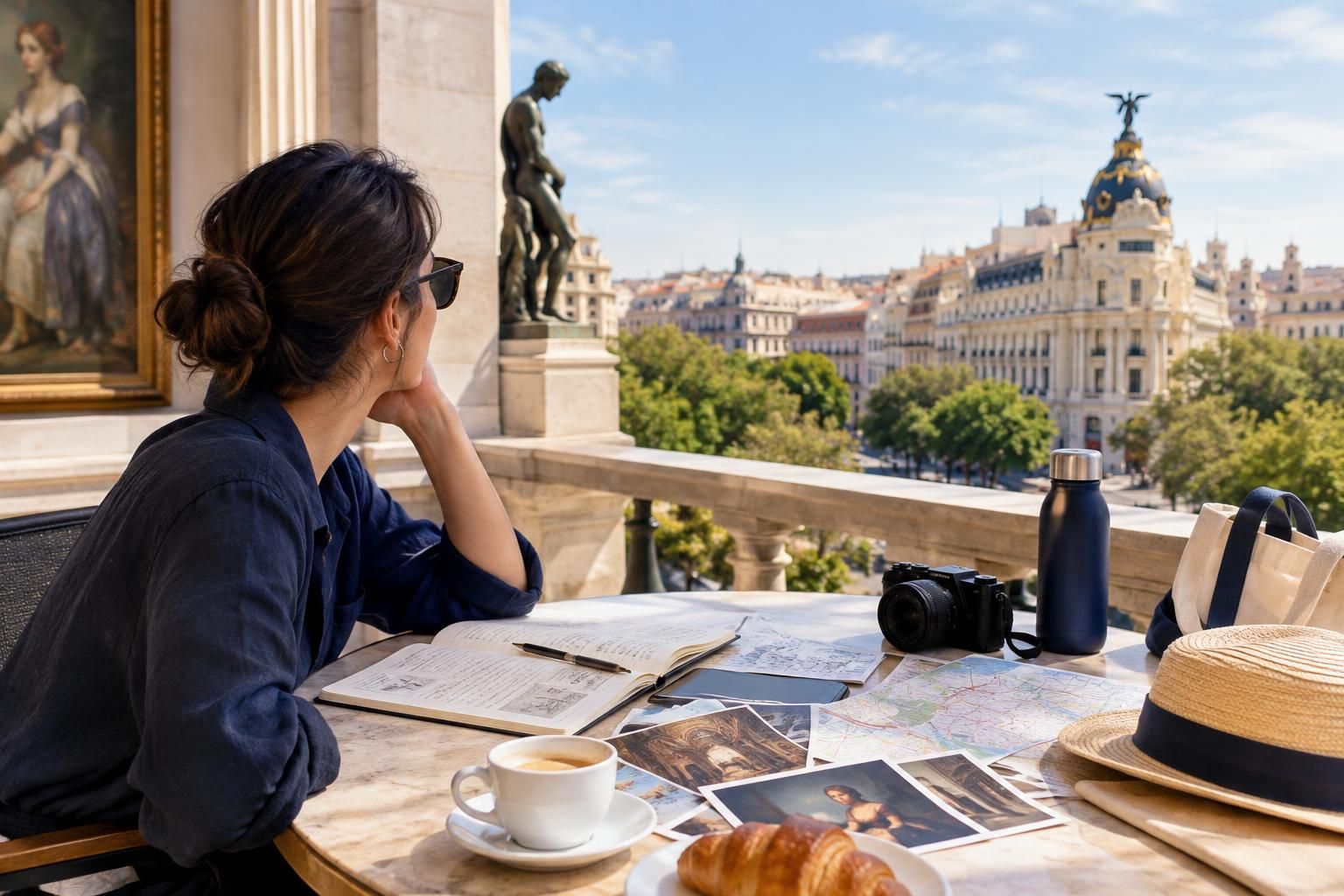
Madrid rewards an art-focused visit, but filling every day with galleries can make extraordinary paintings blur together. A more satisfying approach is to give each major collection its own purpose, then balance looking closely with parks, meals and neighborhood walks. Five nights offer room for three substantial museum visits without turning the trip into an endurance exercise. Rather than trying to see everything, plan around a few artistic interests and leave space to follow whatever catches your attention.
Give each museum a different role
Start by deciding what you want from Madrid’s three best-known art museums. The Prado is a natural anchor for European painting, particularly if Velázquez and Goya are priorities. The Reina Sofía gives the trip a modern and contemporary focus, while the Thyssen-Bornemisza offers a broad route through different periods and styles. Treat them as complementary experiences rather than three lists to complete.
Before booking, choose one theme for each visit: portraits and power, experiments in color, or the changing depiction of everyday life. Select a handful of works or artists to seek out, allowing for displays to change. A short priority list gives you direction while preserving the pleasure of encountering something unexpected.
Choose accommodation for the whole day, not just the galleries
The area around the Paseo del Prado is convenient for an art-led stay, but proximity alone should not decide your accommodation. Barrio de las Letras can suit travelers who want galleries, cafés and evening walks within the same general area. Retiro-side streets may appeal if you value park access, while Chamberí offers a more neighborhood-centered stay with a longer journey to the main museums.
Compare the actual route from each property to your likely destinations. A map’s short distance can conceal an awkward station interchange or an uphill walk home. Check for a lift if stairs matter, and read room descriptions carefully for street-facing bedrooms. A comfortable chair, breakfast arrangements and somewhere to rest between outings can be more useful than a striking lobby.
Build five nights around three anchor visits
Keep arrival day light: settle in, take a short orientation walk and have an uncomplicated meal. Use the first full day for the collection that matters most to you, when your attention is freshest. Follow it with an afternoon that needs no tickets. On the second full day, explore a neighborhood or park before considering a smaller exhibition or another non-museum activity.
Place the other two major museums on the remaining full days, with generous gaps around them. This creates a simple rhythm: art, recovery, art, art with a lighter finish. The order should follow the opening days and entry arrangements published for your travel dates, not a rigid template. Avoid putting your most important visit just before departure, when luggage and onward travel can distract you.
Make gallery time selective and comfortable
For a large museum, plan an initial visit of roughly two hours rather than assuming you will stay until you have covered every room. Begin with your priorities, then choose whether to continue. Spend longer with a few works: notice where the light falls, how figures look at one another, or what changes when you step back. This often creates stronger memories than photographing every label.
If traveling with someone whose interests differ, agree on a meeting point and split up for part of the visit. Decide in advance whether an audio guide would help you focus or simply add too much information. Check each venue’s bag, photography and re-entry policies before setting out. Carrying less makes a gallery day easier, especially when cloakroom arrangements vary.
Use outdoor time as part of the art itinerary
Retiro provides a useful change of scale after hours spent looking at framed images. Plan a walk, find a place to sit, and let the museum visit settle rather than immediately adding another attraction. The streets of Barrio de las Letras offer a different transition, with literary associations and opportunities to look at façades, shopfronts and public spaces.
Give one afternoon to a neighborhood without a checklist. You might walk through Chamberí or explore parts of La Latina, choosing a modest route with a meal or café stop as its only fixed point. Architecture, signs and street life can extend an art trip beyond formal collections. For this length of stay, a day trip is optional; it is not necessary to make the holiday feel complete.
Keep tickets, meals and packing uncomplicated
Compare individual admission with any combined ticket against the museums you genuinely intend to visit. A pass is not automatically good value if it encourages an unwanted extra stop. Check whether temporary exhibitions require separate admission and whether entry is timed. Keep booking confirmations accessible offline, and avoid stacking nonrefundable activities so closely that one delay disrupts the whole day.
Build the budget around accommodation, museum entry, local transport and meals, leaving a small allowance for an exhibition or book discovered along the way. Pack comfortable footwear, a light layer for changing indoor temperatures and a compact bag that suits venue restrictions. Plan at least one proper meal away from the museum schedule each day; resting and eating should not become tasks squeezed between tickets.
A rewarding Madrid art break depends less on the number of galleries visited than on the attention you can give them. Choose a few priorities, stay somewhere that supports easy evenings, and protect the gaps between bookings. Those unhurried intervals help individual paintings—and the city around them—remain distinct.
AI-assisted evergreen travel guide. Featured image is an AI-generated illustration, not a specific product or booking.