Nagasaki rewards travelers who give its geography as much attention as its attractions. Hills rise behind a long harbor, neighborhoods occupy different elevations, and a short distance on a map can involve a surprisingly steep walk. For a first visit, three nights creates room for maritime history, remembrance, local food and an unhurried waterfront afternoon. Rather than treating the city as a checklist, build each day around one area and use public transport to connect the larger pieces. The result is a varied urban stay without needing a rental car or packing every hour.
Choose a base by walking conditions, not just distance
Begin your accommodation search around Nagasaki Station or the central area near Hamanomachi and Shinchi Chinatown. A station-area base suits travelers arriving with luggage or continuing to another part of Kyushu. A more central base puts greater emphasis on restaurants and evening wandering. Neither is automatically better: compare the actual route from the nearest transport stop to the property.
In a hillside city, an attractive room described as close to the center may still involve steps or a sustained climb. Look for information about street-level access, lifts and the final approach. If you are considering a hilltop stay for the view, decide whether you would be happy making that journey after dinner or in wet weather. Travelers with heavy bags, strollers or limited walking stamina should give straightforward access priority over a panoramic window.
Build the itinerary around three geographic clusters
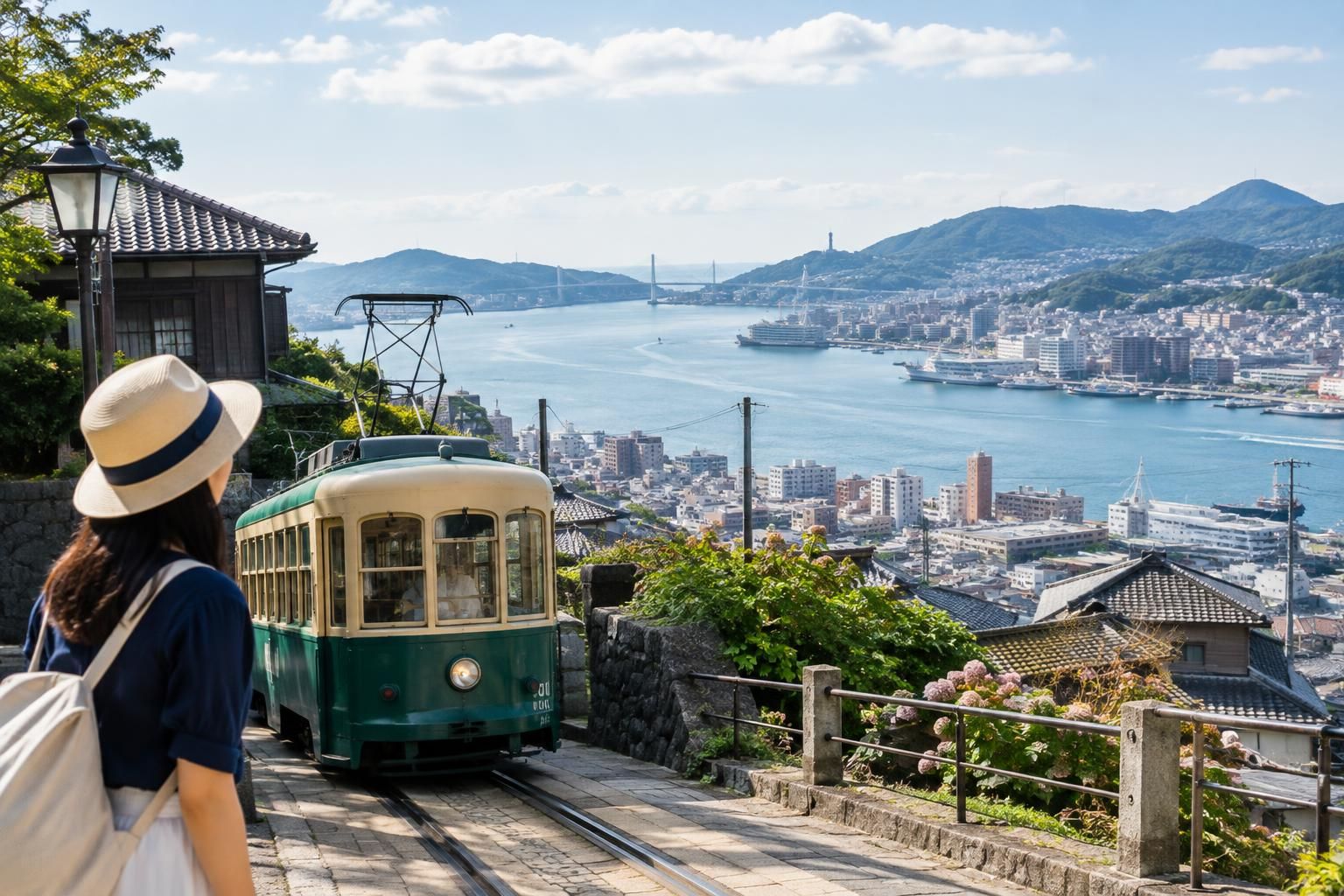
A useful starting structure is one day for the southern harbor and international-history area, one for the northern remembrance sites, and one flexible arrival or departure window for central neighborhoods. This reduces the temptation to cross the city repeatedly. Treat tram routes as connections between clusters rather than assuming they remove all walking: the last section of a journey may still be uphill.
For a three-night visit, keep arrival day light with a nearby meal and a short orientation walk. Give your first full day to the waterfront and southern slopes, then reserve the second for the Peace Park area and a quieter afternoon. Before committing to individual visits, check transport arrangements, admission details and accessibility for your dates. Leave departure morning free of anything that would be disappointing to miss.
Explore the harbor’s history without turning it into a marathon
Dejima, the former trading enclave, offers a starting point for understanding Nagasaki’s overseas connections. Farther south, the streets around Oura and Glover Garden introduce another layer of the city’s international history. These places work well within the same broad day, but they need not become one continuous walk. Break the journey with lunch or a waterfront pause, especially if climbing streets is tiring.
Choose depth over collecting every historic building. One substantial visit, followed by time noticing slopes, rooflines and harbor views, can be more memorable than several rushed interiors. If you want to include a religious site, check visitor arrangements and approach it as a place of faith as well as architecture. Keep a shorter alternative in mind if rain makes an extended hillside wander unappealing.
Give remembrance sites time and emotional space
The Nagasaki Atomic Bomb Museum, the hypocenter area and Peace Park deserve a different pace from a food-and-shopping afternoon. Set aside a substantial part of a day rather than fitting them between unrelated stops. Historical exhibits can require concentration and can be emotionally difficult; there is no need to pair them with another demanding museum simply to fill the schedule.
Afterward, plan something undemanding: lunch, a rest at your accommodation or a gentle neighborhood walk. Families should consider how much detail suits their children and allow adults different amounts of time if needed. At memorial spaces, follow posted guidance and be considerate about photography, noise and other visitors. A quieter afternoon is a deliberate part of the itinerary, not wasted sightseeing time.
Use meals to experience another side of Nagasaki
Nagasaki’s food offers an accessible thread through its cultural history. Champon, a noodle soup with mixed toppings, and sara udon, served with a thick sauce over noodles, provide two contrasting meals to try. Castella sponge cake makes an easy afternoon snack. Rather than seeking every specialty in one day, spread them across the stay and leave room for an ordinary neighborhood lunch.
For a splurge, consider a shippoku-style meal, associated with Nagasaki’s blend of culinary influences and shared dishes. Ask about portion size, ordering arrangements and dietary needs before committing. Seafood, pork and meat-based stocks can matter even when they are not obvious from a dish’s name. Keep one convenient dinner option near your accommodation so that a tiring day does not end with another lengthy journey.
Keep viewpoints and excursions as flexible extras
A high viewpoint such as Mount Inasa can add perspective to the harbor’s shape, but make it a weather-dependent bonus rather than the trip’s defining promise. Low cloud or rain can change the experience. Check access and return transport before heading up, and carry a light layer for exposed viewpoints. If visibility is poor, a sheltered meal or central-area visit may be a better use of the evening.
Likewise, an offshore excursion such as Hashima should not be the foundation of a short stay: sea conditions can affect departures and landing opportunities. If it is a priority, retain an alternative city plan. Pack comfortable shoes with reliable grip, a compact rain layer and a small day bag. Keeping luggage manageable also makes the station-to-hotel journey easier.
The most useful Nagasaki itinerary is organized around terrain, neighborhood clusters and room to pause. Choose accommodation with an easy approach, separate the main historical areas into manageable days, and let weather guide optional views or boat trips. Three nights can then offer a satisfying introduction to the city without making every hill, transfer and meal part of a race.
AI-assisted evergreen travel guide. Featured image is an AI-generated illustration, not a specific product or booking.