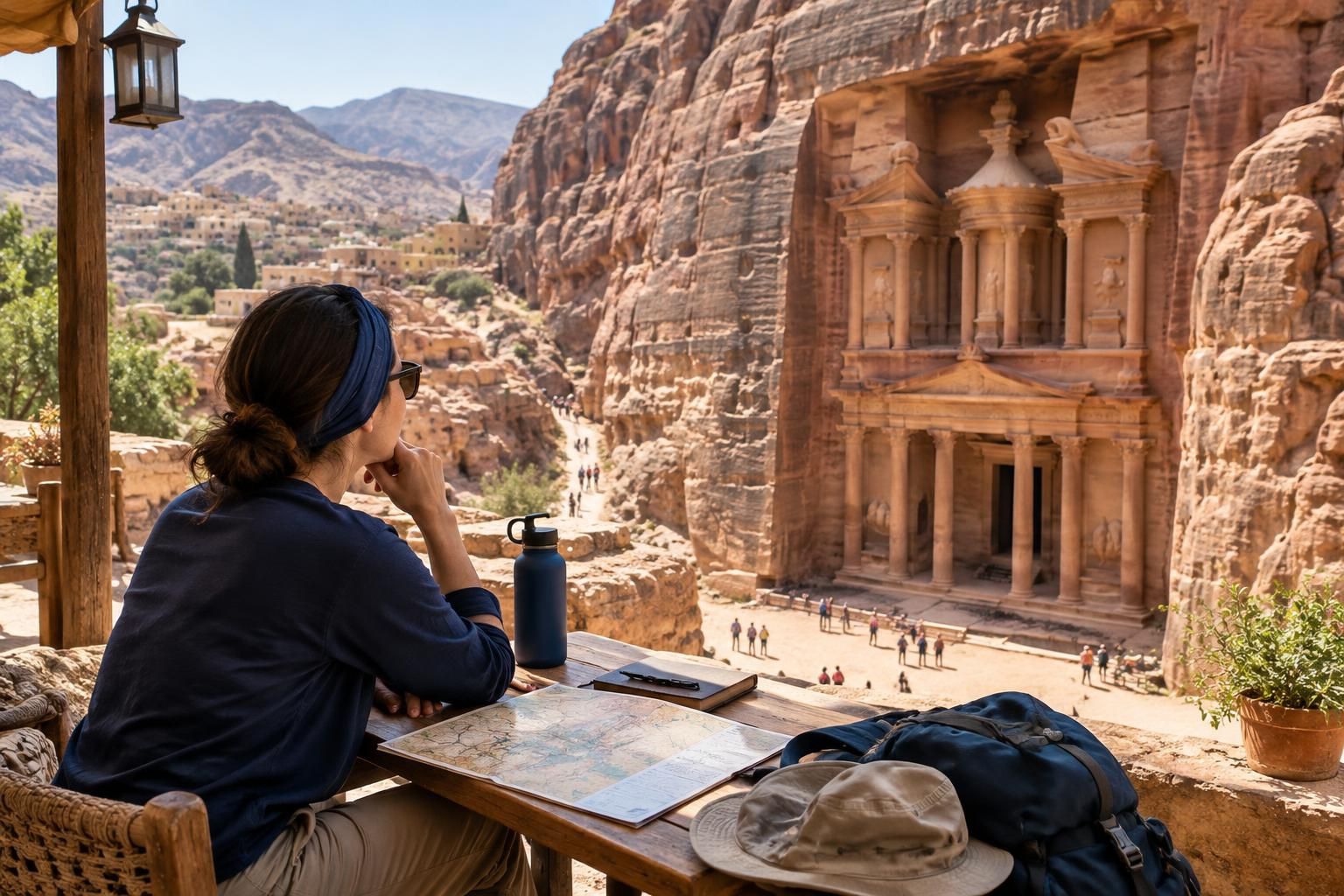
Petra is often pictured as a single monument framed by a narrow canyon. In practice, visiting this ancient Nabataean city means moving through a large archaeological landscape of rock-cut facades, open valleys, uneven paths and stairways. The Treasury is an unforgettable introduction, but it is not the whole visit. Allowing two sightseeing days gives you room to appreciate the main route without making every optional climb feel compulsory. The key is to choose a practical base in Wadi Musa, understand how much walking your plans involve, and protect enough time for the return journey.
Decide what you want from the second day
A second day at Petra is most useful when it serves a clear purpose. For some travelers, that means separating the central monuments from the climb toward the Monastery. For others, it means moving slowly, spending longer with architectural details, or returning to a favorite area rather than covering more ground.
Build your plan around interests rather than a completion list. A photography-focused traveler may prefer repeating part of the main route in different light. Someone drawn to archaeology might prioritize a guided introduction and time among the tombs and civic remains. A keen walker may want a longer route, but additional distance should be a deliberate choice, not an assumption that every famous viewpoint belongs in the itinerary.
Before booking, check the current admission arrangements for the number of days you intend to visit. Do not assume that a general Jordan itinerary or bundled sightseeing product automatically matches your Petra plans.
Choose a Wadi Musa hotel by the walk, not just the map
Wadi Musa is the usual overnight base for Petra, but accommodation locations offer different trade-offs. A room close to the visitor entrance can simplify an early departure and reduce the effort of getting back after a long day. A hotel farther into town may suit travelers who value a broader choice of nearby meals or a quieter setting.
Pay attention to elevation as well as distance. A property that looks close on a map may involve a climb that feels very different after hours on foot. Read the location description carefully and establish whether you would walk, arrange a vehicle, or use any transport the property offers. Confirm arrangements rather than assuming a shuttle exists.
For this stay, practical comforts can matter more than decorative extras. Look for somewhere to sit outside your bed, a breakfast arrangement that suits your departure plans, and a clear policy for storing luggage after checkout.
Use the first day to understand the main route
A sensible first day follows the approach through the Siq to the Treasury, then continues into the wider archaeological site according to your energy and interests. This introduces the contrast that makes Petra compelling: an enclosed entrance passage opening into a much broader landscape.
Resist the temptation to commit to every side route before you understand the scale. Walking beyond the Treasury adds both distance and the eventual walk back. Allow time for looking, resting and finding your bearings rather than treating the main path as a transfer between photo stops.
A licensed local guide can add context to what might otherwise feel like a succession of impressive facades. Agree on the route, approximate duration, meeting point and what the service includes before setting off. Choose an interpretation-focused walk if understanding the site matters more to you than reaching the greatest number of places.
Make the Monastery a choice, not an obligation
The route toward the Monastery involves a substantial stepped ascent beyond the central sightseeing areas. It is better treated as a major part of a day than as a small extra after everything else. Consider how you usually feel on prolonged stairs and uneven ground, not simply how far you can walk on a pavement.
If the Monastery is your priority, give it a day with fewer competing objectives. If it is not, use the second visit for a more selective exploration of the main archaeological area. Skipping a demanding climb does not make the trip incomplete.
Ask locally about current route access and conditions before following any alternative approach. A line on a digital map is not enough to establish that a trail is open, appropriate or easy to navigate.
Pack for a long walking day with limited spontaneity
Bring footwear you already know is comfortable on uneven surfaces, sun protection, drinking water and a small day bag that leaves your hands free. A light layer is useful for changing conditions and shaded stretches. Pack only what you are willing to carry for the whole outing.
Do not make your day depend on finding a particular refreshment stop at exactly the right moment. Plan your food and water needs before entering, and check what services are operating during your visit. Keep essential booking information available offline, while remembering that a downloaded map does not replace local route guidance.
Give arrival and departure their own space
For two substantial sightseeing days, three nights in Wadi Musa is the simpler arrangement: arrive, spend two days exploring, and leave after another night's rest. Two nights can work if your arrival or departure timing genuinely leaves enough usable sightseeing time, but it creates less flexibility.
Avoid combining your longest Petra walk with an ambitious onward journey simply because both fit on a calendar. Whether continuing toward Wadi Rum, Amman or elsewhere, account for collecting luggage, eating and reaching your transport. Check current travel arrangements separately, and leave room for a slower finish than expected.
A rewarding Petra visit is less about reaching every landmark than matching the landscape to your interests and stamina. Choose accommodation with the return walk in mind, give each sightseeing day a purpose, and keep demanding climbs optional. That leaves more attention for the place itself, rather than the pressure of getting through it.
AI-assisted evergreen travel guide. Featured image is an AI-generated illustration, not a specific product or booking.