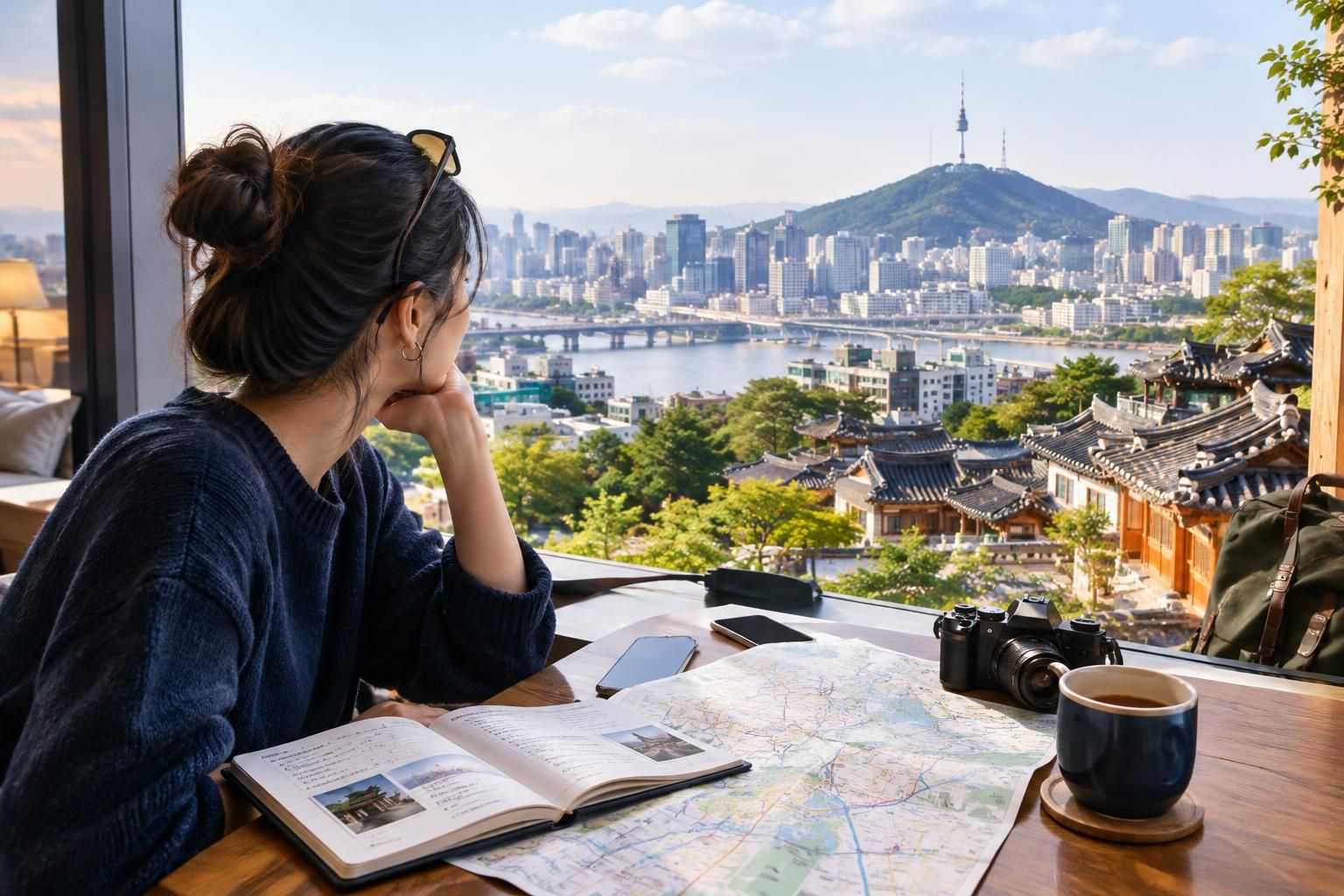
Seoul rewards travelers who think in neighborhoods rather than landmarks. Palace grounds, market alleys, design districts and riverside paths offer very different experiences, but connecting too many of them in one day can turn a city break into a sequence of transfers. For a first visit, one well-chosen hotel and a few geographically focused days usually make a better starting point than an ambitious checklist. A four- or five-night stay gives you room to explore historic central Seoul, spend time in a contemporary neighborhood and keep a flexible day for weather or a particular interest.
Choose a Base for Your Evenings as Well as Your Sightseeing
Jongno and the area around Insadong suit travelers who want traditional streets, palace visits and teahouses to shape their trip. Myeongdong and Euljiro offer another central option, particularly if you prefer busy commercial streets and plenty to browse after sightseeing. These are useful starting areas, but the exact hotel location matters more than the district label.
Hongdae may appeal if cafes, shops and an energetic evening atmosphere rank above being close to the historic core. Gangnam makes more sense when your priorities lie south of the Han River rather than around the palaces. Before choosing, map the actual entrance of each hotel against a station, then inspect the walking route for major roads, slopes and awkward crossings.
Accommodation details can change the experience of a longer city stay. Compare room size, luggage space, laundry arrangements and potential street noise. A quieter room slightly farther from nightlife may be worth more than a prestigious address.
Build Each Day Around One Geographic Cluster
Give each day one main area and one optional extension. A historic-core day might combine a palace visit with Insadong and nearby lanes. A western Seoul day could focus on Hongdae and Yeonnam, while a south-of-the-river day might pair a museum or shopping district with time beside the Han.
Avoid treating every recognizable neighborhood as an essential stop. Seongsu, Hongdae and Gangnam can each support an unhurried outing, but combining all three sacrifices time to travel. Choose according to your interests: independent shops and cafes, youthful street life, contemporary architecture or a particular exhibition.
Plan one anchor experience each morning and leave the afternoon less structured. This creates space for a long lunch, an unexpected gallery or simply staying somewhere you enjoy. Keep a nearby indoor alternative rather than sending yourself across the city when rain arrives.
Make Historic Seoul a Place to Explore, Not Just Photograph
Select a palace that fits your route rather than assuming you need to visit several. Palace grounds can involve substantial walking and exposed courtyards, so allow time to absorb the buildings and layout instead of adding them between other appointments. Check visitor arrangements close to your trip, especially if a particular interior or guided experience matters to you.
Traditional-house areas such as Bukchon are also lived-in neighborhoods. Keep voices low, avoid obstructing doorways and do not enter courtyards simply because a gate is open. Hills and stepped lanes can make a short map distance feel considerably longer. Follow posted visitor guidance and choose a few streets to explore respectfully rather than chasing every photo location.
Use Transit to Reduce Walking, Not Hide Extra Distance
Seoul's rail network is useful for organizing a stay, but a station name does not tell you the whole journey. Large interchanges can involve lengthy corridors, and the wrong exit may leave you across a broad road from your destination. Compare total journey time, transfers and the final walk rather than counting stops alone.
Before arrival, familiarize yourself with a navigation service that supports local public transport and save your accommodation address in Korean. Confirm airport transfer options for your arrival time and luggage needs. A route that looks quickest on paper may be less convenient than a simpler journey with fewer changes.
For daily sightseeing, alternate transit with walking inside one compact area. If your group has different energy levels, identify a cafe, museum or return route where someone can comfortably break away.
Plan Meals Around Appetite, Not a Food Checklist
Markets are enjoyable places to sample dishes, but they work best when you arrive hungry enough to share a few choices. Browse before ordering, look for displayed prices and clarify portion sizes. Balance snack-heavy outings with seated meals so that eating does not become another standing activity after hours of walking.
Match restaurant choices to your group. Some barbecue and hot-pot meals are easier to order with companions, while noodle shops and casual counter-style places may suit solo diners. For vegetarian diets, allergies or other requirements, prepare clear written questions about broths, sauces and shared cooking surfaces rather than relying on a dish's appearance.
Leave Space for Weather, Hills and a Slower Final Day
Season affects how a Seoul day feels. Hot or wet conditions favor shorter outdoor stretches with indoor breaks; cold weather makes warm layers and less exposed waiting time valuable. Comfortable footwear matters in every season, especially when your plans include palace grounds or hillside neighborhoods.
Use your final full day for something you genuinely want more of: a museum, shopping, a riverside walk or a return to a favorite district. Pack a small day bag with water, a weather layer and charging essentials. Leave room in your schedule, not just your suitcase, for discoveries that were never on the original list.
A satisfying first Seoul trip does not require crossing the whole city every day. Choose a base that supports your evenings, group nearby experiences and let one substantial outing set each day's pace. You will spend less time navigating transfers and more time noticing the streets, meals and small places that give each neighborhood its character.
AI-assisted evergreen travel guide. Featured image is an AI-generated illustration, not a specific product or booking.