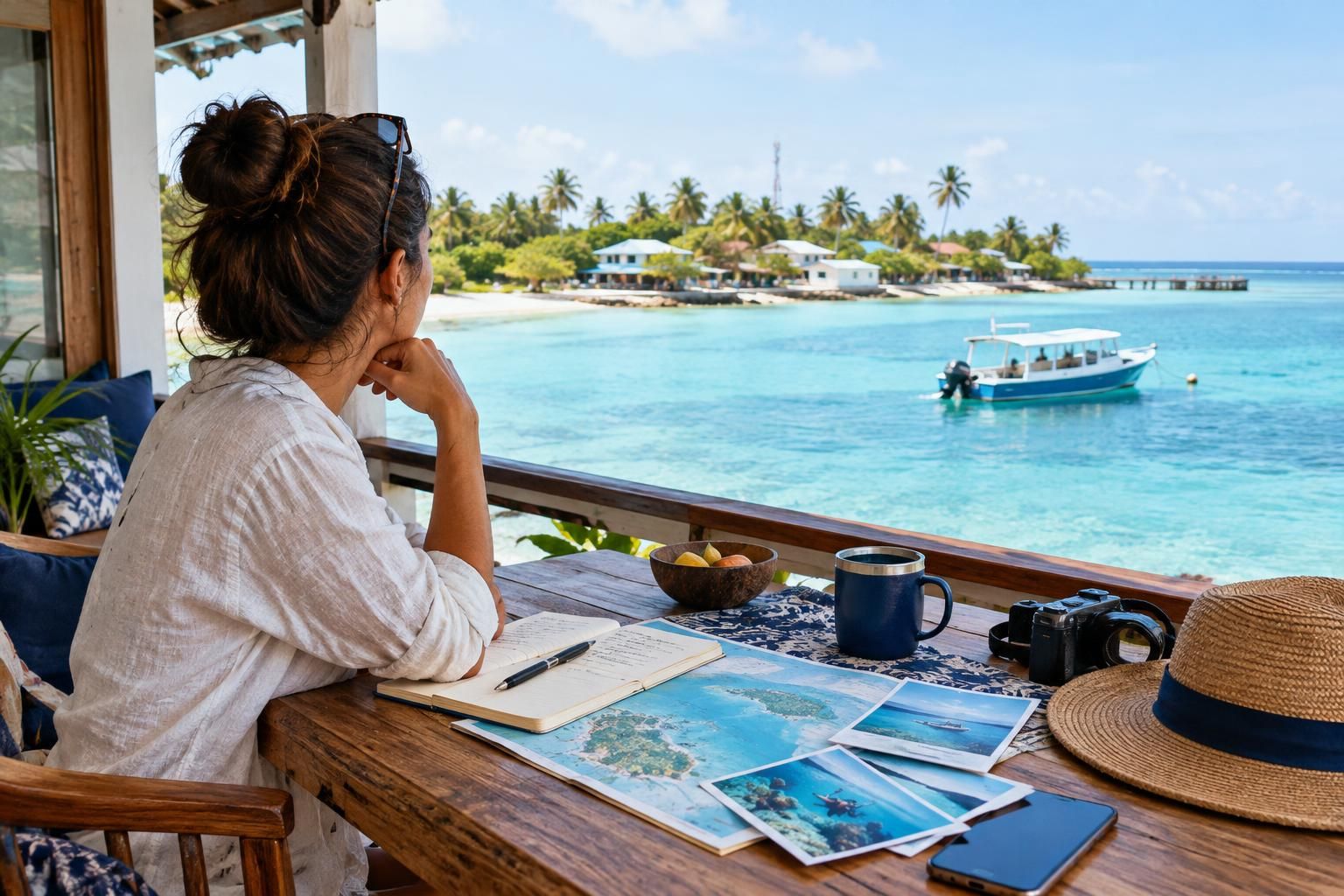
The Maldives does not have to mean a private-island resort. Staying in a guesthouse on an inhabited island can bring neighborhood cafés, working harbors and everyday community life into a trip built around the sea. It also changes the planning priorities: the beach nearest your room may not be the one you use for swimming, and reaching a small island can require more coordination than its distance on a map suggests. The best approach is to choose the island and its transfer arrangements together, then find accommodation that suits how you want to spend your days.
1. Decide what you want from an inhabited island
Local islands are communities rather than self-contained holiday properties. Homes, schools, shops, mosques and boat operations share a relatively small space with visitor accommodation. That setting can be rewarding if you enjoy walking to meals and observing daily life, but it is different from having every facility arranged around a hotel beach.
Start with your main priority. For a first visit, you might prefer an island with several places to eat and a choice of excursion operators. For a quieter break, fewer facilities may be acceptable. Maafushi, Dhigurah and Thulusdhoo are examples worth comparing, not interchangeable versions of the same holiday. Look at island layout, swimming areas, harbor activity and the kind of accommodation available rather than choosing from beach photographs alone.
2. Treat the transfer as part of the destination choice
Map distance is a poor substitute for a workable arrival plan. Depending on the island, the journey may involve a passenger ferry, speedboat or domestic flight followed by a boat connection. Before committing to accommodation, ask how guests normally reach it, where the transfer departs, how reservations are arranged and what happens if an inbound flight is delayed.
Compare the full journey cost and effort, not just the room rate. A less expensive guesthouse can become a poor fit if reaching it requires extra transfers or an overnight stop. Coordinate your international flight arrival and departure with the island connection, leaving breathing room rather than planning a tight handoff. Sea conditions can disrupt boat travel, so a final night nearer the international departure point may be sensible.
For a short holiday, one island is often enough. Changing islands can mean returning through a transport hub rather than taking a simple direct boat, turning a seemingly short hop into a substantial travel day.
3. Choose a guesthouse by location and daily comfort
A beachfront label does not explain the whole setting. Ask whether the property faces a swimming beach, a harbor or another stretch of shoreline, and how far you would walk to the beach intended for visitors. A room near restaurants may suit independent travelers; a quieter location may appeal more if you expect to eat at the guesthouse.
Check the basics that shape a tropical stay: effective cooling, window ventilation, shade, a place to dry swimwear and enough room to keep damp equipment away from luggage. If stairs are difficult, confirm the room floor and access arrangements. Travelers who are sensitive to sound should ask about nearby construction, boat activity and other neighborhood noise.
Clarify what meals and transfers are included and which costs are separate. On a small island, breakfast timing and access to lunch can matter more than a long facilities list, especially when excursions occupy much of the day.
4. Understand the difference between village space and beach space
Pack for both a beach holiday and time in a Maldivian community. Lightweight clothing that covers shoulders and knees is a considerate choice for village walks. Swimwear expectations can differ between designated visitor beaches and other public areas, so ask your host where to swim and what is appropriate in each setting.
Bring an easy cover-up, comfortable sandals and a reusable water bottle. Check how drinking-water refills work at your accommodation rather than assuming they are available. Ask before photographing people, avoid obstructing working areas around the harbor, and remember that residential streets are not simply a backdrop for visitors.
If drinks, nightlife or resort-style dining are central to your holiday, establish whether a local-island stay matches those expectations before booking. Do not assume that a guesthouse island offers the same experience as a private resort.
5. Plan sea activities around suitability, not a checklist
Snorkeling, diving, sandbank outings and boat trips can give structure to an island stay, but there is no need to book an excursion every day. Choose one or two priorities and leave flexibility for conditions. Wildlife encounters are never guaranteed, and an outing should still feel worthwhile without a particular sighting.
For snorkeling, describe your swimming confidence honestly and ask about water entry, currents, flotation equipment, group size and supervision. A reef close to shore is not automatically suitable for an inexperienced swimmer. For diving, discuss experience and training requirements directly with the operator rather than selecting solely by price.
Choose operators that explain how they limit disturbance to marine life. Keep your distance from animals, avoid touching coral and never stand on a reef for a photograph. Bring sun protection suited to long periods outdoors, and carry a dry layer for the return boat ride.
6. Build a stay with uncommitted time
For a five-night island stay, a useful framework is an arrival afternoon, two possible excursion days, one beach-and-village day and one flexible day. The order can change with conditions and your energy. This is a planning template, not a reason to fill every gap.
Expect tropical heat, showers and changing sea conditions rather than designing the trip around uninterrupted sunshine. Pack sun protection, a light rain layer, a waterproof pouch for documents and a small day bag. Download essential booking and transfer details before traveling. Keep your final island day relatively simple so packing and departure coordination do not compete with an ambitious outing.
A rewarding local-island trip starts with practical compatibility: an island you can reach comfortably, a guesthouse in the right location and activities suited to your confidence in the water. Choose fewer transfers and leave some days open. The result can balance time at sea with the quieter pleasure of getting to know one small island.
AI-assisted evergreen travel guide. Featured image is an AI-generated illustration, not a specific product or booking.