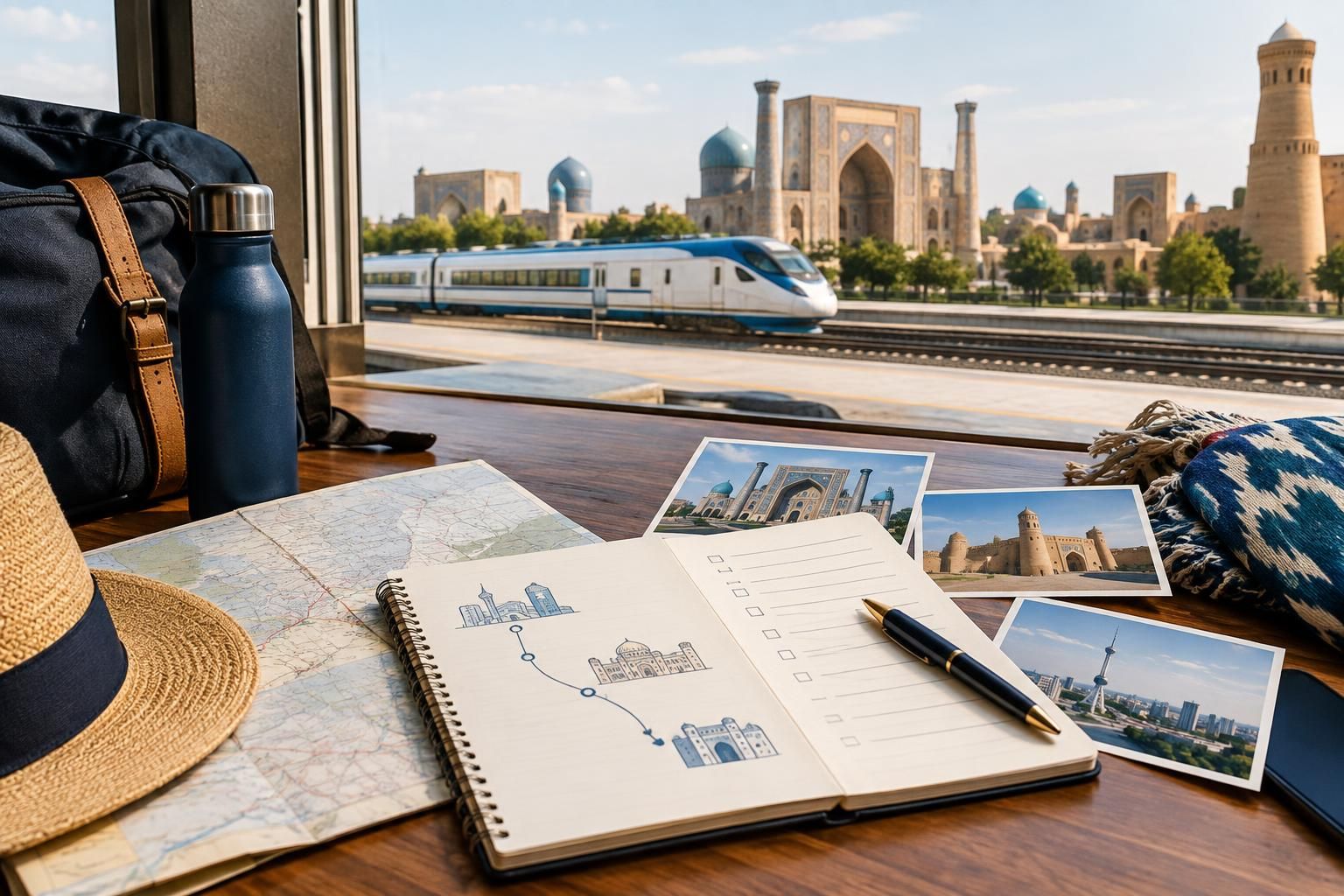
Uzbekistan’s historic cities reward more than a quick circuit of famous monuments. Tashkent offers a broad introduction to urban life, Samarkand brings monumental architecture into focus, and Bukhara encourages slower exploration through streets, courtyards and trading domes. Connecting these three places by rail creates a coherent first trip without requiring a new hotel every night. The key is to plan around the full journey rather than the train ride alone: station transfers, accommodation locations and time to rest all shape how the trip feels.
Choose a route before adding more destinations
Start with Tashkent, Samarkand and Bukhara as the core itinerary. This gives the trip a clear progression while keeping the number of moves manageable. Depending on your arrival and departure options, you might travel in one direction or return to Tashkent at the end. Compare the total cost and effort of both arrangements, including the final transfer, rather than choosing flights and rail journeys separately.
For a trip of roughly nine or ten nights, an illustrative split is two nights in Tashkent, three in Samarkand and three in Bukhara, with remaining time placed where it best supports arrival or departure. This is a planning framework, not a minimum requirement. With less time, shorten the route rather than compressing every city into a single night. Khiva is tempting, but adding it changes the travel demands enough to deserve a longer itinerary.
Treat each rail journey as a door-to-door move
When comparing trains, look beyond the advertised journey duration. Confirm the departure and arrival stations, then work out how you will reach each one from your accommodation. Bukhara is a particularly important place to check the relationship between the station and your intended hotel area. A short rail segment can still occupy much of a day once packing, transfers and check-in are included.
Check booking procedures, ticket conditions, identification requirements and luggage arrangements with the operator or booking provider before committing. Keep essential journey information accessible offline, including station names in the form shown on your ticket. Leave a sensible buffer before departure and avoid making an expensive, separately booked flight depend on a tight same-day rail connection. On travel days, plan one optional activity rather than a full sightseeing program.
Pick accommodation for the stay, not just the photograph
A courtyard guesthouse can suit travelers who value atmosphere and a quieter place to pause, while a larger hotel may appeal if predictable facilities matter more. Compare heating or cooling, stairs, bathroom arrangements and room position as carefully as decorative details. In characterful older properties, rooms facing a shared courtyard may feel different from those opening onto a street.
Location needs vary by city. In Tashkent, think about access to the neighborhoods and transport you expect to use rather than searching for one universally convenient center. In Samarkand, decide whether you prefer to stay near the principal monuments or in a busier everyday district. In Bukhara, proximity to the historic core can make short outings easier, but ask about vehicle access and the final walk with luggage. Save the property address and arrival instructions offline.
Give each city a different role
Use Tashkent to settle in. A market visit, a neighborhood walk and time with the city’s metro architecture can make a balanced introduction without turning arrival day into an endurance test. In Samarkand, build outings around major architectural ensembles such as the Registan and Shah-i-Zinda, but separate large sights with meals and unstructured time. Check access arrangements and visitor requirements when planning individual visits.
Let Bukhara provide a slower finish. Rather than treating every historic building as another stop to complete, choose a few interiors that interest you and leave room to notice brickwork, shaded passages and courtyard spaces. A guide can be useful for understanding architectural details and historical context; independent wandering works well for travelers who prefer frequent pauses. Combining both approaches can be more rewarding than booking guided sightseeing for every day.
Plan for weather, walking and respectful visits
Much of this itinerary involves exposed squares, paved streets and time outdoors. Match the season to your tolerance for heat or cold, then arrange each day accordingly. In warmer conditions, place more demanding walks earlier or later and reserve the middle of the day for a meal, indoor visit or rest. In colder conditions, build in warm indoor breaks instead of assuming that short distances will make extended sightseeing comfortable.
Pack comfortable walking shoes, layers and sun protection appropriate to your dates. Bring clothing that can adapt to the expectations of religious and commemorative sites, and follow posted guidance about dress, photography and behavior. A compact day bag is useful for water, an extra layer and essentials. Choose luggage you can handle independently through stations and along uneven approaches; several smaller practical decisions matter more here than an elaborate packing list.
Leave room for meals and small discoveries
Avoid scheduling every meal around a famous dish or a particular restaurant. Plov, filled dumplings, soups and breads offer useful starting points for exploring Uzbek food, but menus and preparation vary. If you have dietary restrictions, carry a clear written explanation and ask about ingredients rather than relying on a dish name. Keep simple snacks available for travel days without assuming what will be offered on board.
Reserve some unassigned time for a workshop visit, a tea break or a second look at a favorite street. If you hope to buy ceramics or textiles, consider weight, fragility and space in your luggage before purchasing. One thoughtfully chosen object is often easier to bring home than several spontaneous buys. This breathing room also absorbs ordinary delays without forcing you to abandon the experiences that matter most.
A satisfying first Uzbekistan rail trip does not need the longest possible route. Three well-chosen bases can provide architectural variety, everyday city life and time to absorb the differences between places. Set the route first, check each transfer carefully, and protect a little unscheduled time in every city. The result is a journey shaped by exploration rather than constant movement.
AI-assisted evergreen travel guide. Featured image is an AI-generated illustration, not a specific product or booking.