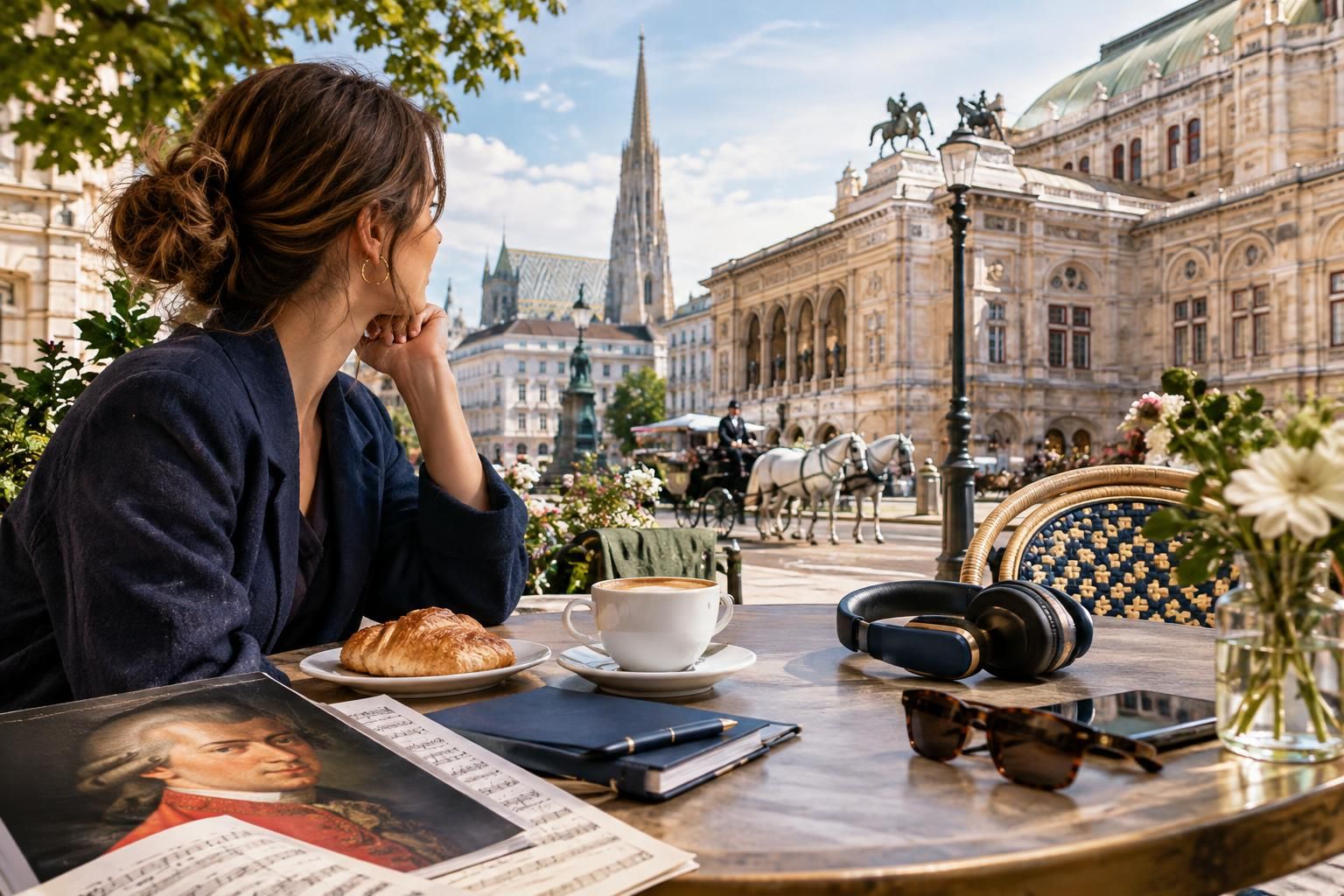
Vienna rewards a music-focused trip even if you cannot name a symphony or follow an opera plot. Its appeal lies as much in the setting as the performance: an evening walk through the historic center, a quiet museum room, or coffee before the auditorium doors open. Four nights give you room for two contrasting musical experiences without turning the holiday into a sequence of reservations. The most useful planning decision is not which famous venue to visit first, but how much listening, sightseeing and travel you genuinely want in each day.
Choose two musical anchors, not four crowded evenings
Start with one principal performance and one contrasting experience. An orchestral concert paired with chamber music offers different scales of sound; an opera paired with a museum visit creates a less demanding combination. If classical music is unfamiliar, choose something that interests you rather than something you feel obliged to admire. A recognizable work, a favorite instrument or an intriguing story can provide a useful starting point.
Assess the whole evening before committing. Look at the advertised program, expected duration, interval arrangements and any available language support. A long opera after a travel day may be less enjoyable than a shorter concert the following evening. Keep at least one night free so a delayed arrival, tired feet or an unexpectedly absorbing afternoon does not disrupt the trip.
Pick accommodation for the journey home
The Innere Stadt places you among historic streets and major cultural landmarks, making it attractive if walking between sights is your priority. Wieden can suit travelers interested in the area around Karlsplatz, while Neubau offers a different balance of museums, cafés and neighborhood wandering. Treat these as starting points rather than guarantees of atmosphere: the individual street and room position matter.
Once you have a likely performance venue, compare the complete route from each accommodation option. A seemingly close hotel may involve an awkward interchange, while a more distant one may have a straightforward connection. Check evening transport for your actual dates and consider the final walk from the stop. If you expect late nights, prioritize a quiet room over a view onto a lively street.
Understand what you are booking
Separate the attraction of the building from the appeal of the event. A famous hall does not make every program equally suitable for your tastes, and a less familiar venue can still provide a rewarding evening. Read the event description carefully to distinguish a full staged opera, a concert performance, an orchestral program and a mixed selection of popular pieces.
Seat choice can shape the experience as much as the venue. Consult the seating plan and note any stated restrictions on sightlines, particularly for opera or performances where seeing the stage matters. If standing admission is offered, weigh the physical commitment rather than treating it simply as a cheaper equivalent. Review booking conditions before paying, especially when coordinating separate tickets with transport and accommodation.
Give each day a manageable shape
Use arrival day for settling in, a neighborhood walk and an uncomplicated meal. On the first full day, explore the historic center and leave time to return to your room before your main performance. Place a museum or composer-related visit on the next day, with an open evening. Reserve the final full day for a contrasting neighborhood and your second musical experience, if you want one.
Avoid combining a large museum, extensive palace grounds and an evening performance simply because they fit on a map. Listening requires attention, and sightseeing fatigue can make even a much-anticipated concert feel long. One substantial daytime visit, a proper lunch and a rest usually create a more satisfying concert day than continuous movement.
Connect the music with the city around it
Choose one composer-related stop rather than collecting every address. A museum connected with Mozart, Beethoven or Schubert can give a performance greater context, but first check what the visit actually contains. Some places emphasize objects and domestic spaces; others rely more on interpretation. The strongest choice is the one that matches your curiosity, not necessarily the most recognizable name.
Balance interiors with outdoor time. Walk around the Ringstrasse to understand the scale of imperial Vienna, then change pace in a park or a residential neighborhood. A café stop is useful breathing space rather than another attraction to complete. If your music plans become more demanding than expected, drop an optional museum instead of sacrificing every unstructured hour.
Prepare for comfortable, low-friction evenings
Pack clothes that feel appropriate for an evening out but remain comfortable when seated for a long period. Check the venue’s guidance rather than assuming formalwear is necessary. Bring weather protection suited to the season and shoes that work for the walk before and after the performance. Travel light where possible, and check bag and cloakroom arrangements in advance.
Plan dinner around the event rather than squeezing it into an uncertain gap. An earlier meal can be simpler than depending on a particular kitchen afterward. Download tickets if the booking system permits, save the venue address and allow time to find the correct entrance. Reading a short plot summary or listening to a few excerpts beforehand can make an unfamiliar work easier to follow without turning preparation into homework.
A successful musical break in Vienna needs contrast more than volume: one eagerly anticipated performance, another perspective on the city, and enough unscheduled time to enjoy both. Choose accommodation around practical journeys, judge events by their content, and protect your energy on concert days. You will leave with a clearer sense of the city than a packed list of famous venues alone can provide.
AI-assisted evergreen travel guide. Featured image is an AI-generated illustration, not a specific product or booking.