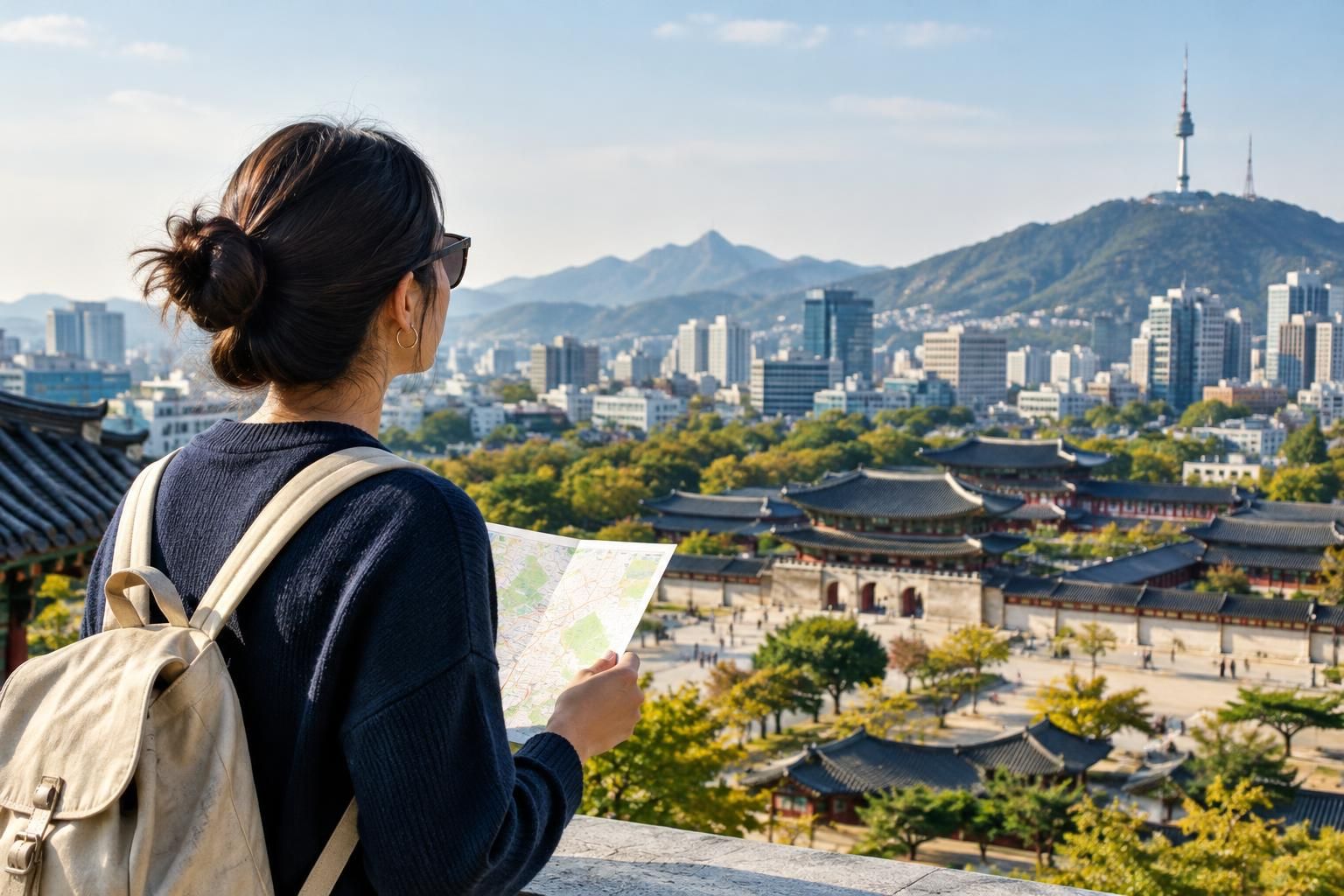
Choosing accommodation in Seoul is less about finding one perfect central district and more about deciding which journeys you want to make repeatedly. Palace visits, late dinners, shopping and riverside walks can pull a trip in different directions. A neighborhood that suits one traveler may add unnecessary travel for another. Start with your main interests and preferred evening atmosphere, then compare the actual walk between each hotel and useful transport. These four areas offer distinct starting points for a first visit, without requiring you to change hotels halfway through your stay.
Start with your daily journeys, not a list of famous districts
Before browsing rooms, choose five or six experiences you genuinely want: perhaps a palace, a traditional market, contemporary design, a neighborhood food walk and an evening beside the Han River. Place them on a map. If most cluster north of the river, accommodation there usually makes more sense than choosing a southern base simply because a hotel looks appealing.
Then consider your evenings. Travelers who return to their room before dinner benefit from restaurants nearby. Those who stay out all day may value a straightforward journey back instead. On a short visit, favor access to your main sightseeing cluster; on a longer stay, a neighborhood you enjoy wandering can matter just as much.
Choose Jongno for palaces, traditional streets and cultural wandering
Jongno is a strong candidate if your priorities include royal palaces, Insadong and the lanes around Bukchon. It suits travelers who enjoy connecting major sights with smaller streets, tea stops and unhurried walks. Rather than treating the whole district as one location, compare individual addresses: a room near a busy avenue will feel different from one tucked into a side street.
Accommodation can range from conventional hotels to traditional-style guesthouses. For the latter, check whether sleeping arrangements involve floor bedding, whether bathrooms are private and how luggage reaches the room. Around residential lanes, keep voices low and avoid treating doorways as photo sets. Historic atmosphere is more rewarding when your plans respect the neighborhood's everyday life.
Choose Myeongdong for a sightseeing-and-shopping compromise
Myeongdong is worth considering when you want shopping close to your accommodation and a base for exploring several parts of central Seoul. It can work particularly well for travelers whose days mix sightseeing with browsing, or who prefer returning to an area with an obvious commercial center rather than a quieter residential setting.
The trade-off is that a lively shopping district may not provide the atmosphere you want outside your bedroom window. Compare rooms facing major streets with those on smaller roads, and look carefully at the route from the nearest useful station. A hotel described as being near Myeongdong may still involve slopes, crossings or a longer walk than the neighborhood label suggests.
Choose Hongdae for evening energy and neighborhood exploring
Hongdae suits travelers who want cafes, casual dining, independent shops and an evening-focused atmosphere. It makes sense when browsing and eating are central activities rather than gaps between monuments. Nearby Yeonnam can appeal if you prefer smaller streets and a more residential setting while remaining within reach of the wider area's activity.
Be selective about the exact block. Staying directly beside nightlife is a different choice from walking to it from a quieter street. If sleep matters more than being immediately among the action, examine the surrounding businesses and room orientation. Also map your cultural sightseeing days: Hongdae can be an enjoyable base without being the closest option to every palace or museum.
Choose Gangnam when your plans genuinely favor southern Seoul
Gangnam is a broad area, not a single compact hotel zone. It can suit a trip centered on southern Seoul's shopping, dining and contemporary cityscape, particularly if you have specific destinations there. Choose an address around those plans rather than assuming that any hotel carrying the Gangnam name offers the same convenience.
For a first visit focused mainly on palaces and older neighborhoods north of the river, it may introduce journeys you do not need. Conversely, staying north while repeatedly traveling south is not automatically efficient either. Compare a few realistic routes, including walking and transfers, before letting a room deal decide your base.
Check the hotel approach, then organize days into geographic clusters
Once you have a shortlist, inspect the final approach to each property. Check station exits, lift access where needed, hills and the distance you would carry luggage. Confirm room layout, bed configuration, bathroom privacy and luggage-storage arrangements directly with the accommodation. For a traditional guesthouse, stairs and limited floor space may matter more than decorative details.
Build each day around one main area and one optional addition nearby. A palace-and-Jongno day, a Hongdae-and-Yeonnam day, and a southern Seoul day are more coherent than repeatedly crossing the city between individual attractions. Leave space for a long lunch or an unexpected shop rather than filling every gap with another journey.
Keep one flexible indoor option for wet, hot or cold conditions, such as a museum or exhibition that interests you. Before committing to anything time-sensitive, check its current visitor information. For a short stay, keeping one hotel usually avoids the packing, luggage storage and check-in interruption of moving between districts.
For a first Seoul trip, let your likely days and evenings guide the accommodation choice. Jongno favors historic sights and wandering, Myeongdong combines central sightseeing with shopping, Hongdae suits evening activity, and Gangnam works best when your plans lean south. The deciding detail is often the exact street and station approach, not the district's reputation. Choose one well-matched base, group nearby experiences together and leave enough time to enjoy the neighborhood around your room.
AI-assisted evergreen travel guide. Featured image is an AI-generated illustration, not a specific product or booking.