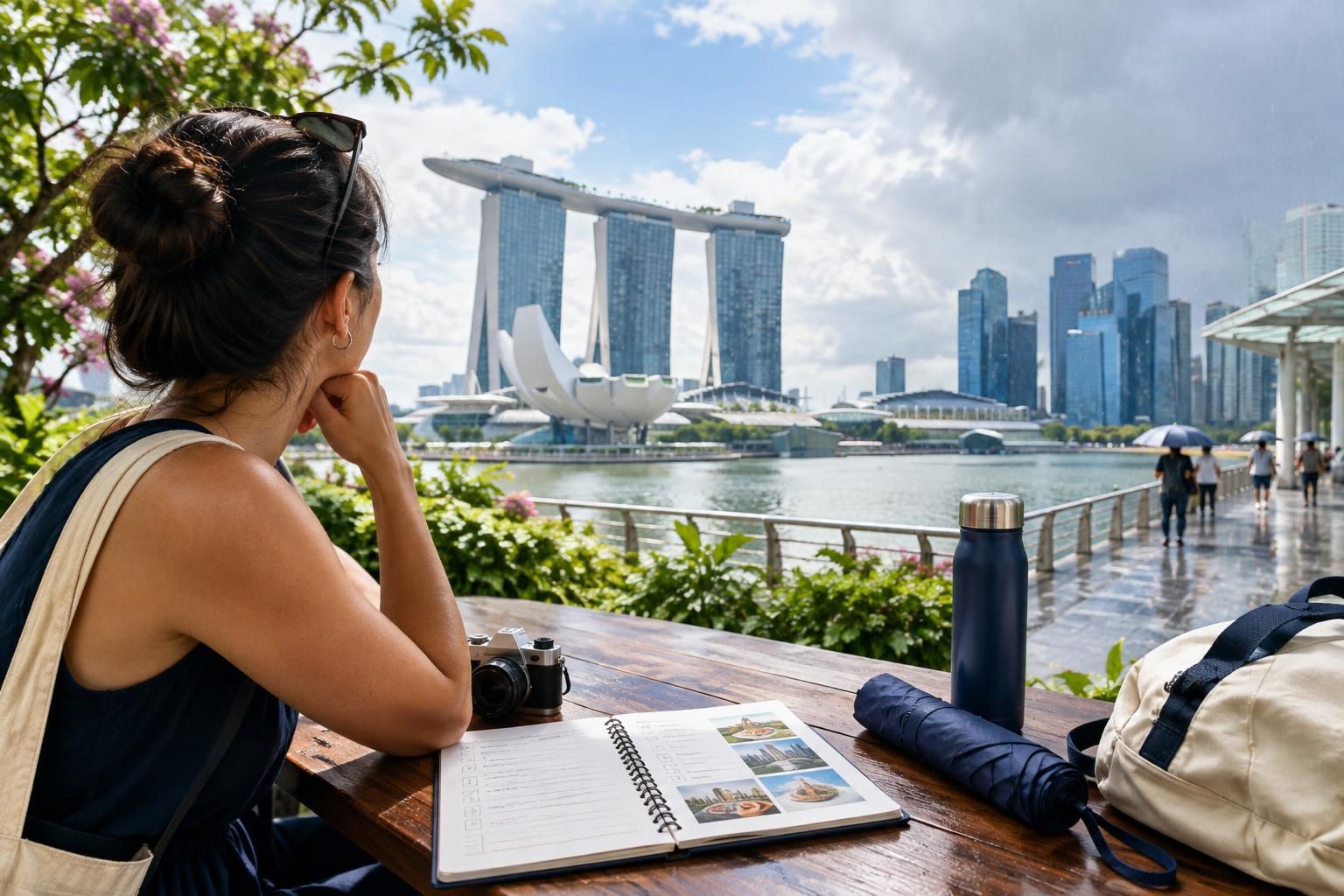
Singapore rewards travelers who plan by neighborhood rather than by a long list of attractions. A market breakfast, a museum visit, a garden walk and an evening meal can fit together comfortably, but crossing the island repeatedly adds friction when the weather turns hot or wet. Instead of trying to predict every shower, build a city break with short outdoor stretches, useful indoor alternatives and room to pause. This approach suits a first visit especially well: you still experience the city's food, architecture and green spaces without making every day an endurance test.
1. Build each day around one compact area
Start with a simple map and group your priorities into neighborhood clusters. Chinatown and the surrounding historic streets can form one outing; Kampong Glam and nearby Bugis another. The Civic District works well for an architecture-and-museums day, while Marina Bay suits a separate waterfront-focused block. These are planning areas rather than fixed walking routes: choose two main stops within each and leave the connecting time loose.
Avoid pairing distant attractions merely because each takes only an hour to visit. Transfers, station exits, finding entrances and stopping for refreshments all consume time. A useful daily structure is one main experience, one optional nearby stop and a meal in the same general area. Anything beyond that becomes a bonus rather than an obligation.
2. Give outdoor plans a flexible place in the day
Place your most important garden, waterfront or neighborhood walk early in your planned day, when you are fresh, or later if evening atmosphere matters more to you. Neither choice guarantees comfortable conditions, but it prevents every outdoor activity from accumulating in the middle of a packed itinerary. For places such as Singapore Botanic Gardens, select a manageable section instead of treating the entire grounds as a checklist.
Allow a substantial indoor break between outdoor blocks. Lunch followed by a gallery or museum can provide a change of pace without ending the sightseeing day. Keep one outdoor activity movable: if a shower interrupts a walk, shift the indoor visit forward rather than attempting to recover every minute. During thunderstorms, postpone exposed waterfront walks and other open-air plans.
3. Choose accommodation for the journey back
When comparing accommodation, look beyond the neighborhood name. Consider the actual walk to a station, how many transfers your likely outings require and whether nearby meals are easy to find. A property described as central may still involve an awkward approach with luggage. Map the entrance and surrounding streets rather than relying only on distance measured in a straight line.
For a short break, a practical base near the areas you most want to explore often matters more than a long facilities list. Think about your habits, too: travelers who appreciate a midday reset should prioritize an easy return journey, while those who stay out until dinner may prefer stronger evening food choices nearby. Check the room's storage and drying arrangements if you expect damp clothing or umbrellas.
4. Make meals part of the route
Hawker centres and neighborhood food courts can make natural anchors for a Singapore itinerary. Rather than crossing town for every dish, choose a meal stop near your day's main activity. You might organize a Chinatown outing around Maxwell Food Centre or explore Little India with time set aside for a meal. Treat individual stalls as possibilities, not promises, because trading days, queues and availability can vary.
Leave enough appetite and time for an unhurried choice. Walk around before ordering, look at displayed menus and prices, and ask about ingredients if needed. Carry a payment backup rather than assuming every small vendor accepts your preferred method. If traveling with others, agree on a meeting point before splitting up to order; busy dining areas can make regrouping surprisingly awkward.
5. Prepare indoor alternatives that still interest you
A useful rain plan should feel like part of the trip, not a consolation prize. Choose alternatives by interest: the National Gallery Singapore for art, the Asian Civilisations Museum for cultural history, or a longer café-and-bookshop pause if your priority is neighborhood atmosphere. Check current visitor information before committing, including access arrangements, exhibitions and any booking requirements.
Pair each alternative with a nearby outdoor plan, but check the route between their actual entrances. Being in the same district does not necessarily mean the connection is covered. Shopping complexes can be practical places to pause, eat or reorganize, yet there is no need to fill every wet afternoon with retail. One absorbing indoor experience is often more satisfying than several hurried stops.
6. Pack for transitions rather than every possibility
Keep your day bag light: a compact umbrella, refillable water bottle, light layer for air-conditioned interiors and a water-resistant pouch for electronics cover several everyday needs. Choose footwear you already find comfortable and that can cope with wet pavement. A small spare bag can separate a damp umbrella or clothing from the rest of your belongings.
Before leaving your accommodation, save the location of your next stop and a nearby alternative. Downloading a map can help if connectivity falters. Review the day's forecast without treating it as a minute-by-minute script, then decide which reservation or experience truly needs protecting. Keep the rest adjustable, including whether to walk, use public transport or take a taxi for an inconvenient connection.
A satisfying Singapore city break depends less on avoiding tropical weather than on limiting its power to derail your plans. Stay near useful transport, explore in compact clusters and give indoor experiences equal status with outdoor sights. With one clear priority each day and a nearby alternative, you can spend less time rearranging the itinerary and more time enjoying the city.
AI-assisted evergreen travel guide. Featured image is an AI-generated illustration, not a specific product or booking.