A Japan itinerary can look simple on a map: a few nights in Tokyo, a cultural stop in Kyoto and perhaps a mountain town or hot-spring stay. The harder question is what happens to your belongings each time you move. Station corridors, accommodation changes and sightseeing between check-out and check-in can make luggage a bigger influence on the trip than expected. Rather than starting with a packing list, start with your route. The most useful luggage setup is one you can manage independently, keep organized and adapt to different kinds of stays.
1. Match your luggage to the hardest transfer
Imagine the least convenient movement in your itinerary, not just the airport arrival. You might need to walk from a station in rain, negotiate stairs or change trains while carrying a coat. Choose a bag you can lift and move yourself under those conditions. A suitcase that feels manageable across a bedroom may feel very different after several transfers.
A compact wheeled case plus a small day bag is a sensible starting point for many travelers. A backpack can suit frequent accommodation changes, but only if you are comfortable carrying its full weight. Avoid a setup that depends on your companion having a spare hand. Before departure, pack everything and try a short walk, a staircase and lifting the main bag onto a raised surface.
2. Use fewer bases instead of packing around constant moves
Lighter luggage helps, but a calmer route can help more. Consider whether nearby destinations need separate overnight stays. A longer stay in Kyoto, for example, might accommodate a Nara excursion without another hotel change. Conversely, an overnight stay can be worthwhile when the destination itself is the focus rather than a brief sightseeing stop.
Give each accommodation change a purpose: access to a different region, an early activity or a distinctive stay. For a short ryokan visit between longer city stays, a small overnight bag may be enough if you have arranged a suitable way to handle the main suitcase. Do not assume that returning to the same hotel automatically includes luggage storage.
3. Build a wardrobe around laundry, not trip length
Pack for a repeatable clothing cycle rather than a different outfit for every day. Choose tops and bottoms that work together, comfortable walking clothes and a layer suited to the season and regions on your route. A trip combining cities and higher elevations may need more temperature flexibility than one concentrated in a single area.
Place a laundry opportunity before you run out of essentials. When comparing accommodation, look for clear information about laundry facilities, service arrangements and drying options. Access alone is not enough: washing clothes the evening before departure can leave you packing damp items. Keep a spare set of underwear and a clean top available while everything else is being washed.
4. Separate travel-day essentials from the main bag
Your day bag should hold the items you need without opening a suitcase in a station: travel documents, payment methods, phone, charging equipment, water and a compact weather layer. Keep booking details accessible offline as a backup. Small internal pouches can help distinguish cables, toiletries and personal items without turning the bag into a collection of loose objects.
For each transfer, add only what that journey requires. An overnight stop might call for sleepwear, toiletries and a change of clothes; a direct move between city hotels may need much less. Keep valuables, essential personal items and anything needed during the journey with you rather than placing them in luggage you may store or send separately.
5. Treat luggage forwarding and storage as planned options
Luggage forwarding can simplify some multi-stop routes, particularly when a short side trip sits between two longer stays. However, it should be an arranged part of the itinerary, not an assumption. Before relying on it, confirm whether the sending and receiving properties can help, what items are accepted and what delivery timing applies to your particular journey.
Station lockers or staffed storage may also help with sightseeing between stays, but capacity, bag-size limits and access arrangements vary. Have an alternative, such as asking your accommodation about storage or moving sightseeing to another day. If you plan to travel with a large suitcase, check the luggage conditions for the specific transport services you intend to use.
6. Check accommodation details that affect packing
Room layout matters as much as the headline room size. In compact accommodation, a suitcase that must lie fully open can occupy useful floor space. Packing cubes or a bag that opens from the top can make short stays easier to manage. Look at room photographs and descriptions with your actual luggage setup in mind.
For traditional accommodation, check which clothing, toiletries or other amenities are provided rather than packing duplicates or assuming everything is included. Ask about luggage access if stairs or lifting would be difficult for you. A smaller overnight bag can also make arrival and departure less cumbersome when your stay involves several different spaces.
7. Leave space for purchases and the journey home
Plan for purchases before the suitcase is full. Books, ceramics, textiles and packaged food have different packing needs, so leave both spare volume and some flexibility in weight. If shopping is important, placing the main shopping days near your final base can reduce the number of times you carry new purchases between cities.
A lightweight folding bag can provide flexibility, but it does not replace checking the baggage conditions for every flight on your itinerary. Before the final travel day, repack deliberately: protect fragile items, separate anything you need during transit and make sure you can still move the complete load without assistance.
Packing well for Japan is less about finding the perfect suitcase than making luggage fit the journey. Reduce unnecessary hotel changes, schedule laundry with drying time and decide how bags will move before planning sightseeing around a transfer. A manageable load leaves more room for the experiences you came for, whether that is a neighborhood walk, a regional food stop or an unhurried overnight stay.
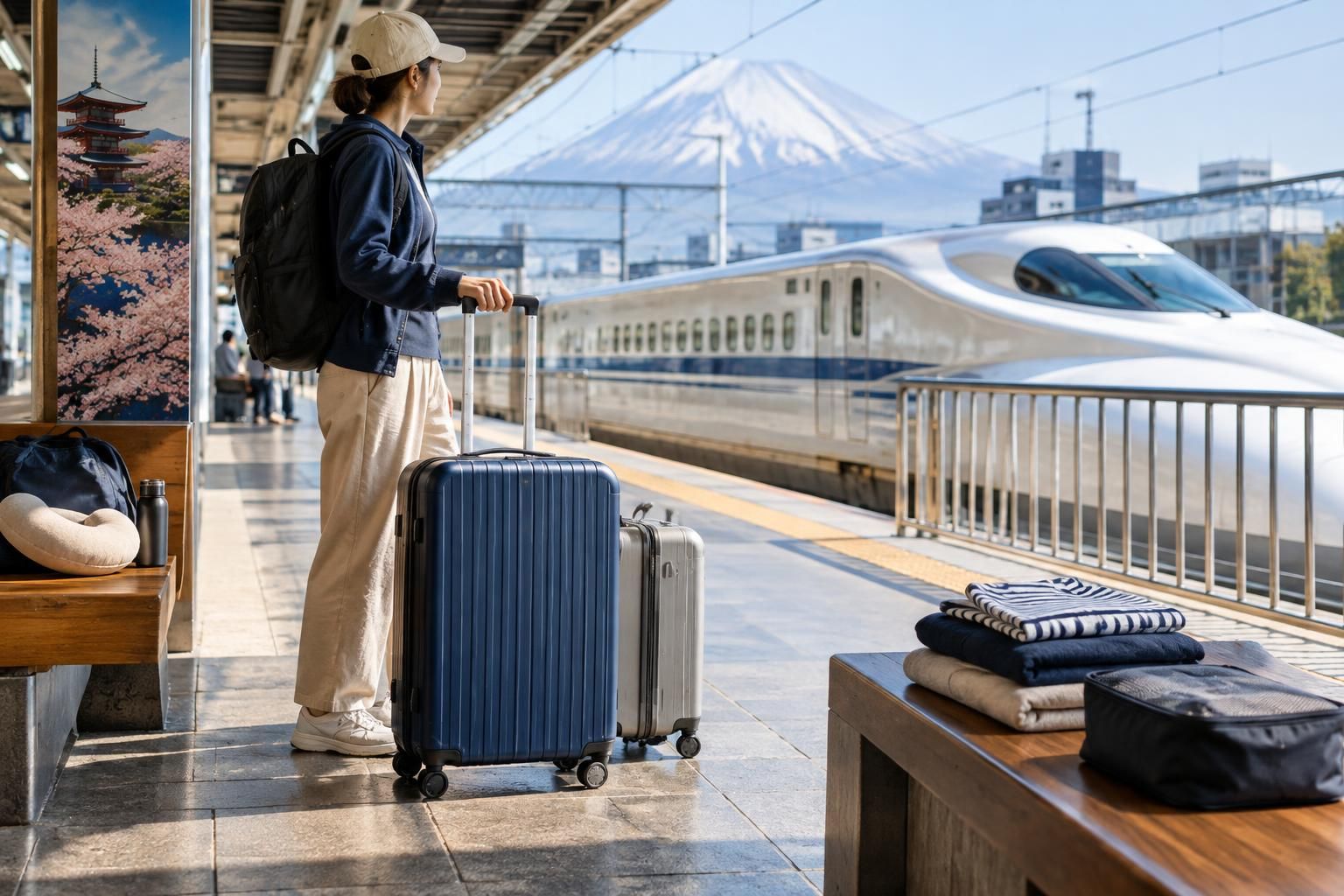
AI-assisted evergreen travel guide. Featured image is an AI-generated illustration, not a specific product or booking.