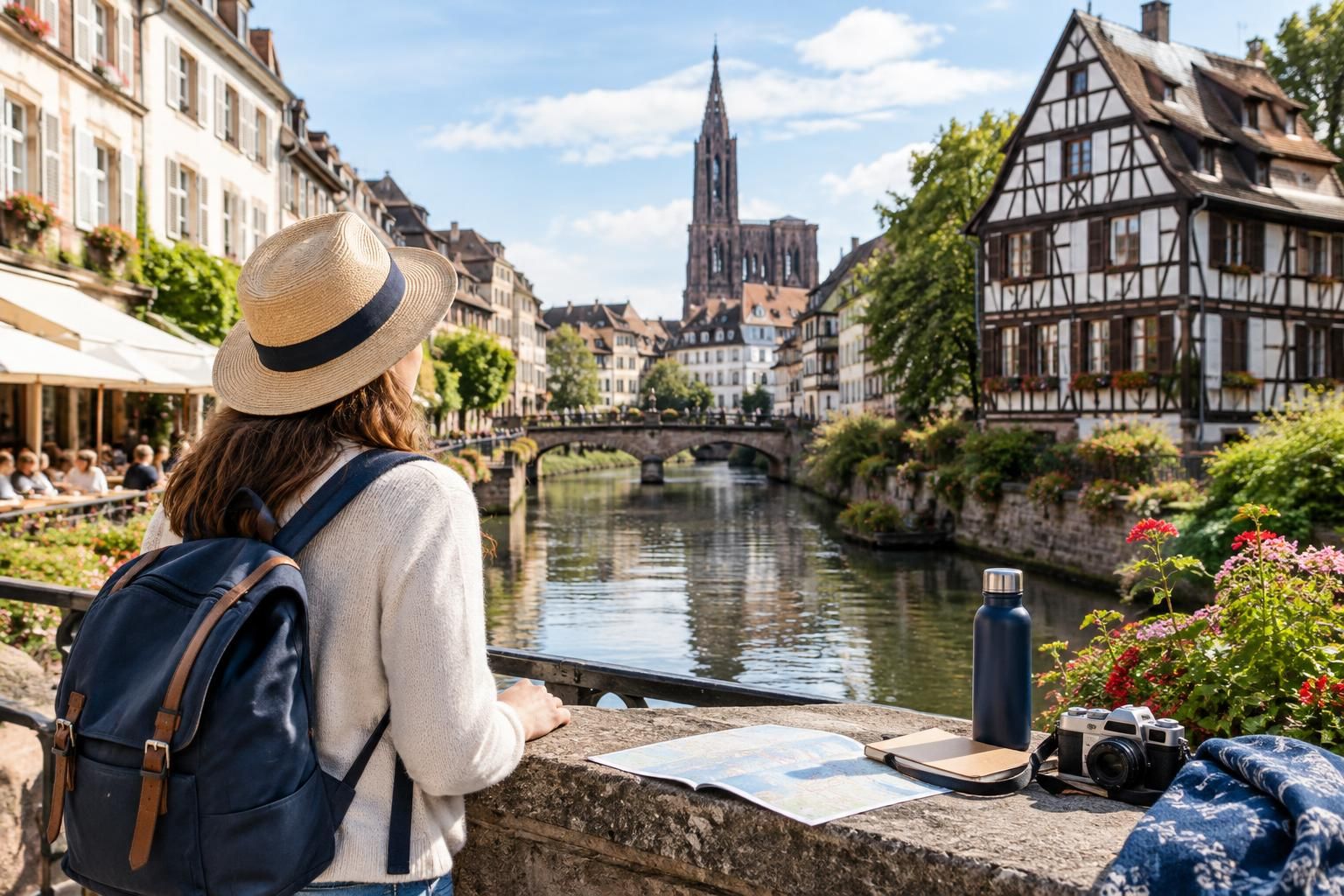
Alsace lends itself to a holiday of canal-side walks, distinctive architecture and long lunches, but planning it without a car requires a little selectivity. Strasbourg and Colmar make a useful pairing: one offers the variety of a larger city, while the other brings a more compact setting and a different pace. The mistake is trying to add every photogenic wine village between them. A six-night trip works better with two bases, one optional countryside day and enough unplanned time to enjoy the places where you are actually staying.
Divide the stay according to your interests
Three nights in Strasbourg followed by three in Colmar creates a balanced starting point. Allow the transfer day to be part of the holiday rather than treating it as lost time: have breakfast, travel, leave your bags if your accommodation permits it, and spend the afternoon exploring your new neighborhood.
Adjust the split rather than adding another hotel. Four nights in Strasbourg and two in Colmar may suit travelers who enjoy museums, varied dining and urban wandering. Two in Strasbourg and four in Colmar gives more room for a village outing and slower afternoons. Before fixing the order, compare your arrival and departure journeys; avoiding an awkward final connection matters more than following a north-to-south itinerary.
Choose accommodation for the walk with your bags
In Strasbourg, decide whether you prefer the atmosphere of the historic center or easier access to the railway station. A central address can make evening walks appealing, but the final approach may involve uneven paving, pedestrian streets or bridges. Check the actual walking route rather than judging convenience from straight-line distance.
Use the same approach in Colmar, where a picturesque address is not necessarily the simplest arrival. Ask about stairs, lifts, luggage storage and vehicle access if these affect your plans. For either base, a quiet bedroom and somewhere comfortable to sit can be more valuable than a canal view. An apartment makes sense if you want breakfasts at home; a hotel may simplify short stays and luggage handling.
Give Strasbourg two different kinds of day
Build one day around the historic core, including the cathedral surroundings and Petite France. Rather than plotting a continuous sightseeing march, choose one interior visit and leave the rest for walking, lunch and pauses by the water. Architectural detail rewards attention, so allow time to look beyond the most photographed streets.
Make the second day a contrast. Explore the broader streets and monumental buildings of the Neustadt, choose a museum that matches your interests, or spend time in a residential neighborhood and park. This prevents Strasbourg from becoming a single prolonged old-town walk. If a boat trip appeals, treat it as an alternative way to experience the city, not an obligatory extra.
Let Colmar be more than a photograph stop
Colmar’s half-timbered buildings and waterside corners invite slow exploration. Start with a loose circuit through the old town, then return later to whichever streets interested you most. Staying overnight gives you more freedom to vary the timing of your walks rather than squeezing everything into a day-trip window.
Balance outdoor wandering with a substantial indoor visit. The Unterlinden Museum is an option for travelers interested in art and regional history; check its current visiting arrangements before building a day around it. Alternatively, organize an afternoon around food shopping and a relaxed meal. Leave space to sit down: compact destinations can still produce tiring days when every attractive lane becomes another detour.
Choose one village outing by its transport, not its fame
Places such as Eguisheim, Riquewihr and Kaysersberg may enter your shortlist, but do not assume they are equally straightforward without a car. Compare the complete outward and return journeys for your travel dates, including weekend differences, stop locations and the walk into the village. A short map distance does not guarantee a simple excursion.
Choose one village you can reach comfortably and explore it properly. Two can work with suitable transport, but a chain of brief stops often means spending the day watching the clock. If public transport does not fit, weigh a prearranged excursion or taxi against simply staying in Colmar. For vineyard walks, identify an established route and its terrain; do not assume every track is public or suitable for casual footwear.
Use meals to vary the rhythm
Alsatian food can give the trip a strong sense of place. Consider tarte flambée, choucroute or a regional bakery stop according to your preferences, but avoid turning every meal into a rich, multi-course event. A substantial lunch followed by a lighter supper can suit days built around walking.
If wine interests you, make it an optional experience rather than the organizing principle of every day. Check tasting arrangements and transport before heading to a producer outside town. Travelers who do not drink can shape the same afternoon around village architecture, a café or a countryside walk. Explain dietary needs clearly when booking meals rather than assuming traditional dishes can always be adapted.
Keep one flexible block and pack for ordinary walking
Reserve at least half a day without a fixed attraction. Use it for your village outing if conditions suit, an indoor visit during rain, or simply returning to a favorite neighborhood. Seasonal conditions affect the experience: warmer periods invite longer outdoor breaks, while shorter days call for more deliberate timing.
Pack comfortable shoes with grip, a light rain layer and luggage you can manage over paving and station approaches. Download accommodation directions and keep essential journey details available offline. Before departure, confirm transport, attraction reservations and any date-specific events that might affect your plans. The itinerary should remain enjoyable even if one excursion proves impractical.
A rewarding car-free Alsace trip does not depend on collecting villages. Give Strasbourg and Colmar enough time to feel distinct, choose accommodation with practical arrival routes, and add countryside only when the transport works comfortably. Six nights can then offer both variety and breathing room, without making every morning a departure.
AI-assisted evergreen travel guide. Featured image is an AI-generated illustration, not a specific product or booking.