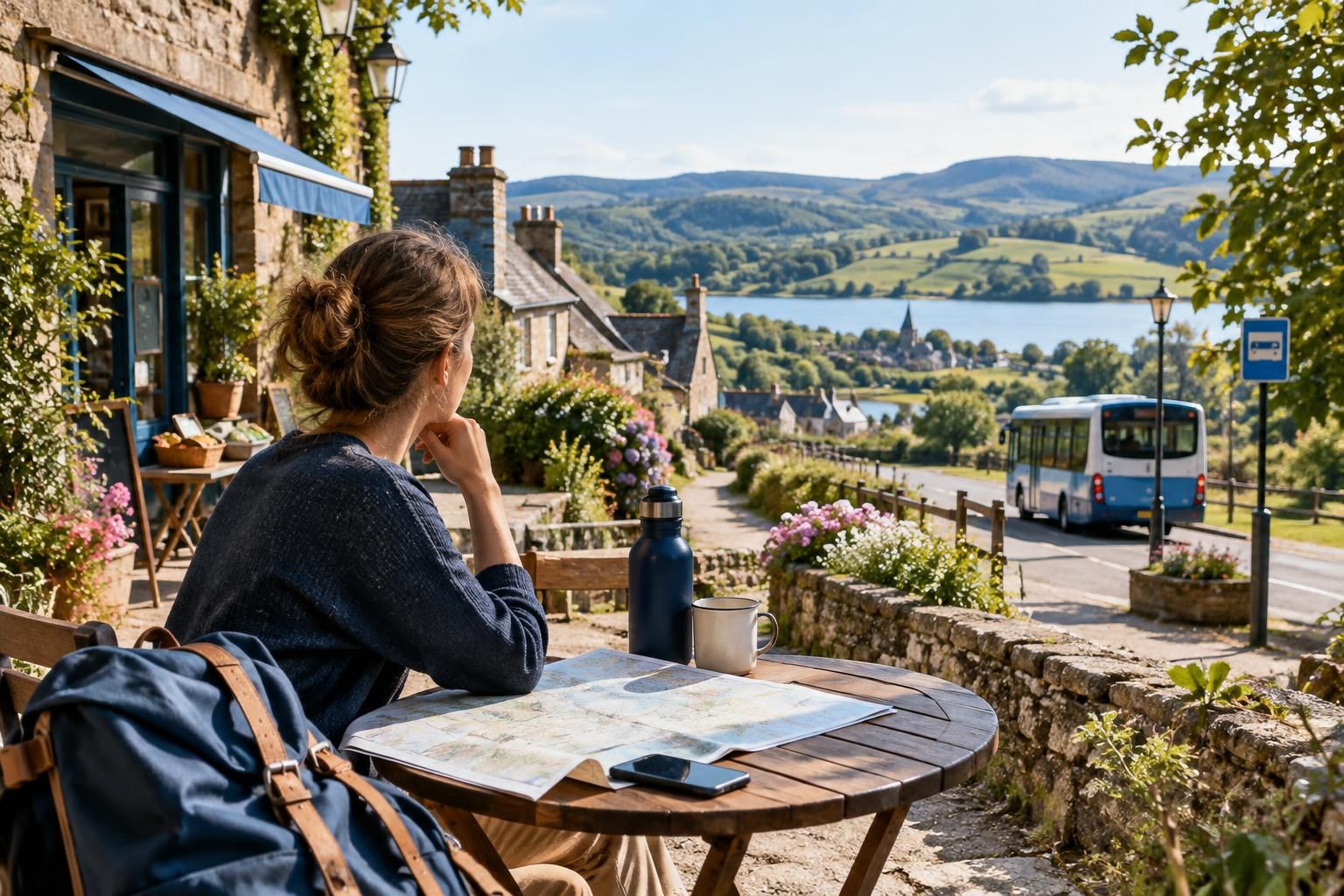
A countryside holiday without a car can offer exactly what many travelers want: slower mornings, walks from the doorstep and time to settle into one place. The challenge is that a destination described as peaceful or well connected may still leave you far from groceries, evening meals or the landscapes you came to enjoy. The most useful approach is to choose a workable base before choosing a beautiful property. Plan around a compact village, a small market town or a rural transport hub, then treat more isolated places as outings rather than overnight bases.
1. Choose a base with everyday life within walking distance
Begin with the experience you want. A walking-focused break needs routes accessible from your accommodation. A village holiday might depend more on a bakery, a few places to eat and somewhere pleasant to sit. A trip built around gardens, historic houses or scattered craft studios will require more attention to connections between individual sights.
Look for a cluster of useful places rather than a single attraction. A railway station near a food shop, accommodation and several dining options creates more independence than a remote cottage beside one bus stop. Small towns on the edge of rural landscapes can be a good compromise: you sleep somewhere practical while spending your days among hills, fields or waterways.
Read maps at street level before committing. A property can be geographically close to the village but separated from it by a steep climb, an awkward road or an indirect route. Distance alone does not tell you whether the walk will feel comfortable with luggage or after dinner.
2. Work backward from the accommodation door
The final connection deserves as much attention as the main train or coach journey. Sketch the full arrival sequence: arrival station, onward connection, stop or drop-off point, walk to the property and check-in arrangements. Include waiting and walking time rather than comparing only the time spent on vehicles.
Before booking, check transport options for your intended day and likely arrival period. A connection that looks straightforward on a weekday may work differently on another day. If the last stretch requires a taxi or property transfer, establish how it would be arranged, whether advance booking is needed and what alternative you could use if your arrival changes.
Use the same process for departure. A lovely rural stay becomes less appealing if reaching your homeward transport requires an uncomfortable rush. When the outward connection is awkward, consider a final night in a larger transport hub rather than forcing the whole journey into one morning.
3. Select accommodation for independence, not just atmosphere
Without a car, useful accommodation features become part of the itinerary. A small kitchen or refrigerator can reduce dependence on restaurant meals. A comfortable indoor seating area gives you somewhere to enjoy a wet afternoon. Laundry facilities may make a longer stay easier without adding another journey.
Check practical details directly when they are unclear: the route from the nearest stop, luggage arrangements before check-in, access to food and whether advertised transfers need advance agreement. Do not assume that an isolated property offers transport simply because it welcomes travelers.
Picture an ordinary evening there. Can you have dinner nearby and return comfortably? Could you prepare a simple meal if you decide not to go out? Choose somewhere that works on a quiet day, not only as the backdrop for a busy itinerary.
4. Build outings around one transport link at a time
Keep most excursions simple. One direct journey followed by a walk or a village visit is generally easier to manage than several rural connections. For example, travel to a nearby town, explore its streets and riverside paths, then return from the same transport hub.
For a one-way walk, compare the two directions. Taking transport to the starting point and walking back toward your accommodation can remove pressure to catch a return service. This only makes sense when the route, distance, terrain and daylight suit your group; walking should not become an improvised substitute for a missed connection.
Give each day one main purpose. A garden visit and a leisurely lunch may be enough when transport is involved. Keep other stops optional, and avoid building a day whose success depends on every connection working perfectly.
5. Make food and luggage part of the plan
Plan your first meal before arrival, especially if you expect to reach the village late. Bring something suitable for the journey and establish where you could obtain basic groceries. For self-catering stays, a short shopping list covering breakfast, a simple dinner and walking snacks is more manageable than carrying several days of supplies.
Pack for the transfers you will actually make. A bag that is comfortable across a station may feel very different on gravel or an uphill lane. Reduce items that require separate handling, and leave room for a modest grocery shop. Clothing that works across walking, village visits and casual meals can help keep luggage manageable.
6. Leave room to enjoy staying put
Include at least one day that needs no transport. Identify a nearby walk, a café, a local collection or simply a pleasant place to read. This gives the trip a quieter rhythm and prevents every morning from beginning with a departure deadline.
Finally, compare the complete plan with your original aim. If reaching every desired sight requires complicated connections or repeated private transfers, choose a different base or narrow the itinerary. A successful car-free countryside trip is not one that reproduces a driving holiday; it is one designed around the pleasures you can reach comfortably.
The strongest car-free rural itinerary starts with a useful base and a clear route to its doorstep. Once food, accommodation and a few straightforward outings are settled, resist adding too much. The reward is time to notice one landscape properly, rather than spending the holiday trying to reach all of it.
AI-assisted evergreen travel guide. Featured image is an AI-generated illustration, not a specific product or booking.