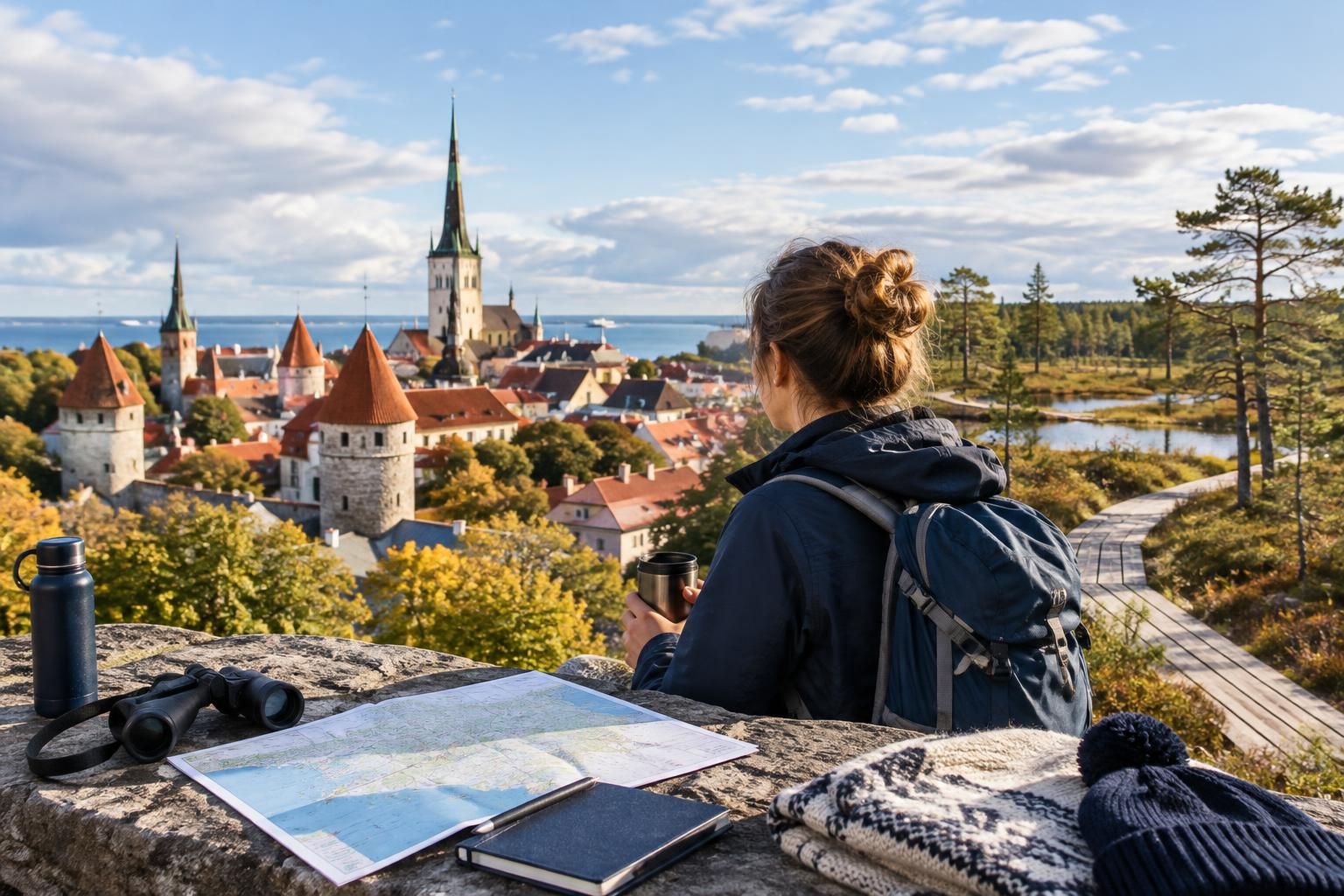
Estonia offers a rewarding contrast within a relatively compact trip: Tallinn’s medieval streets and neighborhood cafés, followed by pine forests, bog landscapes and villages along the northern coast. A week is enough to enjoy both without turning the countryside into a hurried excursion. The key is to treat Lahemaa National Park as a place to stay rather than a checklist of sights. Divide the trip between two bases, organize transport around the rural portion and leave room for weather-dependent walks. The result is a European holiday with cultural interest and outdoor time, without needing a demanding hiking itinerary.
1. Divide the week between city and countryside
For seven nights, start with three in Tallinn and finish with four around Lahemaa. This gives you two full city days before moving to a slower rhythm. If museums and restaurants matter more than walking, reverse that balance. Avoid adding a third overnight base unless it solves a genuine transport problem; packing and checking in can consume the time you hoped to spend outside.
Keep the transfer day deliberately light. Collect a rental car if using one, buy groceries and make one short stop before reaching your accommodation. Save your main bog or forest outing for a day when you can judge the weather and your energy. If your departure timing makes a rural final night awkward, place the countryside stay in the middle and return to Tallinn before leaving.
2. Choose Tallinn accommodation for everyday convenience
Staying in or beside the Old Town makes early and late walks easy, but atmosphere comes with practical trade-offs. Historic buildings may have stairs, irregular room layouts or limited vehicle access. Check the actual approach with luggage, lift provision and whether your room faces a busy street. Travelers who value quieter evenings or easier arrival logistics may prefer accommodation outside the medieval core.
Give each full city day a different focus. Spend one exploring the Old Town and its upper and lower areas, with a museum or long lunch as a break from walking. Use the other for a contrasting neighborhood such as Kalamaja or a visit to Kadriorg’s park and cultural attractions. These are alternatives rather than a single packed circuit; choose according to your interests and the forecast.
3. Pick a Lahemaa base around meals and transport
Lahemaa is a broad landscape rather than one central resort. Coastal settlements such as Võsu and Käsmu suit travelers drawn to village walks and the sea, while inland accommodation can work well for forest-focused days. Compare the position of each property with your intended outings, not simply its distance from Tallinn. A secluded cabin can be appealing but may mean driving whenever you need food.
For four nights, prioritize a usable kitchen, somewhere to dry damp clothing and comfortable indoor seating. Ask what cooking equipment and linen are included rather than assuming every self-catering stay is equally equipped. If you prefer eating out, check the options relevant to your dates before choosing an isolated property. Bring enough groceries for your arrival evening and breakfast so the first night stays uncomplicated.
4. Decide whether a car earns its place
There is little reason to keep a rental car throughout a Tallinn stay if your plans center on urban sightseeing. Consider collecting it when you leave the city. In Lahemaa, a car gives you flexibility to combine accommodation, trailheads and coastal stops, especially when showers change your plans. Choose it for that flexibility rather than as a reason to cover more ground.
A car-free version needs a narrower plan. Choose accommodation with a workable arrival connection, walking options nearby and a realistic way to obtain meals. Check public transport for your actual dates and arrange any necessary transfers before committing to a rural property. An organized countryside excursion from Tallinn is another option if you want a taste of the landscape without managing a separate stay.
5. Build countryside days around one main outing
Use three contrasting themes for your full rural days: a bog walk, a coast-and-village day and a forest or manor-landscape day. Viru Bog is one possible focus for the first; Käsmu can anchor a day of coastal scenery and village wandering. Palmse or Sagadi may appeal for their historic estate settings. Check access and opening arrangements before making an indoor visit essential to the day.
For any trail, establish the route length, surface, return point and current condition rather than judging difficulty from photographs. Boardwalk sections can require more attention than a broad gravel path, particularly when wet. Stay on designated routes and turn back if conditions do not suit your group. Pair a longer outing with a quiet afternoon, not another distant trailhead.
6. Pack for changing conditions and plan a quieter alternative
Choose your season by the experience you want. Longer daylight supports flexible outdoor days, while cooler periods favor shorter walks and more time indoors. Coastal wind, rain and temperature changes still deserve space in the plan. Pack layers, a waterproof outer shell and comfortable shoes with useful grip. In warmer months, insect repellent and lightweight covering layers can make outdoor stops more comfortable.
Keep a small day bag ready with water, food, a charged phone and an offline map. For wet weather, have a short list of indoor possibilities whose opening arrangements you can check locally, but also choose accommodation where an unplanned afternoon feels pleasant. A book, groceries and a comfortable room are useful parts of a countryside itinerary, not evidence that the day has been wasted.
The strongest Tallinn-and-Lahemaa itinerary makes the contrast between its two halves work for you. Enjoy the city on foot, then choose a rural base that supports a few well-spaced outings. Sort out meals and transport before arrival, keep walking plans adaptable and resist collecting distant stops. A week can then feel varied without becoming rushed.
AI-assisted evergreen travel guide. Featured image is an AI-generated illustration, not a specific product or booking.