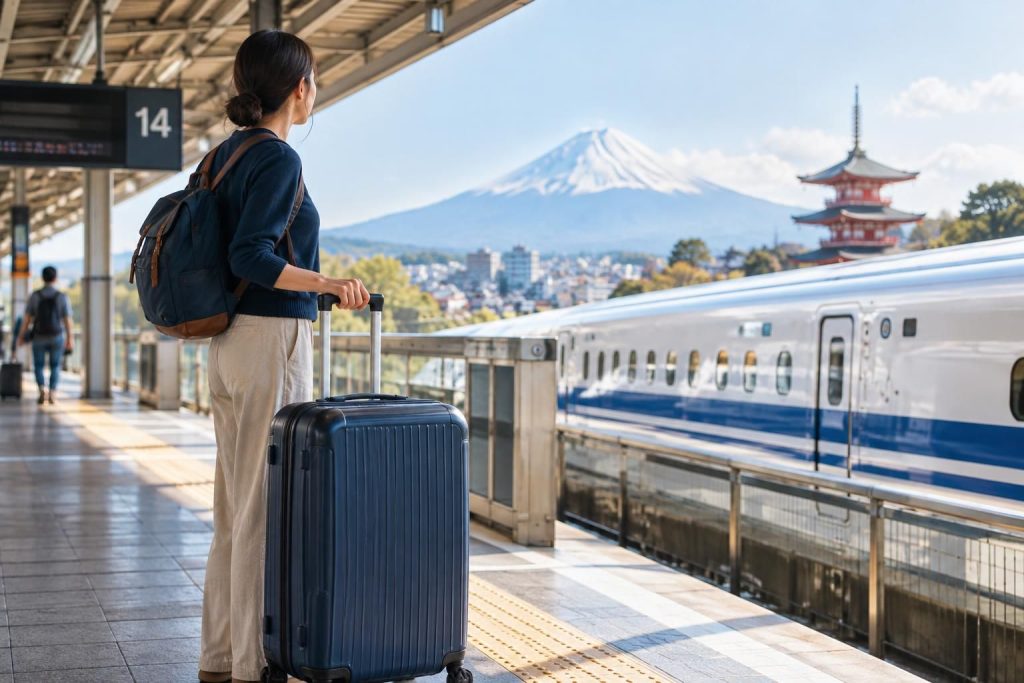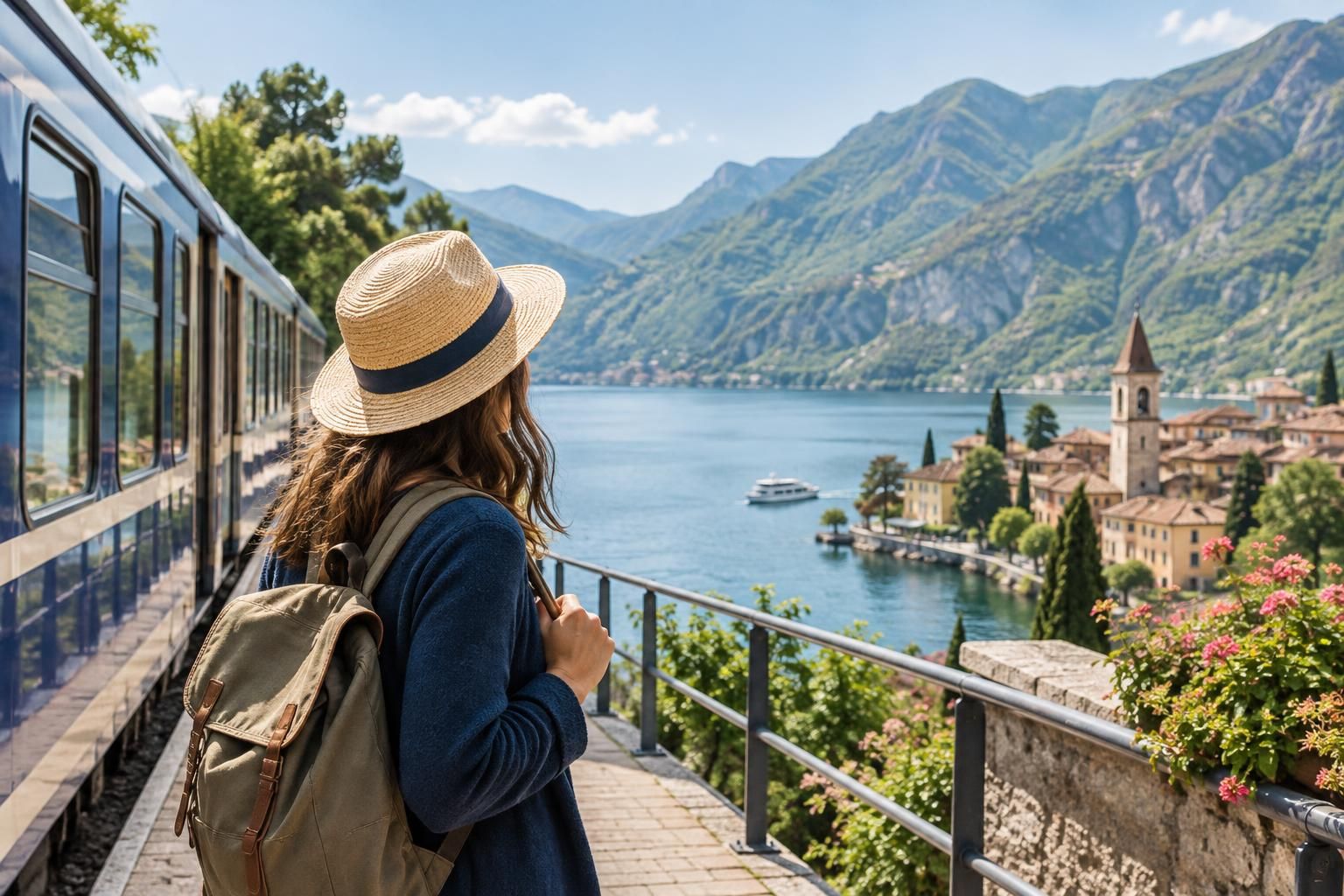
A scenic rail trip can turn the journey itself into a highlight: a river valley unfolding beyond the window, a mountain crossing or the gradual shift from a busy city to open countryside. But a route that looks wonderful on a map can become tiring if every morning starts with packing and finding another platform. The key is to choose a few train journeys worth savoring, then give the places between them enough time. Start with the experience you want, rather than the number of destinations you could connect.
Choose the kind of scenery you want to travel through
Give your trip a clear visual theme. Coastal tracks, mountain valleys, agricultural landscapes and historic towns offer different experiences. A mountain-focused itinerary might center on one dramatic crossing and several days of walking or village exploration. A river route might work better with shorter journeys and longer stops in waterside towns.
Pick two or three priority landscapes rather than trying to collect every scenic line in a region. Remember that a famous destination does not necessarily make the journey there scenic. When comparing routes, distinguish between the place you want to visit and the stretch of railway you actually want to experience.
Build the itinerary around a few anchor journeys
Treat your most anticipated train rides as scheduled activities, not merely transfers. Put them into the itinerary first, leaving other sightseeing lighter on those days. For a week-long holiday, two substantial scenic journeys with stays between them can offer more enjoyment than six consecutive days of changing trains.
Sketch each travel day from accommodation door to accommodation door. Include reaching the station, waiting, connections and the final transfer. A three-hour ride may occupy much of a day once those pieces are added. If the landscape is the attraction, also consider whether your intended journey would take place in daylight at that time of year.
Choose stopovers that reward staying, not just changing trains
A convenient junction is not automatically a good overnight base. Look for places where you would genuinely enjoy an unhurried day: a town with a walkable center, a lakeside settlement with accessible waterfront paths or a city with enough indoor and outdoor options to suit different moods.
For each possible stop, name two things you would do without boarding another train. If you cannot, it may belong in the itinerary as a connection rather than an overnight stay. On a seven-night trip, three nights in one base, two in another and two at the final stop can create a satisfying rhythm without daily repacking.
Compare tickets against your actual route
Do not assume that a rail pass is automatically the simplest or best-value choice. Compare it with individual tickets using the journeys you genuinely intend to make. Check which services are covered, whether reservations or supplements apply, and how much freedom each option gives you to change departure times.
Separate essential rides from optional excursions. A pass may suit an itinerary with several spontaneous train days, while individual tickets may fit a trip built around a few fixed journeys. Also distinguish a travel ticket from a seat reservation: check what each booking includes rather than assuming that permission to board guarantees a particular seat.
Plan the onboard experience, not just the connection
For a journey chosen mainly for its views, seating deserves attention. Check the available seating layout and reservation choices before booking. A window seat may matter more than facing the direction of travel, while companions might prefer seats together. Avoid building the whole experience around securing one supposedly perfect side of the train; scenery and track orientation can change.
Pack a small onboard bag with water, a snack, an extra layer and anything you want during the ride. Keep it separate from your main luggage so you are not repeatedly opening a suitcase. Give yourself permission to spend part of the trip simply watching the landscape rather than photographing every bend.
Make luggage and station access part of the accommodation choice
Rail travel becomes less relaxing when luggage is awkward to carry through several changes. Choose bags you can manage independently, and test the full load before departure. Consider stairs, uneven paving and the distance between your accommodation and local transport, rather than judging convenience by a station-to-hotel map pin alone.
Staying near a station can help with an early departure, but it need not dictate every overnight choice. For a longer stay, a neighborhood you enjoy may be worth an extra transfer. Compare the total effort: one manageable arrival journey can be preferable to several days spent far from the places you want to explore.
Leave room to enjoy the places between the rails
After a substantial rail day, plan a morning without a fixed departure. Have breakfast, explore locally and let the destination become more than a station name. Keep at least one optional excursion genuinely optional, especially if it repeats scenery you will already see elsewhere.
Before committing, ask whether you would still enjoy the trip if one scenic stretch were cloudy or a preferred departure were unavailable. Strong itineraries have more than a single highlight: appealing bases, satisfying local activities and enough breathing space to adjust a journey without losing the purpose of the holiday.
The best scenic rail itinerary is not necessarily the longest route or the one with the most famous trains. It is a sequence of journeys you want to experience and places where you want to linger. Choose a few anchor rides, account for the practical effort around them and protect time off the train. That balance makes the railway part of the holiday rather than a timetable that controls it.
AI-assisted evergreen travel guide. Featured image is an AI-generated illustration, not a specific product or booking.