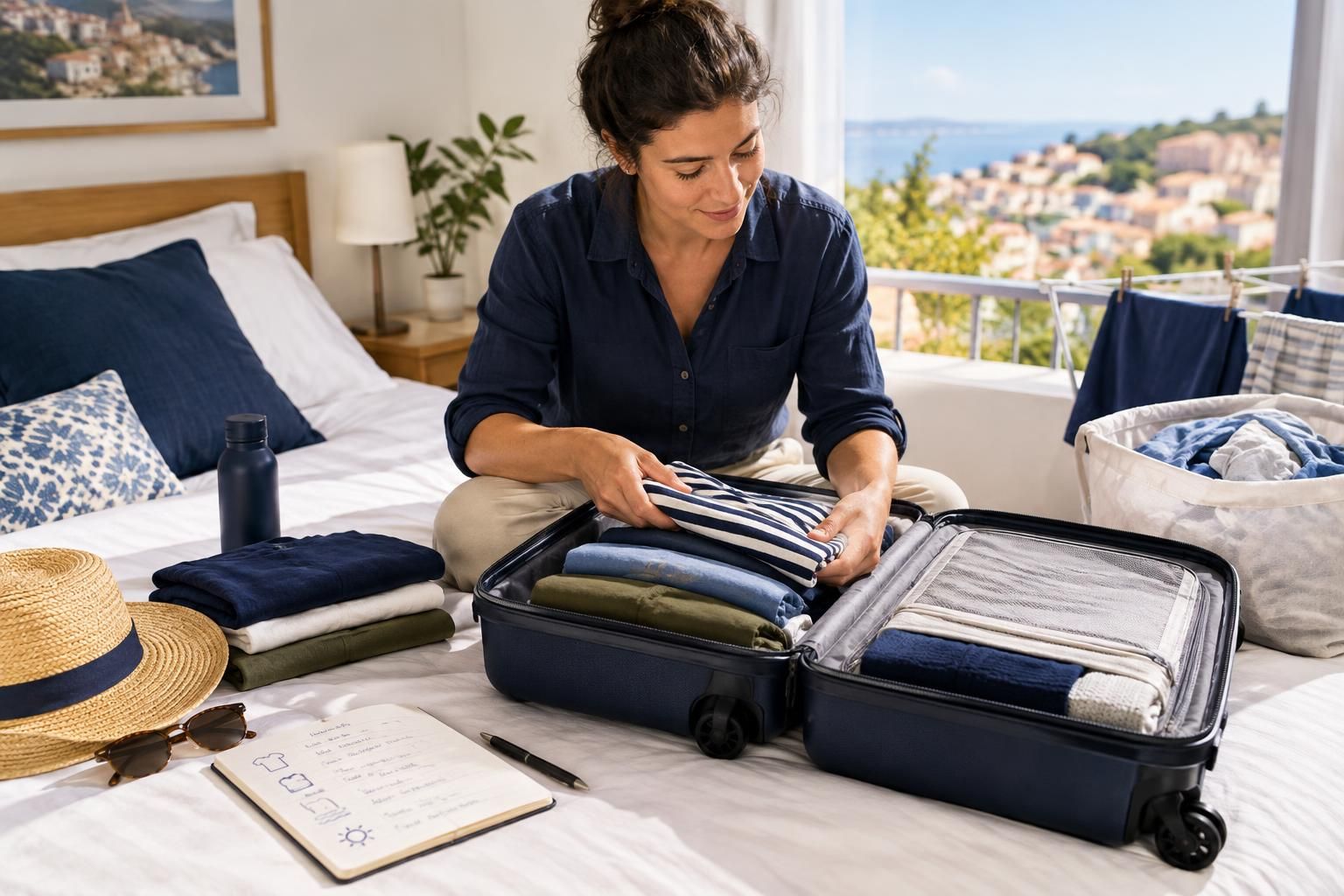
Packing for two weeks does not have to mean carrying fourteen days of clothing. With a workable laundry plan, you can travel with a smaller wardrobe and spend less time lifting, storing and searching through luggage. The key is to plan around the whole washing cycle, including finding facilities, waiting for a machine and getting everything dry before you move on. This approach is especially useful on trips involving trains, several accommodations or rooms with limited storage. Start with your route and activities, then decide what needs washing, where it can happen and how much spare clothing makes the plan comfortable rather than restrictive.
1. Build your wardrobe around activities, not calendar days
List the situations you need to dress for: sightseeing, travel days, active outings, relaxed evenings and any occasion requiring something different. Then identify clothes that can serve more than one purpose. Comfortable trousers might work for both a journey and dinner, while a simple layer can cover a cool morning or an air-conditioned interior. Aim for useful combinations rather than a separate outfit for each day.
One week of clothes is a planning target, not a strict seven-piece formula. Underwear, socks and frequently changed tops may determine your laundry interval, while outer layers can often be worn repeatedly as appropriate. Adjust for your habits and itinerary. A walking-heavy summer trip may require more changes than a leisurely cool-weather stay, even when both last the same number of nights.
2. Put the main laundry stop before you run out
Look at your itinerary and choose a washing point while you still have clean clothes available. On a two-week trip, this might fall around the fifth or sixth day rather than exactly halfway through. That margin gives you room to respond if a machine is occupied, a service takes longer than expected or your chosen afternoon becomes too busy.
Favor a stay of several nights over a brief overnight stop. For example, a route with three nights in a city, four in a small town and six by the coast offers a natural opportunity during the middle stay. Schedule washing early enough in that stop to leave a second opportunity. Avoid making your entire packing plan depend on laundry immediately before an early departure.
3. Check what laundry access actually means
When comparing accommodation, distinguish between an in-unit washing machine, shared guest facilities and a laundry service. They solve different problems. A machine in an apartment offers control over timing, while shared facilities may require waiting. A service can reduce the work, but its turnaround and handling options need to suit your departure and clothing.
Before relying on a listing, clarify the details that matter: whether there is a dryer or drying rack, how facilities are accessed, whether detergent is provided and whether there are usage charges or restrictions. For a local laundrette, establish its location and check relevant details close to your visit. A map listing alone is not enough reason to arrive with no clean clothes left.
4. Treat drying time as part of the itinerary
Washing is only half the task. Thick cotton, denim and bulky garments can be inconvenient when drying space or time is limited. Choose some lighter items you already enjoy wearing, and follow their care labels rather than assuming everything can go into a hot dryer. A familiar wardrobe with manageable washing needs is more useful than unfamiliar travel clothing bought solely to save space.
If you expect to air-dry items, allow a generous window because humidity, ventilation and fabric all affect the result. Keep your departure outfit out of the wash, along with enough essentials for the following day. Use suitable drying facilities and respect accommodation rules; do not build a plan around hanging wet clothing over furniture, heaters or balconies.
5. Choose the laundry method that fits your holiday
Self-service laundry can suit a quiet afternoon, especially if you have reading, route planning or another low-effort task to do while waiting. Keep the rest of that period flexible rather than pairing it with a timed attraction. If facilities require you to remain nearby, treat that time as occupied instead of counting it as free sightseeing time.
A drop-off service may be more appealing on a short, activity-filled stay, provided its terms and turnaround work for you. Small hand-washes can bridge gaps for suitable items, but are less practical as the only strategy for an entire wardrobe. Include laundry costs and time in your trip budget: the cheapest method is not necessarily the best choice if it consumes the afternoon you most wanted outdoors.
6. Pack a small buffer and a simple backup plan
Carry a modest reserve of the items you change most often, plus a way to separate worn clothing from clean clothes. Keep damp items separate during transit, then unpack them promptly when you can dry them properly. Before leaving home, try fitting your planned wardrobe into your bag and check that you can comfortably carry it with your other belongings.
Decide in advance what you would do if the main laundry stop failed: wash a few suitable essentials, use another facility or pay for a service. You do not need to research every alternative, but you should avoid a route where only one narrow washing window makes the packing list viable. If laundry starts dictating too much of the holiday, taking a few extra clothes is a reasonable trade-off.
A smaller suitcase depends less on packing tricks than on a realistic rhythm: wear, wash, dry and leave room for delays. Match clothing to your activities, place laundry within a longer stay and protect a clean-clothes buffer. The goal is not the lightest possible bag, but luggage that is easier to manage without turning routine washing into the main event.
AI-assisted evergreen travel guide. Featured image is an AI-generated illustration, not a specific product or booking.