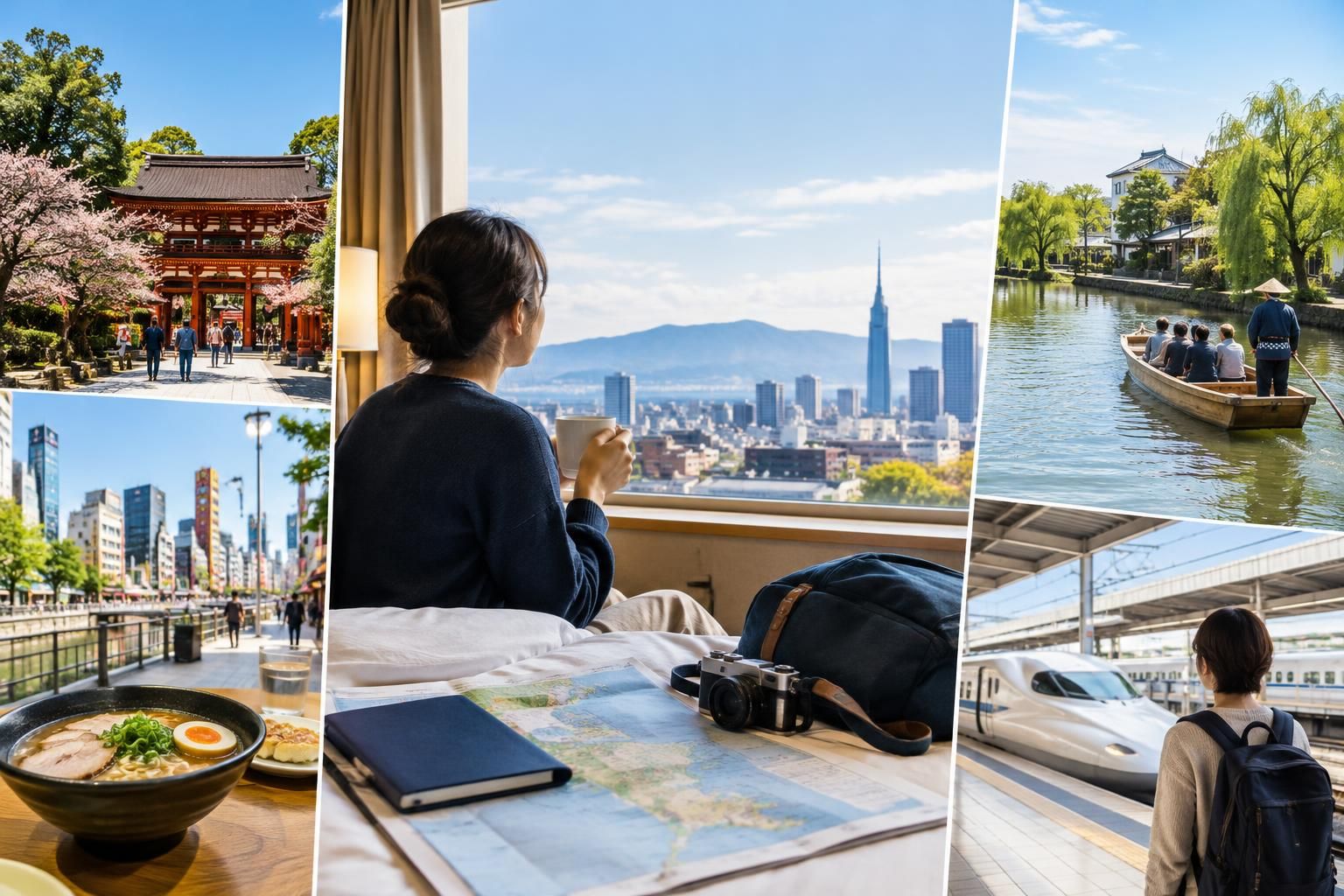
A trip to Japan does not need a new hotel every other night. Fukuoka makes a rewarding base for travelers who want urban food culture, waterfront walks and a few contrasting excursions without repeatedly packing a suitcase. The planning challenge is restraint: northern Kyushu offers enough possibilities to turn a relaxed stay into a succession of station departures. Five nights gives you room to enjoy Fukuoka itself, take two well-chosen day trips and keep some flexibility for weather or tired feet. Start with the kind of days you want, rather than a list of places you could theoretically reach.
Choose your base around the journeys you will actually make
Hakata and Tenjin are useful starting points when comparing accommodation, but they suit slightly different plans. Staying near Hakata can simplify arrival with luggage and excursions using the main railway station. Tenjin is worth considering if shopping, dining and outings on the Nishitetsu railway feature prominently. Neither area removes every transfer, so compare the complete route from your prospective hotel rather than choosing by neighborhood name alone.
A hotel several blocks from a station may offer a calmer setting, but the walk matters when rain, luggage and tired legs coincide. Check room dimensions, bed arrangements, laundry facilities and whether breakfast fits your preferred routine. For a five-night stay, a comfortable room and convenient evening meals can matter more than shaving a few minutes from one excursion.
Give Fukuoka two proper city days
Avoid treating the city as somewhere to sleep between trips. Build one day around Ohori Park and the surrounding area, combining a walk with an indoor cultural stop or a long lunch. On another day, explore the Hakata side of the city, with time for neighborhood streets, a shrine visit and food browsing. These are flexible frameworks, not routes that require completing every attraction.
The waterfront offers another change of scene, although different coastal areas are spread apart. Choose one stretch rather than trying to link every seaside sight on foot. Keep your arrival day especially light: checking in, finding dinner and learning the route back to your hotel is enough. Leaving open time also lets you return to a neighborhood you enjoyed instead of moving on simply because the itinerary says so.
Choose Dazaifu for a focused cultural outing
Dazaifu suits travelers who want a day shaped around shrine surroundings, approach streets and the possibility of a museum visit. Its appeal is in the combination rather than a single photograph: browsing a few shops, noticing the transition into the shrine grounds and allowing time for a break. Before departure, check access arrangements for any particular building or exhibition that is central to your plans.
Decide whether you want a compact excursion or a fuller cultural day. Adding a substantial museum visit changes both your energy needs and your return time. Wear shoes that work for standing as well as walking, and carry a light layer for indoor spaces. Back in Fukuoka, leave dinner flexible rather than attaching a reservation that makes the afternoon feel rushed.
Choose Yanagawa for canals and a slower rhythm
Yanagawa provides a different contrast to Fukuoka, with canals, waterside scenery and an outing that can revolve around a boat excursion and lunch. It is a good candidate when you want less emphasis on collections and monuments. Think about whether sitting outdoors on the water sounds appealing in the conditions expected for your travel dates; sunshine, wind or rain can change the experience considerably.
If a canal trip is your main reason for going, check its operating arrangements, boarding location and ending point before setting out. Do not assume the finish will be beside the start or your onward transport. Leave space for a leisurely meal, particularly if you want to try the area's eel dishes, and allow for dietary preferences rather than relying on one specific restaurant.
Resist adding a distant city just because a train connects it
A fast rail connection can make an ambitious day trip look deceptively easy. Assess the whole outing: reaching the departure station, waiting, onward transport at the destination and returning to your hotel. Nagasaki, for example, deserves consideration as a separate stay if its history, neighborhoods and evening atmosphere are important to you. A brief visit is a different experience, not necessarily an efficient substitute.
For a five-night Fukuoka stay, two substantial excursions are a sensible starting point. One possible sequence is an arrival evening, a city day, Dazaifu, another city day, Yanagawa and departure. Swap the order according to weather and personal interests. If you prefer only one excursion, use the extra day for an unstructured neighborhood visit rather than filling it automatically.
Keep transport, food and packing simple
Price your intended journeys before buying a rail pass. Different excursions can involve different operators, and a pass is useful only when its coverage matches your actual route. Check ticket options, reservation requirements and payment methods for the services you choose. Save your hotel's name and address offline, along with the key station names for each outing.
A small day bag should cover most needs: water, a compact umbrella, a light layer, charging equipment and any personal essentials. For meals, balance planned specialties with ordinary neighborhood restaurants. Fukuoka's yatai food stalls can be an atmospheric evening option, but limited seating and close quarters will not suit every group. Keep an alternative nearby, and avoid building the whole evening around one particular stall.
The strongest Fukuoka-based itinerary gives the city as much attention as its surroundings. Choose accommodation that supports your main journeys, select excursions with genuinely different experiences and leave room to change the order. Five nights can then feel like a settled visit to northern Kyushu rather than a series of commutes with the same hotel at the end.
AI-assisted evergreen travel guide. Featured image is an AI-generated illustration, not a specific product or booking.