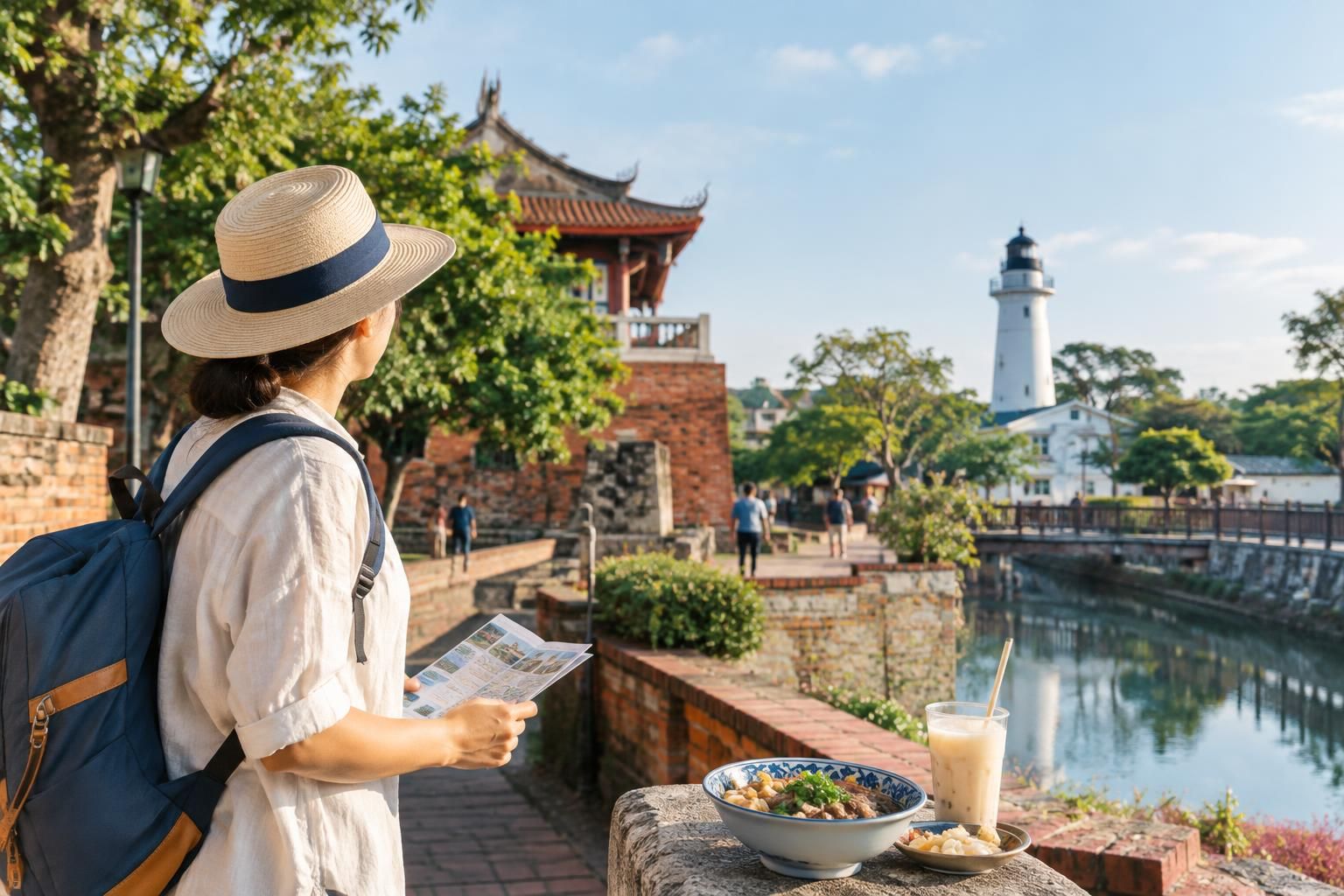
Tainan rewards travelers who enjoy discovering a city in small pieces: a temple courtyard, a narrow lane, a bowl of noodles and a shaded place to sit. Its appeal is less about completing a landmark checklist than noticing how food, worship and everyday life share the same streets. A scooter is not essential, but a comfortable visit needs more planning than simply drawing a walking route across a map. With three nights, you can explore the historic center, give Anping its own outing and leave room for meals without turning every day into a sightseeing marathon.
Build the stay around two areas, not one long checklist
For a first visit, divide your attention between central Tainan and Anping to the west. The center suits short walks linking temples, old streets, shops and food stops. Anping offers a different setting, with historic sites and lanes associated with the city’s maritime past. Treat it as a separate outing rather than the final stop on an already crowded central walking day.
A useful three-night structure is an arrival evening close to your accommodation, one full day in the center, another focused on Anping and a flexible departure morning. If you have only two nights, keep the same two areas but reduce individual stops. Adding distant attractions often costs more in transfers and energy than it adds in enjoyment.
Choose accommodation for your evening routine
A base in West Central District can suit travelers who want to step out for food and return easily for a rest. Look at the immediate streets rather than relying on a broad neighborhood label. A room above a busy eating area may be convenient but less restful than one on a quieter side street a few blocks away.
Staying near Tainan’s conventional railway station can simplify some arrivals, while Anping suits visitors who prefer to concentrate their time there. Before booking, check walking access with luggage, lift availability, room windows and potential street noise. In converted older buildings, stairs and compact layouts may matter more to comfort than decorative character.
Distinguish the two railway arrival points
Tainan railway station and the high-speed rail station are different arrival points. The conventional station is near the central city; the high-speed station is outside the historic center. Compare the complete journey to your accommodation, including the onward connection, luggage handling and any wait between services, rather than choosing solely by the main train’s travel time.
For local exploration, combine short walks with buses or taxis where useful. Avoid assuming that two places appearing close on a map will make an enjoyable walk: heat, junctions and stretches with limited pedestrian space can change the experience. Save your walking energy for streets you actually want to explore, and budget for occasional vehicle transfers.
Give the historic center a flexible walking day
Choose a small cluster around the Confucius Temple area, then build a second cluster elsewhere in the center rather than threading every landmark into one continuous route. The Chihkan Tower area or the lanes around Shennong Street can provide another focus. Opening arrangements and restoration work can affect individual sites, so keep the surrounding neighborhood part of the attraction.
Plan a substantial indoor break around the warmer part of the day. A museum, café or relaxed meal can separate morning and late-afternoon walks. At active temples, remember that you are entering places of worship: avoid blocking entrances, give ceremonies space and ask before photographing people. Modest clothing and a quiet manner are considerate defaults.
Visit Anping with a clear starting point
Anping works best when you decide what interests you most before setting out. You might focus on historic architecture around Anping Old Fort, the roots and old structures of Anping Tree House, or a slower wander through surrounding lanes. Select a couple of anchors and let the rest of the outing remain optional.
Arrange the outward journey to your first stop rather than to a vaguely defined neighborhood center. Likewise, identify a sensible place for the return journey before you become tired. Waterfront stretches can be exposed to sun, wind or rain, so carry water and weather protection. You do not need to add a coastal sunset to make the outing worthwhile.
Make food part of the itinerary, not a separate challenge
Tainan is associated with dishes such as danzai noodles, milkfish preparations and savory rice cakes called wagui. Use these as starting points rather than a mandatory eating list. Ordering modest amounts and leaving gaps between stops makes it easier to notice differences and enjoy an unexpected discovery.
Keep at least one straightforward meal option near your accommodation, especially for arrival night. Individual vendors may specialize in particular dishes or meal periods, so avoid making the day depend on one counter. If you have dietary restrictions, prepare a clear written explanation in Chinese; broths, sauces and toppings may contain ingredients that are not obvious from a dish’s name.
Pack for short outings and changing conditions
Comfortable footwear, a compact umbrella, sun protection and a lightweight day bag are more useful than carrying everything for an uninterrupted full day outside. Rain and humidity can make repeated hotel breaks appealing. Check the forecast before departure, and keep an indoor alternative for each main sightseeing day.
Download a map and save your accommodation’s name and address in Chinese for easier navigation. Carry some cash alongside your preferred payment method, and allow extra time before an onward journey. On departure morning, a nearby breakfast and one final short walk are usually a better fit than an excursion that leaves you watching the clock.
A satisfying Tainan visit depends on compact plans and generous pauses. Choose a convenient base, separate central sightseeing from Anping, and use transport to bridge the less rewarding stretches. Three nights gives you room to appreciate the city’s food and historic streets without needing a scooter—or a schedule that fills every hour.
AI-assisted evergreen travel guide. Featured image is an AI-generated illustration, not a specific product or booking.