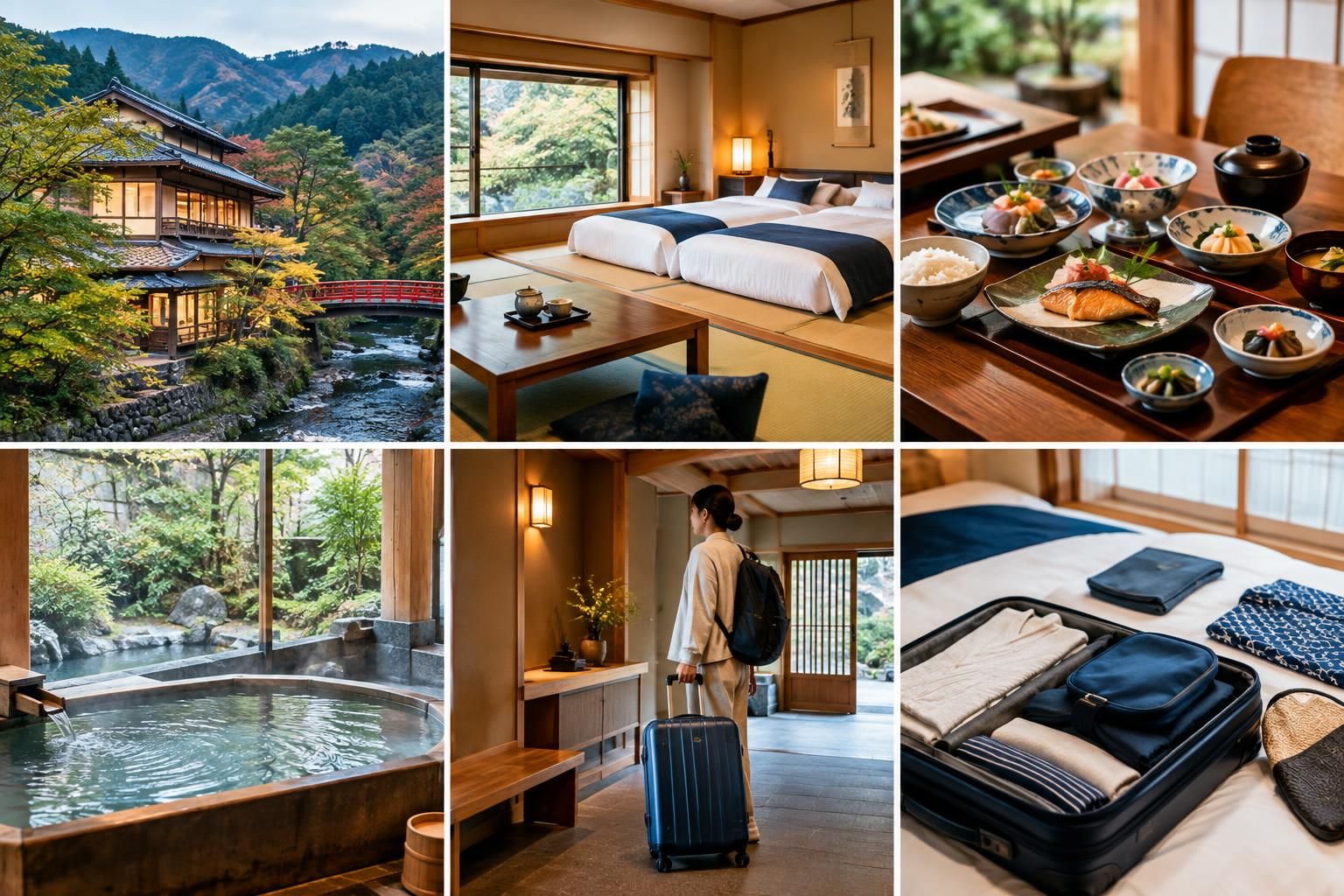
A ryokan stay can offer a different rhythm from a city hotel: shoes left at the entrance, a carefully arranged room, an evening meal and time set aside for bathing. But Japanese inns vary considerably. Some are intimate, family-run properties; others resemble large resort hotels with traditional rooms. Choosing well means looking beyond photographs to understand how the stay actually works. Start with three questions: how you want to sleep, whether you want meals included and which bathing arrangements feel comfortable. Those decisions will help you choose both the property and its place in your Japan itinerary.
1. Choose the setting before choosing the inn
Decide whether the ryokan is the destination or simply your accommodation. A countryside inn suits travelers who want to arrive, settle in and spend most of their time on the property. A town-based inn makes it easier to combine the stay with cafés, small shops and walks between meals.
For example, Kinosaki Onsen suits a stay built around a compact hot-spring town, while Hakone offers mountain scenery within a wider sightseeing area. Shuzenji on the Izu Peninsula is another option for a town-centered retreat. Compare the complete journey rather than distance alone: a rail trip followed by a bus and uphill walk can feel longer than it looks on a map.
2. Decide whether one night is enough
One night can work well when the inn is easy to reach and you protect the afternoon for arrival. Treat it as a dedicated overnight experience rather than somewhere to sleep after a full sightseeing day. Arriving close to dinner leaves little time to enjoy the room or understand the bathing facilities.
Two nights create a more relaxed rhythm, especially after several city stops. You can spend the middle day exploring nearby streets or simply reading and resting. Before committing, ask how meals differ across consecutive nights and whether the room is available for daytime use during housekeeping. A longer stay is most appealing when you genuinely want that slower pace.
3. Look closely at beds, bathrooms and room layout
A traditional room may have tatami flooring and futons laid out for sleeping, but not every ryokan uses this arrangement. Some offer raised beds, mixed Japanese-Western layouts or separate sleeping and sitting areas. If getting up from floor level would be uncomfortable, prioritize the actual bed description rather than the label “traditional.”
Read the bathroom details just as carefully. An en-suite toilet does not necessarily mean a private shower or bath. Check whether seating has back support, whether stairs are unavoidable and whether there is a lift if needed. For families or friends sharing, consider how futon setup changes the usable floor space and whether everyone is comfortable following the same bedtime routine.
4. Treat dinner as part of the itinerary
Meals can be a central part of a ryokan stay, and plans may include dinner and breakfast, breakfast only or no meals. A multi-course dinner rewards an unhurried evening, but it also limits spontaneous plans elsewhere. Confirm the arrival window associated with your meal plan before arranging transport or adding sightseeing stops.
If you have dietary requirements, explain them before booking and ask what the kitchen can accommodate. Do not assume that removing a visible ingredient resolves the issue: broths, sauces and garnishes may contain ingredients that are less obvious. Travelers who prefer flexible dining should consider a room-only arrangement in a town with alternative places to eat, rather than an isolated property.
5. Match the bathing arrangement to your comfort level
A ryokan is not automatically an onsen property, and an attractive wooden bath does not by itself establish that it uses natural hot-spring water. Separate the atmosphere you want from the facilities you need. Options may include communal baths, reservable private baths or a bath attached to your room.
Communal bathing commonly involves washing before entering and bathing without swimwear, but follow the property's instructions for its particular facilities. Ask directly about tattoo policies, private-bath reservations and any restrictions relevant to your group. A reservable family bath can suit companions who prefer privacy, though access arrangements vary. If communal bathing does not appeal, choose accommodation you would still enjoy without using it.
6. Make arrival simple and pack for the stay
Plan the final connection as carefully as the main train journey. Establish how you will get from the station to the inn, whether any offered pickup requires advance arrangement and what happens if you are delayed. Save the property's name and address in Japanese, along with your booking information, for easier navigation.
Keep luggage manageable, particularly if your route includes buses, steps or narrow streets. Put an overnight change, toiletries and essential belongings somewhere easy to reach. Many inns provide indoor clothing and basic amenities, but confirm what is supplied rather than relying on assumptions. On arrival, ask for a short explanation of meal locations, bath use, footwear changes and room setup; understanding the routine early makes the rest of the stay easier.
The best first ryokan stay is not necessarily the most elaborate. It is one whose location, room layout, meals and bathing arrangements fit your preferences. Choose those essentials first, allow enough time to arrive without rushing and resist filling every spare hour with sightseeing. The space to enjoy the inn is part of what you are traveling for.
AI-assisted evergreen travel guide. Featured image is an AI-generated illustration, not a specific product or booking.